Trump says US must respond after Iran downed helicopter
Plus: US tech selloff resumes; Government agencies demand KPMG data assurances; Hedge funds double short bets on banks to record.


Good morning. Here’s what happened overnight and what you need to know today.
1.
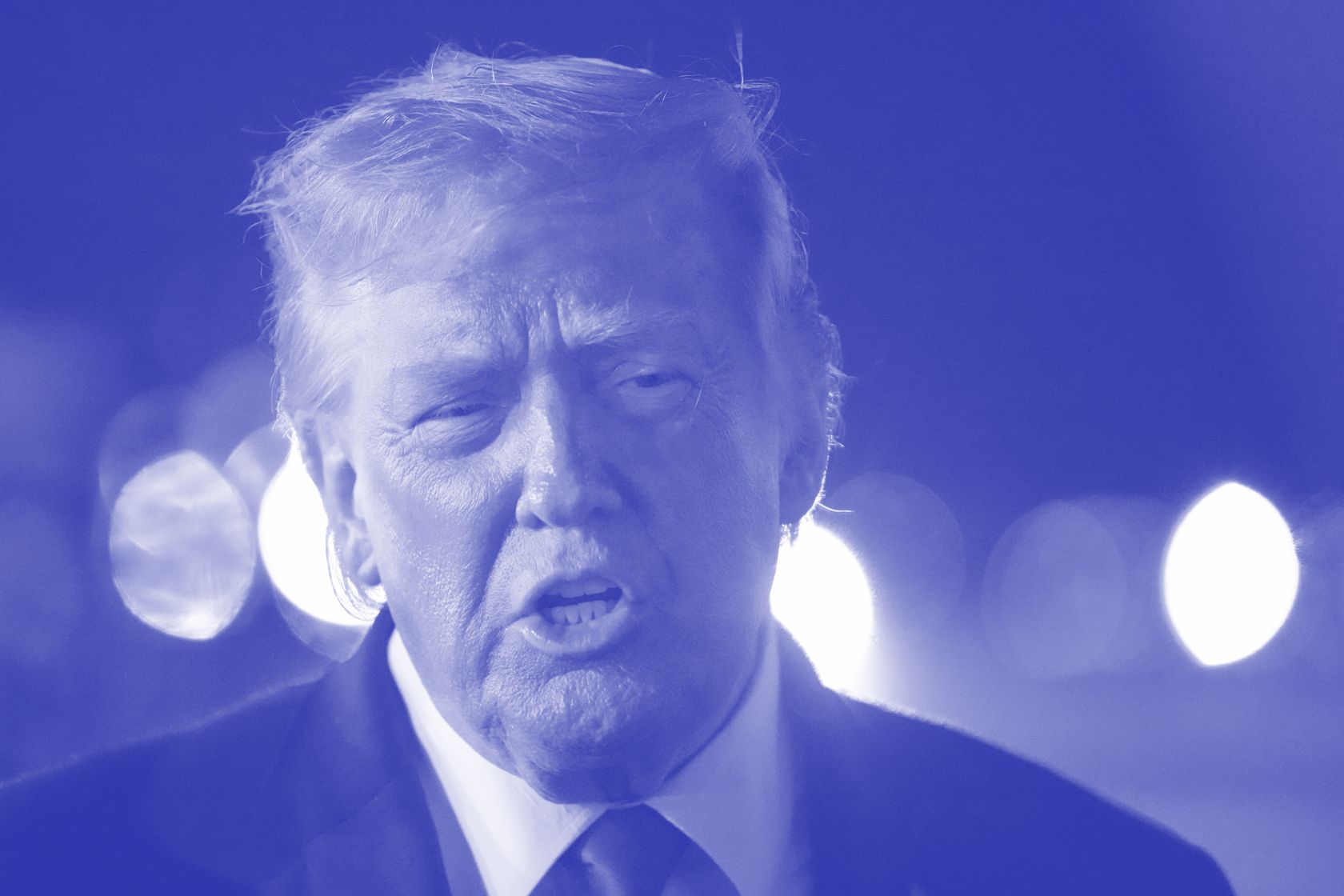
Must respond: Donald Trump said the United States “must, of necessity, respond” to what he said was an attack by Iran that “shot down one of our highly sophisticated Apache helicopters” near the Strait of Hormuz. The US President’s claim came after a US Navy drone boat rescued the two-person crew of the downed AH-64 Apache in what US Central Command spokesman Capt Tim Hawkins described as the first known drone rescue at sea by the US military. The two aviators had spent about two hours in the water off the coast of Oman before they were brought to shore, Hawkins told media. Trump had told reporters at JFK Airport on Monday night that the pilots were “fine” and “nobody injured”. “I have just been informed by our Great Military that last night the Iranians shot down one of our highly sophisticated Apache Helicopters while patrolling over the Strait of Hormuz,” Trump posted. “There were two pilots involved, both are safe and uninjured. Nevertheless, the United States must, of necessity, respond to this attack.” Meanwhile, a US official told Axios investigators had not determined whether Iran’s drone strike was intentional. (Capital Brief)(WSJ)(FT)(AP)(Reuters)(Axios)
2.
Tech wreck: A renewed tech selloff swept global equity markets overnight, with chipmakers sinking before partly recovering, and the Nasdaq Composite falling around 0.97% in volatile trading as investor anxiety over AI valuations collided with fresh Middle East tensions. The S&P 500 fell 0.26% even as a majority of its member stocks rose, with defensive sectors posting solid gains while tech dragged the index lower. Trump’s social media post blaming Iran for shooting down a US Apache helicopter near the Strait of Hormuz “created another leg down,” JonesTrading chief market strategist Michael O’Rourke told Reuters, though markets recovered from their lows. The Cboe Volatility Index hit its highest level since April. Analysts gave varied explanations for the selloff, from profit-taking after the PHLX Semiconductor Index had surged more than 96% this year, to fears that interest rates would stay higher for longer following strong May jobs numbers, and investor repositioning ahead of SpaceX’s IPO, which could raise as much as USD86 billion. Bloomberg reported the raising is already massively oversubscribed, with demand from institutional investors multiple times the available shares, and some placing orders of USD10 billion or more each. “Where does the money come from?” Ameriprise’s Anthony Saglimbene said, adding that institutional participation in a deal of that scale could require trimming existing winners. (Bloomberg)(WSJ)(Reuters)(FT)
3.
KPMG squeeze: Public sector clients are demanding assurances from KPMG that their confidential information has not been mishandled as the fallout from the firm’s spiralling audit leaks scandal continues to widen. After Capital Brief last week revealed the RBA and the Australian National Audit Office were reviewing their contracts with the firm, several other departments and agencies confirmed they were monitoring the situation closely. The CSIRO, which holds contracts worth $4.9 million with KPMG according to AusTender, said it had “sought and received assurances” that its confidentiality had not been compromised. The ATO confirmed it had four active contracts with KPMG and said it was “seeking assurance from KPMG on contractual compliance including confidentiality”. Meanwhile, a parliamentary hearing on 19 June has called 13 current and former KPMG partners, current and former board members including former NSW premier Mike Baird, along with senior executives from Lendlease, Ashurst, Allens and ASIC to appear. Separately, the AFR reported KPMG secretly and repeatedly accessed a whistleblower’s computer in 2024 to extract documents detailing the allegations, sharing the material with senior partners and former chief executive Andrew Yates. (Capital Brief)(AFR)(APH)
4.
Big short: Hedge funds have doubled their short positions in Australia’s big four banks in the past six months to almost $11 billion, the biggest short position held against the major banks since the corporate regulator began collecting data in July 2010, the AFR reported. Commonwealth Bank is the biggest target, comprising just over half of the $10.9 billion in short positions, with Westpac the second most targeted, according to ASIC data cited by the paper. The figure may be even greater as some brokers told the paper that a number of hedge funds were shorting via derivatives not captured by ASIC. Hedge funds said the major banks had been hit by a perfect storm of macroeconomic weakness, stalling property prices, rising unemployment and falling credit growth. Firetrail Investments CIO Patrick Hodgens, who has shorted all four big banks in equal measure since mid-April, said the banks were “priced to perfection” and that housing investment could halve due to the government’s crackdown on negative gearing and capital gains tax. “The budget is the trigger,” Sage Capital portfolio manager Sean Fenton said. Others warned of a multiplier effect through the banks, with falling house prices expected to weigh on consumer wealth, spending and investment. (AFR)
5.
Tyre strike: Israel struck the Lebanese city of Tyre on Tuesday, killing at least eight people and wounding dozens more in one of the deadliest raids on the city since fighting erupted in Lebanon in early March. The strikes came after Israel issued a rare evacuation order for the entire city, including its Christian quarter, in the first time the ancient port city’s Christian district had been included in such a warning. Christian religious leaders from Tyre called on the international community and Lebanese officials to act quickly to prevent the destruction of the old quarter, which they described as “the historical and human heart of Tyre,” AP reported. The strikes came a day after Israel and Iran traded direct fire for the first time since the April ceasefire, with Iran warning it would resume attacks on Israel if strikes on southern Lebanon continued. Israel has rejected efforts to link the two conflicts, insisting it will keep targeting Hezbollah in Lebanon regardless of any US-Iran deal. The death toll from months of fighting stands at more than 3,600 in Lebanon and 30 in Israel, according to the NYT. (NYT)(Reuters)(CNN)(AP)
6.
Tax missile: A venture capitalist managing three major Australian investment funds warned that proposed capital gains tax changes will damage investment in sectors critical to Australia’s economic future, describing the tax change package proposed in last month’s budget as “a productivity-seeking missile”. Martin Rogers, chief investment officer of Sydney-based Defender Ventures, said in a personal submission to a Senate inquiry that the budget bills as drafted would “materially raise the after-tax cost of capital for precisely those Australian businesses upon which the nation’s future productivity, sovereign capacity and high-skilled employment depend.” The changes, which the House of Representatives has already passed, would abolish CGT discounts across all asset classes in favour of an indexation model and confine future negative gearing to new properties, though Treasurer Jim Chalmers is consulting with business over possible amendments. Rogers warned the changes would particularly damage the biotechnology sector, saying capital currently raised on the ASX would “instead be raised on Nasdaq, or not raised at all”, and that Australian-developed intellectual property would “simply be developed by American shareholders, in American clinical sites, under American FDA primacy.” (Capital Brief)
7.
Atlas stalemate: IFM Investors’ hopes of seizing control of toll road operator Atlas Arteria appear to be fading after the Melbourne-headquartered asset manager disclosed it had swayed less than 0.1% of shareholders since its $7 billion takeover offer opened on 11 May. IFM said its current stake in Atlas Arteria now stands at 34.56%, up from 34.48% at the start of the offer period, which ends on 18 June following a one-week extension. The $4.75-per-share bid, which has been rejected as too low and opportunistic by the Atlas Arteria board, will increase to $5.10 per share if IFM reaches a 45% position before the close of the offer, with shares last closing at $5.08. But IFM remains confident it has the numbers, according to a source briefed on the discussions who told Capital Brief that major institutions tend to accept off-market bids after conditions fall away. ClearBridge Investments portfolio manager Andrew Chambers, whose firm is a long-term shareholder, said IFM’s bid “under-appreciates and undervalues” the company, adding that “private capital chasing these assets trade on much, much higher multiples than what we see in the current listed space.” (Capital Brief)
