Wall Street rallies as Bessent kills ‘revenge tax’
Plus: ANZ’s Worldline exit under spotlight after scandal; US claims on Iran strike contradicted by European intel; Optus EPL handover to Stan risks platform shutdown.

Good morning. Here's what happened overnight and what you need to know today.
1.
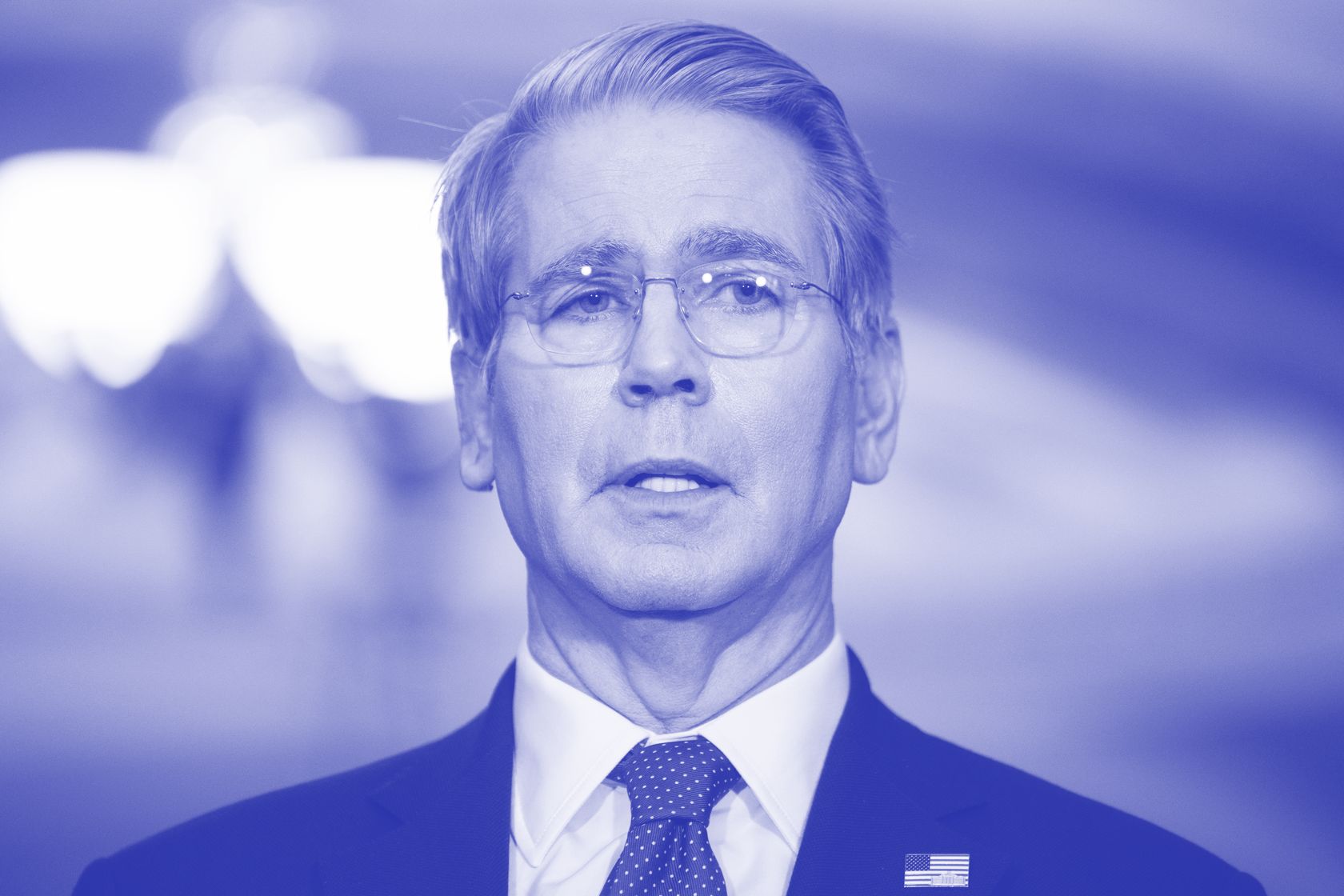
Touching records: Wall Street’s renewed push toward record highs saw the S&P 500 briefly top its February closing peak of 6,144.15, powered by tech megacaps and investor bets on up to three Federal Reserve rate cuts this year. A social media post by Scott Bessent seemed to have given impetus to the rally at the close, announcing the US Treasury would remove the controversial “revenge tax” from Trump’s so-called Big Beautiful Bill after securing a deal with G-7 allies. Meanwhile, Donald Trump was intensifying pressure on Fed Chair Jerome Powell, with The Wall Street Journal reporting he is considering naming a successor by September or October to undermine him. That pushed the dollar to its lowest level since 2022 and down more than 10% this year, with investors citing concerns about Fed independence. Revised data showed US GDP shrank 0.5% in the first quarter, with consumer spending growing at the weakest pace since the onset of the pandemic, and recurring applications for unemployment benefits rising to the highest since November 2021. (Capital Brief)(Reuters)(WSJ)
2.
Dirty deals: The “dirty payments” scandal engulfing global payments giant — and ANZ joint venture partner — Worldline, is bringing renewed attention to ANZ’s proposal to unravel the partnership. Major European news outlets published an investigation alleging that Worldline concealed and conspired to maintain relationships with prohibited and high-risk merchants. ANZ sold its merchant acquiring business, which processes merchant payments, into a joint venture with Worldline in 2020, receiving just over €300 million ($537 million) for a 51% controlling stake. In December, Capital Brief broke the news that ANZ was looking to buy back the stake, as Worldline struggled globally and the Australian arm, ANZ Worldline, underperformed. ANZ had been seeking to reacquire the controlling stake at a steep discount. The proposal had gone to ANZ’s board but was paused following the announcement of a new CEO in December. Since the new media reports, the stock has now shed over 90% of its value since 2021. (Capital Brief)
3.
War of words: Preliminary intelligence assessments provided to European governments indicate that Iran’s highly enriched uranium stockpile remains largely intact after US strikes on key nuclear targets, the FT reported citing sources, contradicting the Trump administration’s claim that the bombing “obliterated” Iran’s nuclear program. The intelligence suggests that the 408kg of enriched uranium had been moved from the Fordow facility to other locations. The report came as Pete Hegseth doubled down on the administration’s position at a Pentagon briefing, saying he was “not aware of any intelligence” that uranium had been moved, and criticised the media for questioning the effectiveness of the strikes. The UN nuclear watchdog said Fordow’s centrifuges are “no longer operational”. Meanwhile, Iran’s Supreme Leader Ayatollah Ali Khamenei spoke publicly for the first time since the weekend attacks, saying the strikes “did not achieve anything” and that Trump had “exaggerated” their impact. (Capital Brief)(FT)(Bloomberg)(WSJ)(MSNBC)
4.
Rights fights: Optus will review over 100 roles tied to its sports streaming service as it finalises a deal to offload coveted rights to the English Premier League (EPL) to Nine Entertainment's Stan. The imminent rights transfer is expected to lead to the closure of the Optus Sport streaming platform, which is built almost entirely around its EPL coverage, employs more than 100 people and has operated since 2016. Optus staff are not currently a factor in the negotiations, according to people briefed on the discussions not authorised to speak publicly. However, it is possible some key personnel may go to Nine after a deal is finalised. Capital Brief last week reported that Nine and Optus were closing in on a deal for the Premier League rights, with mounting industry expectation that Nine would promote its upcoming coverage of the popular league during the British and Irish Lions rugby tour, which begins this weekend. (Capital Brief)
5.
Adelaide’s first: Eastend Ventures has become South Australia’s first Early Stage Venture Capital Limited Partnership (ESVCLP), raising $13 million toward a $50 million fund focused on startups in South Australia, Western Australia and Queensland, regions that collectively receive less than 10% of Australian VC investment. Co-founders JD Sheard and Josh Garratt told Capital Brief they have put over $2 million of their own money into the fund, which targets “achievable sub-$500 million exits” with initial cheques of $250,000 to $500,000. The new fund has already deployed capital into Priory Analytics, Jack App and HeatSeeker. All capital so far has come from South Australian investors who had never been pitched venture capital before, with Garratt saying the tax benefits (“capital gains free, 10% tax offset”) have made it “almost like a no-brainer.” (Capital Brief)
6.
Exec churn: Omead Afshar, a Tesla executive and one of Elon Musk’s closest confidants, has left the company, Bloomberg reported citing unnamed sources. Afshar, promoted in 2024 to oversee North American and European sales and manufacturing, departs amid plunging sales blamed on rising competition and fallout from Musk’s past Trump ties and support for extreme-right European leaders. His exit follows other high-level departures, including Optimus engineer Milan Kovac and North America HR director Jenna Ferrua. Afshar joined Tesla in 2017, helped oversee Austin plant construction and served in the CEO’s office. His name no longer appears in Tesla’s internal directory, with some direct reports now reportedly answering to automotive SVP Tom Zhu. Tesla shares have fallen over 19% this year, with analysts expecting a second straight annual decline in global deliveries, a first in the company’s about two-decade history. (Capital Brief)(Bloomberg)
7.
Fast stand-up: Palantir announced plans to partner with The Nuclear Company to develop and deploy AI software built for construction of nuclear reactors. A press release shared by Palantir says that the companies will create the nuclear operating system in order to allow The Nuclear Company to build plants more efficiently. The deal came after President Trump signed executive orders in May aimed at boosting US nuclear energy production as demand for AI and data centres continues to climb. Palantir’s release says that The Nuclear Company is currently the leading gigawatt-scale deployment of nuclear power in the US. Reuters reports that the Kentucky-based company will pay Palantir around USD100 million ($152.95 million) over five years to develop the platform. Stock in Palantir has climbed almost 300% since October last year, making it the best-performing stock in the S&P 500 in 2025 so far. (Palantir)(Reuters)(Capital Brief)
8.
Epstein files: Ex-CEO of Barclays, Jes Staley, failed in his bid to overturn a UK financial industry ban handed down over his ties to convicted sex offender Jeffrey Epstein. The former financier had mounted a legal challenge to reverse the ban and fine imposed on him by the UK’s Financial Conduct Authority in 2023, after he was found to have misled the regulator about his relationship with Epstein. The judge said that Staley’s behaviour represented a “serious failure of judgment”, that he had “acted without integrity” and “shown no remorse for his conduct.” Staley had approved a Barclays letter to the watchdog that he knew included inaccuracies about the depth of his relationship with Epstein, which was closer than had been represented by Staley. While the financier had hoped to clear his name during the trial, the court heard extensive detail about his dealings with Epstein. (FT)(WSJ)(Bloomberg)
