Boral, Holcim lead the race to solve 'green' concrete's challenges
Concrete production contributes 7% of global CO2 emissions, which is not far behind steel. But unlike steel, efforts to decarbonise concrete have been plagued by challenges, both technical and perceptional.


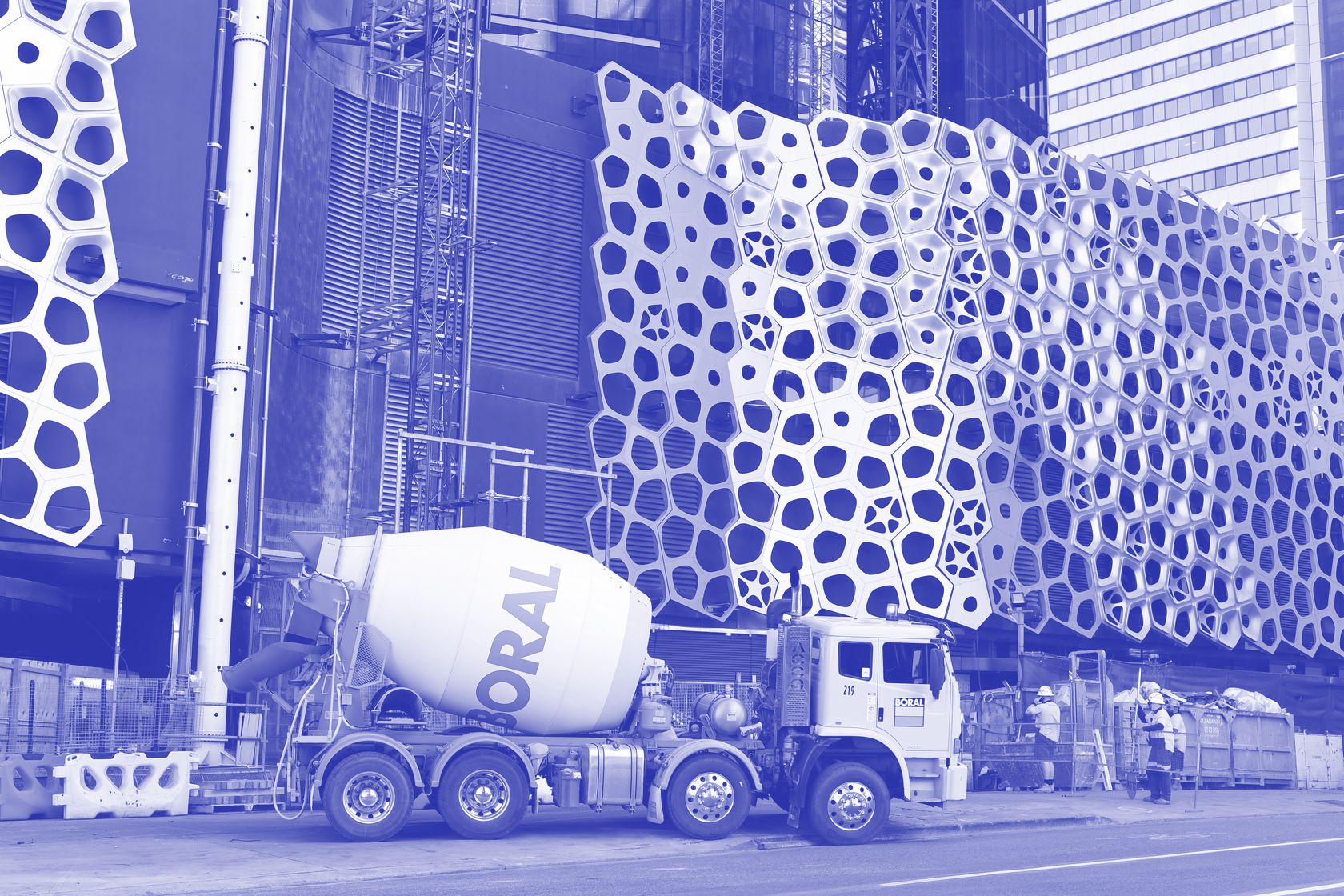
Like steel and aluminium, concrete is a foundational pillar of the net zero economy. It is everywhere, from roads, to factories and buildings and is not going away any time soon.
The challenge is to reduce the emissions profile of clinker, one of the key ingredients in cement, the main ingredient in concrete. Currently, concrete manufacturing generates up to 7% of global carbon dioxide emissions, making it a major contributor to climate change.
But unlike steel and aluminium, most of the solutions for decarbonising concrete are known, proven and have been in use in some way shape or form for decades. Experts say the reason why we haven’t fully decarbonised the cement making process mainly comes down to perception and logistical issues, rather than technical constraints.
Concrete is emissions-intensive due to the release of CO2 when limestone is converted into clinker, the building block of cement. This accounts for around 65% of total emissions, with the remainder coming from fossil fuels used to heat cement kilns, electricity used to mix concrete and transportation.
