Albanese plans social media ban for kids
Plus: News Corp shareholder push to break Murdoch's grip; HSBC to merge banking units in cost-cutting restructure; Deflation haunts Chinese economy, analysts say.


Good morning. Here's what happened overnight and what you need to know today.

1.
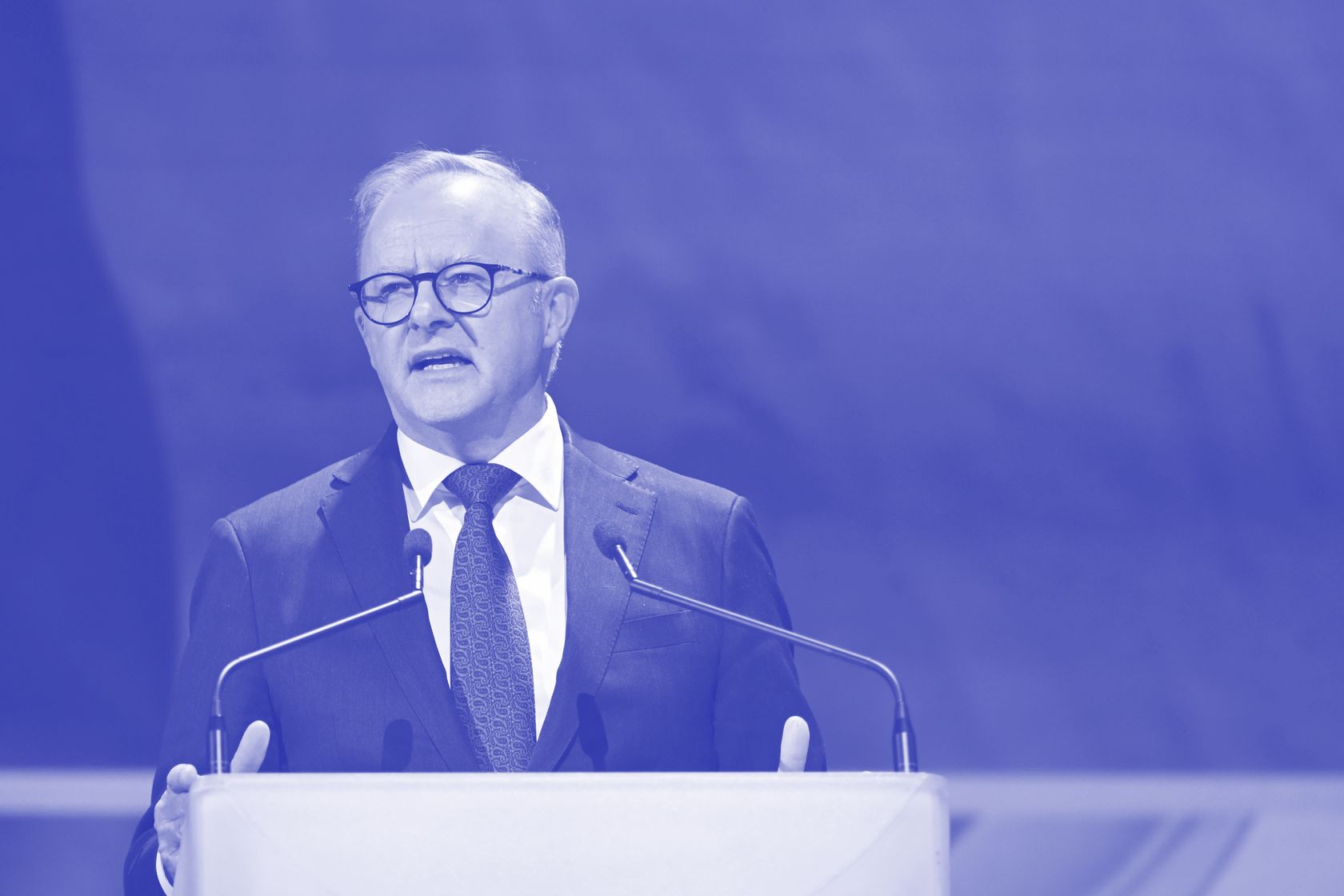
Media laws: Prime Minister Anthony Albanese unveiled plans to introduce legislation setting a minimum age for social media access to protect children. The move would prevent underage access to social media sites such as Facebook, Instagram, SnapChat, TikTok and X, as well as explicit sites. Albanese's proposal, inspired by South Australian Premier Peter Malinauskas' initiative, aims to address mental and physical harms linked to digital platforms. Details, including the exact minimum age, will be finalised before the next election, which is due by May. The age limit will be based on the results of ongoing trials and national cabinet deliberations. (Capital Brief)
2.
Murdoch’s grip: Hedge fund Starboard Value filed a non-binding shareholder proposal aimed at ending Rupert Murdoch's family control of News Corp by abolishing its dual-class share structure, media reported citing a letter to shareholders. Murdoch and his children control 41% of the voting power despite only owning 14% of the equity. Starboard's move challenges the Murdochs' grip on the company as the 93-year-old media tycoon is locked in a legal battle with some of his children to ensure control of his media empire passes on to his son Lachlan after his death. Starboard owns about 1.9% of Class A non-voting shares and 4.6% of Class B voting shares. In the letter, Starboard CEO Jeff Smith called News Corp’s dual-class structure "one of the worst forms," criticising its longevity. News Corp has previously resisted calls for reform, but the proposal could gain shareholder support. Reuters first reported the challenge over the weekend. (WSJ)(FT)
3.
HSBC restructure: HSBC is considering merging its commercial and investment banking units as part of new CEO Georges Elhedery’s cost-cutting efforts, according to reports citing unnamed people familiar with the plans. The combined unit, comprising over 90,000 employees, would generate about USD40 billion ($60 billion) annually and become HSBC's largest revenue source, Bloomberg said. Elhedery wants to simplify the bank’s structure, reduce management layers and increase fee-based revenue to offset declining net interest income, The Financial Times reported. No final decisions have been made and details of any potential restructuring could change, Bloomberg said. HSBC did not comment on the reports. (Bloomberg) (FT)
4.
Deflation fears: China's economy is showing signs of deepening deflation, according to economists and analysts from Morgan Stanley and BNP Paribas cited by Bloomberg. The GDP deflator, a key measure of price changes, has fallen for five consecutive quarters and will likely continue through 2025, marking China’s longest deflationary streak since data began in 1993, the publication said. “We are definitely in deflation and probably going through the second stage of deflation,” said Robin Xing, chief China economist at Morgan Stanley, citing evidence from wage decreases. “Experience from Japan suggests that the longer deflation drags on, the more stimulus China will eventually need to break the debt-deflation challenge.” Consumer confidence remains at record lows, with inflation weaker than forecast in three of the past four months and growing just 0.6% in August. (Bloomberg)
5.
Existential challenge: Former ECB president Mario Draghi warned the EU needs to increase investments by at least an extra €800 billion ($1.33 billion) annually to prevent falling further behind the US and China. In a landmark report on how to stem the bloc’s economic decline, Draghi said a "new industrial strategy" focused on boosting innovation, decarbonising and enhancing defence was needed. The 400-page report lays out how Europe’s lagging productivity and ultra-high energy costs, exacerbated by losing access to cheap Russian gas, are dampening growth. Without significant investment and a joint funding effort, Draghi warned, Europe faces slow economic decline and diminished global influence. “This is an existential challenge,” Draghi said. (Capital Brief)
6.
Apple’s day: Apple's iPhone 16 launch showcased its push towards artificial intelligence, but investor reactions were muted as shares slipped as much as 1.85% to USD216.72 each during the event. The new iPhone 16, starting at USD799, integrates generative AI features including custom emojis, text summaries and more. Many AI updates, however, won’t be available until next year. Other features include a customisable camera control button and improved battery life. Apple also introduced the Watch Series 10 and new AirPods, showcasing health innovations like a sleep apnoea detector and a clinical-grade hearing aid integrated into the products. Apple stock tends to underperform during its September iPhone launches, according to Morgan Stanley analysts. (Forbes)(Wired)(Bloomberg)
7.
AI flags: The US proposed new rules requiring advanced AI developers and cloud providers to report detailed activities to the federal government to ensure AI technologies meet safety and reliability standards. The Commerce Department’s Bureau of Industry and Security (BIS) on Monday said the proposed rule will cover the development of "frontier" AI models, cybersecurity measures and outcomes from so-called red-teaming efforts designed to test their potential misuse in cyberattacks or aiding the development of weapons of mass destruction. It follows a 2023 executive order by President Biden to safeguard AI systems critical to US security and follows stalled legislative efforts in Congress. The BIS conducted a pilot survey earlier this year and is now moving to formalise the reporting requirements, it said. (Bureau of Industry and Security) (Capital Brief)
8.
IPO window: Chinese home appliance maker Midea Group is set to raise up to HK$26.97 billion ($5.18 billion) through a Hong Kong IPO, the city’s largest in over three years. Midea is offering 492.1 million shares at HK$52 to HK$54.80, representing a 25% discount to its Shenzhen-listed stock at Friday's closing. Order books were covered on Monday, according to a Bloomberg report. The offering will run until Thursday and trading is expected to start on 17 September. Cornerstone investors include Cosco Shipping and UBS, who will buy about USD1.26 billion worth of shares equivalent to a third of the company, the news agency said. (Capital Brief) (Bloomberg)
