Albanese to press China for open dialogue
Plus: Netanyahu denounces Israeli’s military tactical plan; Beijing says US wants China to attack Taiwan; Adidas probes bribery accusations in China.


Good morning. Here's what happened overnight and what you need to know today.
1.
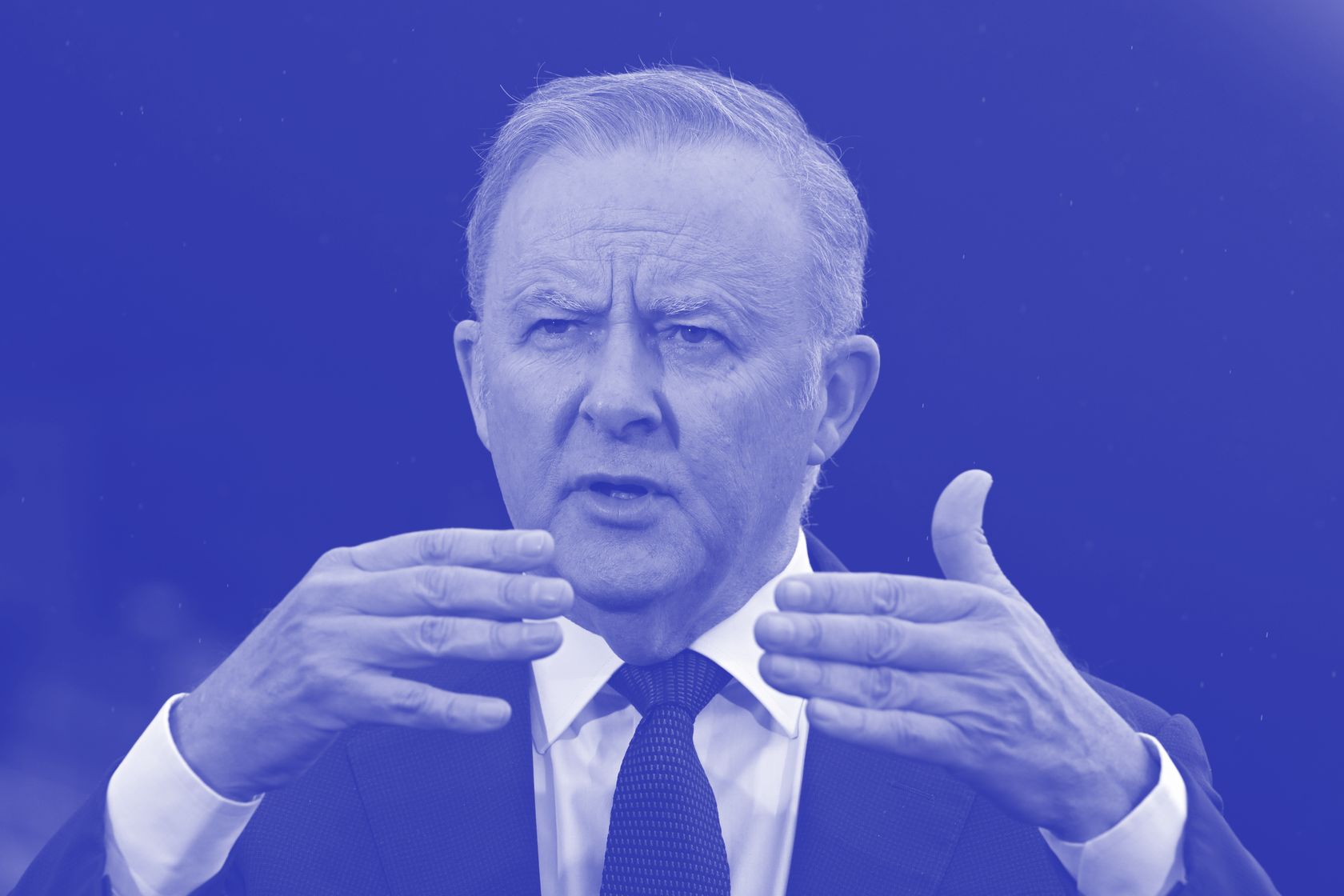
Panda diplomacy: Prime Minister Anthony Albanese will address ongoing challenges in the Australia-China relationship during Chinese Premier Li Qiang’s visit, emphasising that it is far better for both nations to be talking again. In a speech at a state lunch in Canberra later today, Albanese will tell China’s second-most powerful official the two countries “won’t always agree, and the points on which we disagree won’t simply disappear if we leave them in silence,” according to prepared remarks. “Whatever the issue, it is always better if we deal direct with each other. Consistent, steady engagement helps build and maintain stability across our region. We share an interest in protecting a stable order in our region,” the remarks released ahead of delivery state. At a meeting before the lunch, the PM is expected to tackle contentious issues including recent military incidents between Chinese and Australian forces, Beijing's support for Russia’s war in Ukraine, and remaining trade sanctions on Australian lobster and some beef. Albanese is also expected to push for the release of jailed Australian writer Yang Hengjun, whose supporters have urged the PM to advocate for his release on medical parole. Li’s visit, the first by a Chinese premier in seven years, began with a trip to Adelaide where he announced the loan of new pandas to replace the current pair at Adelaide Zoo, symbolising goodwill. Despite the complexities, both leaders aim to rebuild and stabilise relations. (The Conversation) (Sydney Morning Herald)
2.
Tactical breaks: Israeli Prime Minister Benjamin Netanyahu denounced the military's plans for daily pauses in operations along a key road in Gaza intended to help aid distribution, calling it "unacceptable." Shortly after Israel Defence Forces announced that military operations would halt daily from 0500 GMT to 1600 GMT in parts of Gaza to allow the flow of humanitarian aid into the enclave, Netanyahu's office stated he was unaware of the "tactical pause" and had made clear to his military secretary that “this was unacceptable to him.” The military clarified that normal operations would continue in Rafah, the main focus of its operation in southern Gaza, where eight Israeli soldiers were killed on Saturday when their armoured carrier was hit by an explosion. Concurrently, Israeli strikes hit several areas of Gaza, killing at least 19 Palestinians, Reuters reported. Protests erupted in Tel Aviv, with tens of thousands demanding a ceasefire-for-hostages deal with Hamas and criticising Netanyahu's handling of the nine-month war against Hamas. Ismail Haniyeh, Hamas’ Qatar-based leader, said the group’s response to the latest ceasefire proposal was consistent with the plan outlined by US President Joe Biden, expressing readiness for a comprehensive deal involving a ceasefire, withdrawal, and a prisoner exchange. Israel, however, claims Hamas rejected key elements of the proposal. (Financial Times) (Reuters)
3.
Xi’s take: Chinese President Xi Jinping told European Commission President Ursula von der Leyen the US is trying to provoke China into attacking Taiwan, the Financial Times reported citing unnamed sources. Xi conveyed similar warnings to his domestic officials, stating that he would not fall into the US's trap, the publication reported. The remarks, made during a meeting in April 2023, provide a window into Xi's thinking on the Taiwan issue, a major point of tension in US-China relations. Xi also said that a conflict with the US would destroy many of China’s achievements and undermine his goal of achieving a “great rejuvenation” by 2049, according to the FT. Chinese officials in Washington did not comment on Xi’s reported remark but told the publication the US was selling weapons to Taiwan and backing “independence separatist forces”. The report comes amid heightened tensions in the Taiwan Strait after China in May conducted military exercises following Taiwan's recent presidential inauguration. (Financial Times)
4.
Bribe stripes: Adidas is investigating allegations of large-scale bribery in China following a whistleblower complaint accusing senior staff of embezzling millions of euros, the Financial Times reported, citing unnamed sources. The anonymous letter, purportedly from "employees of Adidas China," was briefly posted on Chinese social media and named several employees, including a senior manager overseeing a €250 million ($405 million) marketing budget. The letter claims Adidas staff received kickbacks from service providers and alleges another senior manager accepted millions in cash and real estate from suppliers. Adidas confirmed it received the complaint on 7 June and said it was “intensively investigating” the matter, together with external legal counsel. No staff have been placed on leave, according to the FT’s sources. The investigation follows a challenging period in China for the world’s second-largest sportswear maker. Sales fell off a cliff between 2019 and 2022, leading to the appointment of Adrian Siu as country chief in 2022. He vowed to revive the brand, including by launching patriotic clothing lines. In March, the company said it expected a rebound in China this year, forecasting double-digit sales growth. (Financial Times)
5.
WaPo scandal: The Washington Post's publisher, Will Lewis, and its incoming executive editor, Robert Winnett, are facing allegations of using fraudulently obtained records during their tenure at The Sunday Times in London two decades ago. According to a former colleague and newspaper archives, Lewis and Winnett used stolen phone and company records in their articles, The Post’s arch-rival, The New York Times, reported in a bombshell article on Saturday. Lewis reportedly assigned an article in 2004 based on hacked phone records, contradicting his claims that his role had been solely to rectify problematic practices at the News Corp publication. A 2002 article with Winnett's byline relied on deception to obtain confidential information, the report said. The claims, reminiscent of the broader British newspaper phone-hacking controversy that led to the closure of The News of the World in 2010, come as Winnett readies to start helming one of America's most prestigious news organisations. The Washington Post declined to answer questions, stating that Lewis was clear about ethical lines. Winnett did not respond to questions. (New York Times)
6.
AI unicorn: Sakana AI, a Japanese startup co-founded by former Google researchers, is planning a funding round that would value it at over USD1 billion ($1.5 billion), making it the fastest Japanese company to achieve unicorn status. The OpenAI rival is in talks with US venture capital firms New Enterprise Associates, Khosla Ventures, and Lux Capital to raise USD125 million, Nikkei Asia reported. The new funds will accelerate its generative AI research, focusing on merging multiple small AI models to create sophisticated systems efficiently. The approach has attracted global investor interest amid the booming generative AI sector, the publication said. Founded in July 2023 by David Ha, Llion Jones, and Ren Ito, Sakana AI raised USD30 million in January from investors including NTT Group, KDDI, and Sony Group. (Nikkei Asia)
7.
Pay surge: Executive pay in the US is increasing at the fastest rate in 14 years, with the median CEO reward at S&P 500 companies rising by 12% in 2024, according to ISS Corporate, a unit of proxy firm adviser Institutional Shareholder Services. This contrasts with a 4.1% increase in US wage growth. Critics worry the re-approval of Elon Musk's historic pay package last week sets a precedent for further growth in pay awards, though others believe Musk's case is unique and won't broadly impact other executives' compensation. Major investors BlackRock and Vanguard, who supported Musk’s package - valued at USD56bn ($85 billion) when it was first approved in 2018 - typically rubber-stamp over 90% of executive pay proposals. William George, a former Exxon board member, told the Financial Times Musk’s win sends executives a message that “the sky’s the limit,” arguing excessive executive pay exacerbates social inequality and erodes trust in companies. (Financial Times)
8.
Scorching states: A record-breaking heat wave is set to blanket the US this week, with temperatures soaring from the Midwest and Ohio Valley to the Mid-Atlantic and Northeast. Starting Sunday, 268 million people will experience temperatures of at least 90°F (32.2°C), with heat indices surpassing 100°F in many areas. Major cities including Chicago, New York and Washington DC will be affected, and even the usually cool northern Maine will see temperatures in the upper 90s°F. A heat dome will cause the prolonged, intense heat, with minimal relief at night, posing significant health risks, according to the US National Weather Service, which issued “excessive heat” alerts across several states. The heat wave follows several others around the world this year and is expected to persist beyond this week, potentially setting daily and monthly temperature records. Electric grids and transportation networks will be strained, and heat-related illnesses may increase, particularly among vulnerable populations, the NWS said. (Bloomberg) (Axios)
