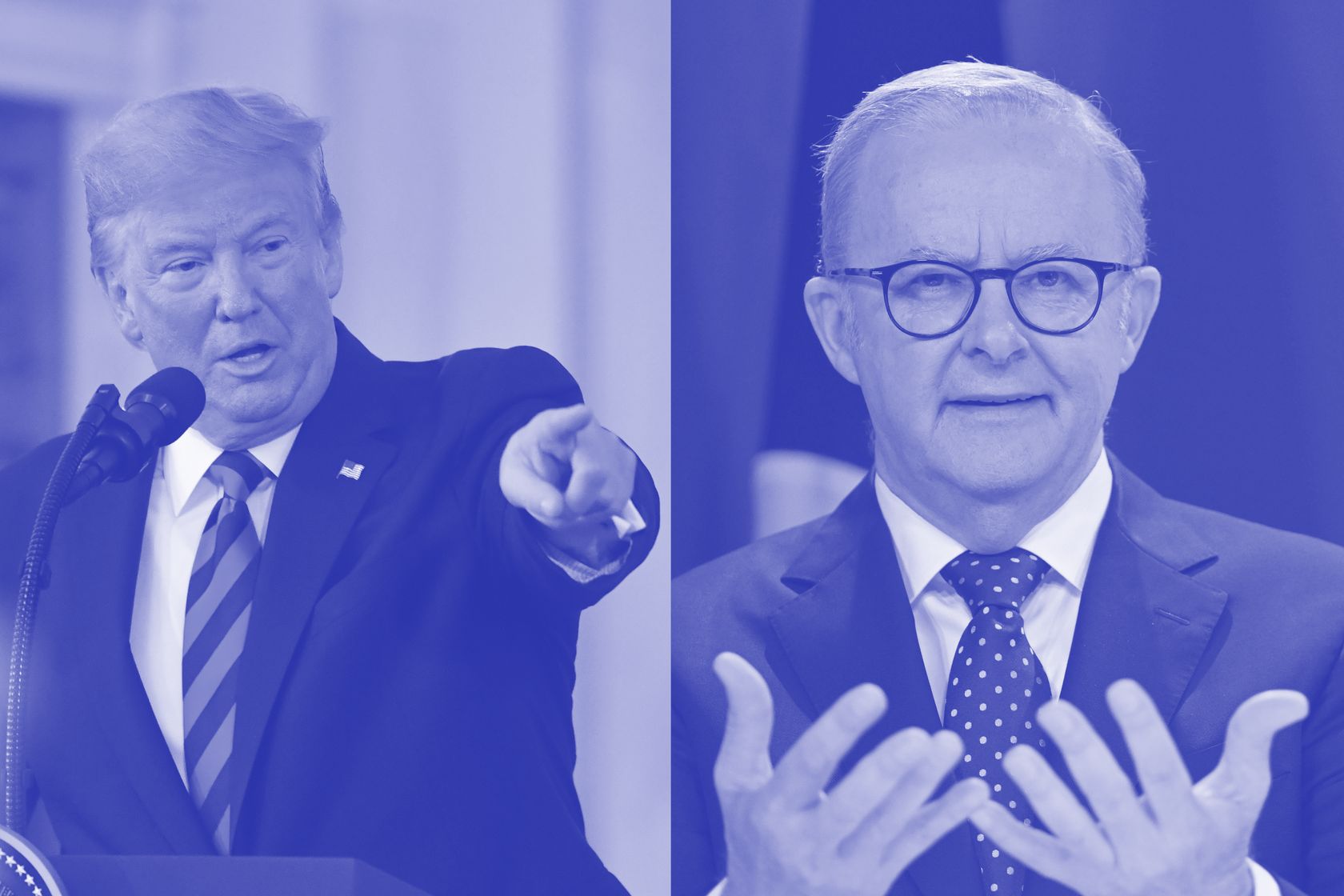
Albanese, Trump discuss economic ties in fourth phone call
Plus: Atlassian buys The Browser Company for $937m; Macquarie urges RBA to slash credit card fees and curb big bank gouging; BCA modelling says 50% 2035 emissions cut could cost at least $210b.

Good morning. Here's what happened overnight and what you need to know today.

1.
Critical call: Prime Minister Anthony Albanese and US President Donald Trump spoke by phone on Thursday night in what Albanese described on social media as a “warm and constructive” conversation covering trade, critical minerals and shared security interests. It was their fourth call since Trump’s re-election and comes ahead of a possible in-person meeting during the United Nations General Assembly in New York later this month. The call follows criticism of Albanese for not yet meeting Trump face to face, amid tensions over tariffs on Australian products and the US review of the AUKUS submarine pact. A planned meeting at the G7 summit in June was cancelled when Trump left early due to a Middle East crisis. A readout from Albanese’s office said the leaders discussed “economic co-operation” and “opportunities to work together” on critical minerals, but made no mention of AUKUS or tariffs. (Capital Brief)(SMH)
2.
Just browsing: Software developer Atlassian agreed to acquire maker of the Arc and Dia web browsers, The Browser Company for approximately USD610 million ($937.5 million) in cash, thrusting the productivity software developer into the competitive AI-driven browser market. CEO of The Browser Company, Josh Miller, said via X that the company will operate independently from Atlassian, and will continue developing its Dia browser after it dropped development of its previous browser product, Arc, last year. The deal is expected to close in the second quarter of its fiscal year 2026. The Browser Company reached a USD500 million valuation in a USD50 million raise in March 2024, and has raised a total of USD128 million across multiple rounds. Atlassian co-founder and CEO Mike Cannon-Brookes said via LinkedIn: “We're on a mission to create an AI-powered browser, optimised for the many SaaS applications living in tabs.” (Atlassian)(Tech Crunch)(Reuters)(Capital Brief)
3.
Surcharge schism: Macquarie Bank urged the RBA to curtail the expensive credit cards of its rivals and prevent large institutions from price gouging small businesses, in a distinct policy split from the big four banks. In its policy submission to the ongoing merchant costs and surcharging review, viewed by Capital Brief, Macquarie says the central bank should lower the cap on interchange fees on credit cards, drastically slashing their economics, or allow businesses to surcharge customers who pay with them, diminishing their value proposition. “Low interchange on credit cards would serve the public interest by allocating the costs of credit cards to their users, removing complicated incentive systems that shift costs to the merchant, and then via cross-subsidy to all consumers,” Macquarie wrote. The submission, authored by Macquarie’s head of banking product Drew Hall, throws its support behind debit, encouraging the RBA to remove surcharges on debit payments as well as cutting interchange. (Capital Brief)
4.
Transition warning: The Business Council of Australia released modelling that suggests the soon-to-be decided 2035 emissions reduction target would cost at least $210 billion if set at a rate consistent with ongoing efforts, but could cost upwards of $530 billion for a more ambitious target. The emission reduction scenarios capture the period between 2022 and 2035. If the federal government sets the 2035 emissions reduction target at 50% of 2005 levels, the net transition investment cost could be between $210 billion and $300 billion, according to the McKinsey modelling commissioned by the BCA. The BCA report states that a 50% reduction target assumes “Australia’s emission reduction efforts are maintained from a 29% reduction in 2022 and passing through a 43% reduction in 2030”, requiring all existing policy measures and commitments to be fully implemented as announced. The federal government is due to make a decision on a 2035 emissions reduction target by mid-September. (Capital Brief)
5.
Trump’s Fed: White House economic adviser and President Trump’s nominee to the Federal Reserve Board, Stephen Miran, told senators he would take unpaid leave from the administration if confirmed, rather than resign. Such an arrangement would make him the first modern Fed governor to retain such close ties to the White House. Known for advocating greater presidential influence over the Fed, Miran currently chairs the Council of Economic Advisers and was previously confirmed by Senate Republicans without Democratic support. Trump nominated him to serve through 31 January, with the option to extend if courts uphold the removal of Governor Lisa Cook. As Miran testified, news broke that the US Justice Department had opened a criminal mortgage fraud investigation into Governor Cook. Reuters reported that the probe includes grand jury subpoenas issued in Georgia and Michigan, and centres on allegations Cook listed multiple properties as primary residences to obtain favourable mortgage terms. (Capital Brief)(Reuters)
6.
401k Free-for-all: Goldman Sachs will partner with leading asset manager T Rowe Price, to develop and distribute private market products to retail investors. The companies announced that, as part of the agreement, Goldman Sachs intends to invest “through a series of open market purchases,” up to USD1 billion ($1.53 billion) in T Rowe Price common stock with the intention to own a stake of up to 3.5%. Goldman will use its balance sheet to hold equity in T Rowe Price, and the firms will collaborate on a range of investments for retirement savers and wealthy investors, the firms told Bloomberg. CVC has also turned its sights on US retirement savings and is developing products to tap into the USD9 trillion market following Trump’s executive order to open up the sector to alternative assets. CVC, which manages EUR200 billion in assets, plans to build out its US business to “take full advantage of it.” Elsewhere, Citigroup will shut its last in-house asset manager and transfer USD80 billion to BlackRock by year-end in a major wealth overhaul. (Bloomberg)(T. Rowe Price)(Bloomberg)(Barron's)(Capital Brief)(FT)
7.
They’re here: US First Lady Melania Trump on Thursday told tech CEOs including Google’s Sundar Pichai, IBM’s Arvind Krishna and OpenAI’s Sam Altman that “the robots are here” and that leaders must manage artificial intelligence “responsibly.” Hosting the White House Task Force on Artificial Intelligence Education, she promoted early AI literacy, highlighted her new Presidential AI Challenge for students and referenced the Take It Down Act, which targets AI-generated abuse. President Trump did not attend but cabinet members including Education Secretary Linda McMahon and Energy Secretary Chris Wright joined the meeting. The president will later host a separate Rose Garden dinner for more than two dozen tech and business leaders. Earlier, a report from the New York Federal Reserve said rising AI use has so far led to retraining rather than job losses, though future layoffs and reduced hiring could be expected. (NY Fed)(Axios)(The Hill)(White House)
8.
Bipartisan affair: Robert F Kennedy Jr, the head of the US Department of Health and Human Services, faced sharp bipartisan criticism in a contentious Senate Finance Committee hearing over his actions as health secretary, including firing the CDC director, dismissing all 17 members of the agency’s vaccine panel, and restricting access to Covid vaccines. Senators accused Kennedy of undermining immunisation efforts, spreading misinformation, and breaking promises made during his confirmation. He defended his decisions, repeated debunked claims about vaccine safety, adding “what we’re going to do is reorganize CDC... I need to fire some of those people.”. Whistle-blower complaints from senior NIH officials accused the administration of politicising science, cancelling vaccine studies, and retaliating against dissenters. (Bloomberg)(NYT)(Reuters)
