Albanese walks diplomatic tightrope in Shanghai
Plus: Musk’s SpaceX to pour US$2b into Xai, says WSJ; EU and Mexico race to avert Trump’s 30% tariff; US online sales jump 30% to smash forecasts in US$24b spree.

Good morning. Here's what happened overnight and what you need to know today.

1.
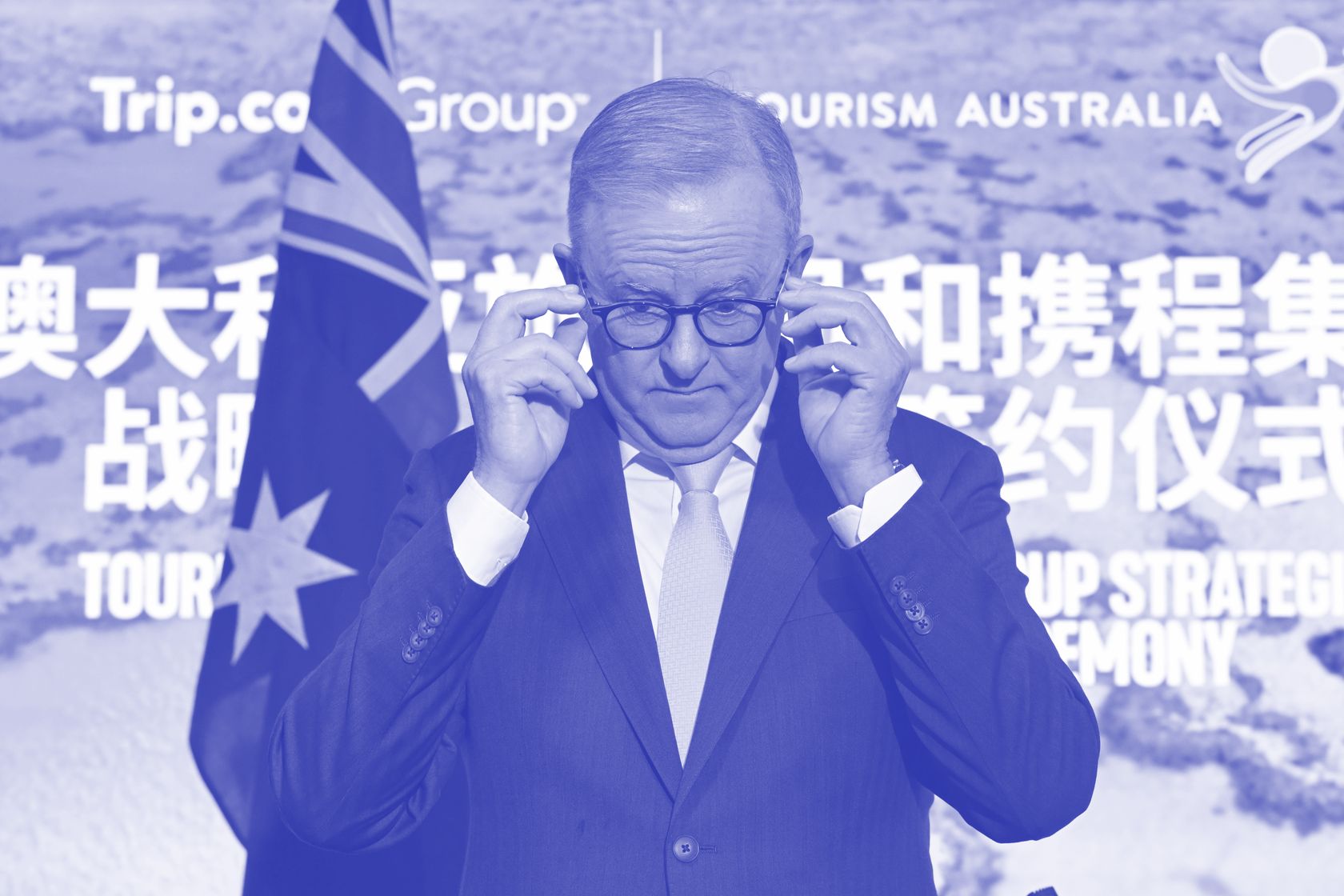
Treading carefully: PM Anthony Albanese said that Australia “supports the status quo” with regard to Taiwan on his first full day of his China tour on Sunday. Speaking to reporters in Shanghai, Albanese said that Australia does not support “any unilateral action” on Taiwan. Declining to give an explicit public assurance that Australia’s nuclear submarines would assist the US in a potential conflict with China, Albanese said: "We have a clear position and we have been consistent about that…We don't want any change in the status quo." The FT reported on Saturday that senior US defence official Elbridge Colby, who is leading Trump’s review of AUKUS, is pressing Japan and Australia to commit to the role they would play should the US and China begin a conflict over Taiwan. Albanese is set to promote Australian iron ore at a roundtable with China’s largest steelmakers on Monday, NewsWire reports. (ABC)(Capital Brief)(SMH)(FT)(AP)(The Australian)(Reuters)
2.
Musk empire: Elon Musk’s SpaceX will invest USD2 billion ($3 billion) into xAI, forming part of the USD5 billion equity round announced by Morgan Stanley in June, according to the Wall Street Journal. The investment round follows the merger of xAI with Musk’s social media company X which valued the combined company at USD113 billion. xAI released Grok 4 last week, with Musk calling it “the smartest AI in the world,” despite having struggled to gain comparable success achieved by rival OpenAI. The release of Grok 4 came amid controversy as the AI tool posted racist and anti-Semitic posts in response to users on the X platform. xAI has since said that it has taken steps to address the issues. In response to a post on X about whether Musk’s EV maker Tesla would also invest in xAI, Musk responded on Sunday: “It would be great, but subject to board and shareholder approval.” (WSJ)(Capital Brief)(Capital Brief)
3.
Trade talks: The EU suspended US trade war countermeasures as it pushes to reach a deal, European Commission President Ursula von der Leyen said in a press conference on Sunday, after the Trump administration said the US would increase tariffs on imports from the EU and Mexico from 1 August. Von der Leyen said that levies on US exports would be imposed only if the US follows through on the threat. Trump’s declaration on Saturday to impose 30% blanket tariffs on EU goods took officials by surprise, prompting EU lawmakers to postpone its countermeasures. “We have always been clear that we prefer a negotiated solution with the US. This remains the case,” von der Leyen said. French cheese and wine producers warned the 30% tariffs level on US imports would be disastrous for the food industry. Meanwhile, Mexican officials projected confidence the country can strike a deal to dodge Trump’s threatened 30% tariffs, with hopes pinned on the USMCA framework. (FT)(Politico)(Reuters)(Truth Social)
4.
Sales bonanza: Online spending surged USD24.1 billion ($36.7 billion) across US retailers between 8-9 July, as ‘Black Friday in Summer’ outpaced forecasts from Adobe Analytics. Reuters reports that retailers recorded online sales growth of 30.3% during events that included Amazon Prime Day, compared with Adobe’s projection of 28.4%. Several major retailers including e-commerce giants Amazon.com, Walmart, Target and Best Buy have been launching deal events with strong discounts, encouraging shoppers to trade up on expensive items they might normally forgo. Amazon extended its sales window to 96 hours, up from the typical 48 hours, featuring aggressive promotions on categories ranging from apparel to electronics. Mobile shopping was the dominant transaction channel during the Prime Day event, driving 53.2% of online sales, above Adobe's forecast of 52.5%, while overall discounts across US retailers were between 11% and 24%, compared with the prior forecast range of 10% to 24%. (Reuters)
5.
Cash crunch: Australia’s largest banks and retailers agreed to tip in $25 million to keep Armaguard operating until the end of the year, after the cash transportation business owned by billionaire Lindsay Fox warned it was not profitable and could shut. The Australian Financial Review reported from sources an agreement was reached over the weekend and is expected to be announced today. Commonwealth Bank, Westpac, NAB, ANZ, Coles, Woolworths, Bunnings and Australia Post previously paid Armaguard $50 million in 2024 to stay afloat. It handles 90% of all cash movements in Australia of about $6 billion a week. The Australian Banking Association said the funding extension “will allow work to continue on the development of an independent pricing mechanism to support a sustainable cash in transit business in the longer term”. Deloitte Access Economics has begun consulting pubs, clubs and other users. (AFR)
6.
Chip tension: Nvidia CEO Jensen Huang said the Chinese military is unlikely to use US AI chips because access “could be… limited at any time” and “they simply can’t rely on it,” in an interview aired Sunday on CNN. His comments come ahead of a planned media briefing in Beijing on 16 July, amid heightened scrutiny from Washington. Earlier this month, US Senators Elizabeth Warren and Jim Banks urged Huang not to meet with Chinese military-linked firms or entities on the US restricted export list during the trip. In May, Huang had called earlier export rules a “failure” and warned the current approach will fuel rival Chinese AI development. Nvidia, which last week passed the USD4 trillion valuation, made USD17 billion in China last fiscal year, or 13% of its total revenue. (CNN)(Bloomberg)(Reuters)
7.
Capital current: Memecoin platform Pump.fun raised USD600 million ($912 million) in just 12 minutes on Saturday (Sunday AEST), one of the largest initial coin offerings ever, Bloomberg reported. The Solana-based platform had said it planned to sell 150 billion tokens at USD0.004 each, after selling 180 billion at the same price to private investors. Co-founder Alon Cohen told the publication the public sale had raised USD600 million, bringing the total to USD1.32 billion. Investors in the US and UK were excluded. Meanwhile, former Sequoia Capital partner Matt Miller is reportedly close to raising USD400 million for a new London-based tech fund, Evantic Capital, which includes participation from Sequoia. The Financial Times reported Miller has secured at least USD355 million and will focus the fund on European AI and infrastructure start-ups at the series B stage. Miller left Sequoia after a failed attempt to oust Klarna’s board chair, but continues to represent the firm on some boards.(FT)(Bloomberg)
8.
Israel conflict: Ten people, including six children, were killed and dozens injured by an Israeli airstrike while waiting to fill water containers on Sunday, local health officials say. Witnesses said a drone fired a missile at a crowd queuing with empty jerry cans next to a water tanker in al-Nuseirat refugee camp. The Israeli Defense Forces (IDF) said that there had been a “technical error” with a strike targeting an Islamic Jihad “terrorist” causing the missile to land “dozens of metres” from the target. The IDF said it was aware of the “claim regarding casualties in the area as a result”, that it works to mitigate civilian harm “as much as possible” and “regrets any harm to uninvolved civilians.” The news comes as progress on talks aimed at securing a ceasefire in Gaza is stalling, with the sides divided over the extent of Israel’s withdrawal from the enclave. (Reuters)(Reuters)(BBC)
