Amazon backs away from tariff labels after Trump call
Plus: Beijing vows never to kneel to US pressure; Trump to ease auto tariff pressure on US firms; Canada’s Carney to form minority government as Poilievre loses long-held seat.

Good morning. Here's what happened overnight and what you need to know today.

1.
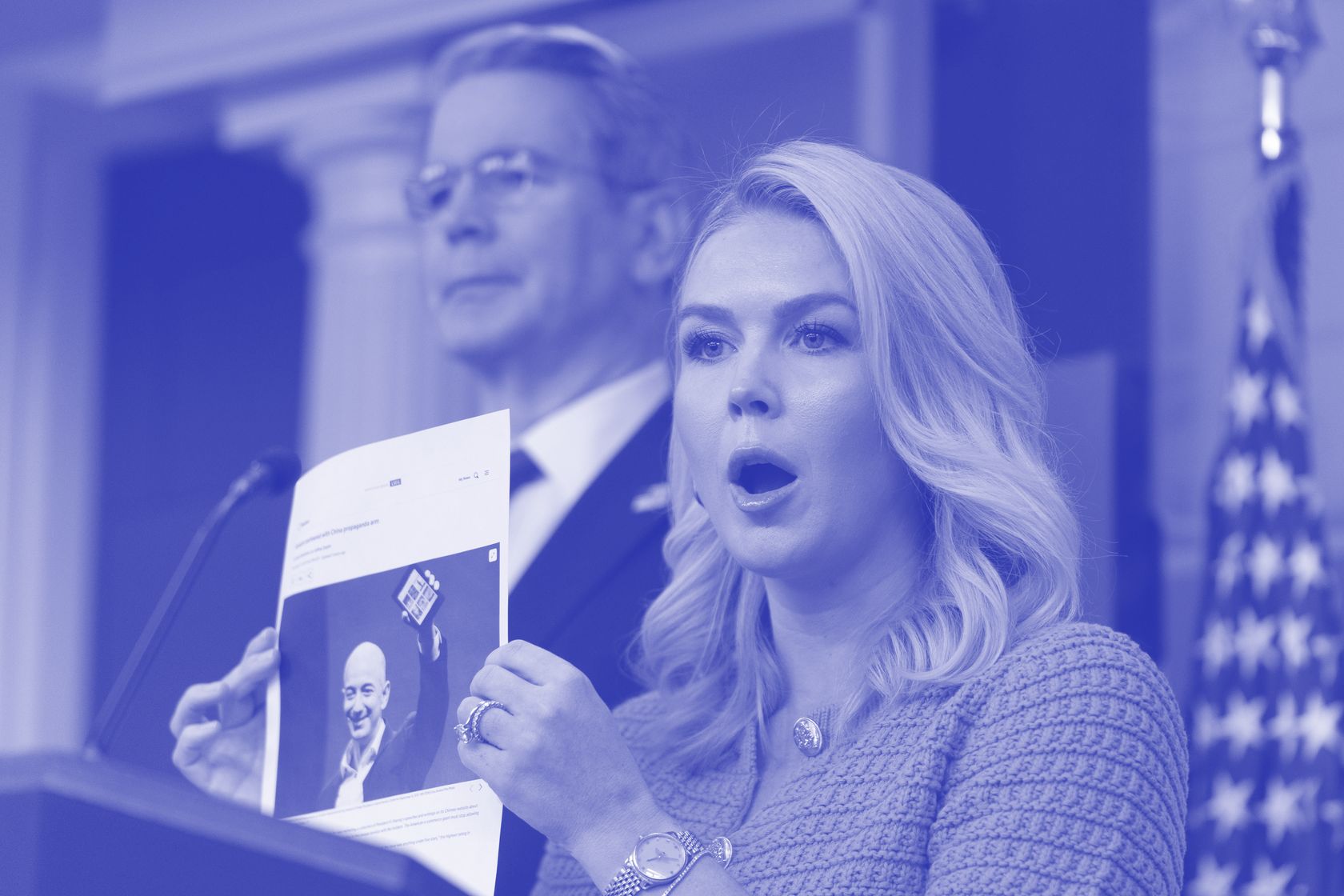
Tariff tiff: Amazon.com denied reports it planned to display the cost of Donald Trump’s tariffs on products, after the White House blasted the reported move and the US president called Jeff Bezos to complain. The White House seized on a brief Punchbowl News report that Amazon would “soon” begin displaying the cost of US tariffs on individual products next to the total listed price. White House Press Secretary Karoline Leavitt called the purported plans “a hostile and political act”. Amazon said the idea was considered by the team running its Haul store and “was never a consideration for the main Amazon site.” A spokesperson said the proposal “was never approved and is not going to happen.” Amazon reports earnings Thursday, with its stock down more than 20% from a February record high. Meanwhile, companies like Temu and Shein are bracing for 120% levies and the scrapping of the “de minimis” exemption for small packages from China and Hong Kong. (Bloomberg)
2.
Dragon roar: China’s Foreign Ministry posted a video vowing it would “never kneel down” to US coercion, calling America a “paper tiger” and urging other countries to resist “bullying”. The video, promoted internationally, criticised Trump’s tariffs and said, “bowing to a bully is like drinking poison to quench thirst”. Foreign Minister Wang Yi reinforced at a BRICS meeting that “if we choose to give the bully an inch by remaining silent, giving in or backing down, we are only emboldening them to take a yard.” Beijing retaliated with 125% tariffs, rejected Boeing jets, and restricted exports of key materials. Officials said China could secure food and energy supplies without US imports. Treasury Secretary Scott Bessent said China could lose 10 million jobs quickly. Meanwhile, Bloomberg reported that China’s National Medical Products Administration asked drugmakers to study reducing reliance on US medical goods. Although Trump has said tariffs could 'substantially' come down, China rejected claims that tariff negotiations are underway and that Trump and Xi have been in contact. (WSJ)(Bloomberg)(WaPo)
3.
Tariff breaks: Donald Trump was set to sign an executive order to soften the impact of his 25% tariffs on autos and auto parts, following warnings from automakers that the tariffs would raise prices, reduce sales and make US production less competitive. Companies that finish vehicles in the US will receive credits equal to 15% of the car’s value this year and 10% next year, effectively offsetting the auto parts tariffs, a senior Commerce Department official told reporters, the Associated Press said. Automakers paying the 25% vehicle tariff will not also be charged duties on steel, aluminium, or Canadian and Mexican goods. Instead, they will pay whichever tariff is higher, the official said. The move would also be retroactive, meaning that automakers could be reimbursed for such tariffs already paid. The 25% tariff on finished foreign-made cars went into effect early this month, while the upcoming parts tariffs are still scheduled to begin 3 May. (Capital Brief)(Reuters)(Bloomberg)(WSJ)
4.
Trump rebuffed: CBC News projected Mark Carney’s Liberals will form a minority government, winning enough seats to lead the country but falling short of a decisive majority. In his victory speech, Carney said Trump “is trying to break us so America can own us. That will never ... ever happen.” His first official act was a call with French President Emmanuel Macron. Conservative Leader Pierre Poilievre lost his Carleton seat after seven straight terms. He said he has no intention of stepping down as leader, citing the party’s highest projected vote share since 1988. Poilievre was tipped to be Canada’s next leader at the end of 2024, up 25 points ahead of the highly unpopular then-Prime Minister Justin Trudeau. However, the Conservative leader was unable to distance himself from US President Donald Trump, and his ‘common sense’ campaign, which gained endorsements from Trump allies, was flatly rejected by voters. Poilievre first won an Ottawa seat in 2004 at the age of 25, and has held onto a seat in the area since then. (Capital Brief)(CBC)(Politico)
5.
Confidence crash: Americans’ confidence in the economy slumped in April to the lowest level since the onset of the pandemic, with the Conference Board reporting a 7.9-point drop in its consumer confidence index to 86. A separate measure of short-term expectations fell 12.5 points to 54.4, the lowest in more than 13 years. Mentions of tariffs reached an all-time high, and nearly one-third of consumers expect hiring to slow. Meanwhile, UPS said it will cut around 20,000 jobs and close 73 buildings by June, citing “new or increased tariffs” and economic conditions. Despite weak sentiment, the S&P 500 posted its best six-day advance since March 2022, according to Bloomberg. (Conference Board) (Bloomberg)(WSJ)
6.
Guidance skid: General Motors, Volvo Cars and Porsche all pulled or cut 2025 profit guidance due to uncertainty surrounding US President Donald Trump’s proposed tariffs on steel and autos. GM’s Q1 net income fell 6.6% to USD2.8 billion ($4.4 billion), while Volvo’s profit dropped to 1.2 billion kronor from 3.34 billion a year ago. Volvo also announced 18 billion kronor in cost reductions, including job cuts, and will prioritise its US and China markets. Porsche cut its sales and profit targets, revising return expectations to 6.5-8.5% from 10%-12%. GM’s CFO said the financial impact of Trump’s 25% tariffs could be “significant” but wouldn’t give specifics ahead of GM’s rescheduled investor call which has been pushed to Thursday. The US carmaker also suspended buyback activity until there is more clarity on the impact of tariffs. Outside of autos, Kraft Heinz, Electrolux and JetBlue Airways Corp also slashed their outlooks for 2025. (Volvo)(GM)(CNBC)(WSJ)(Reuters)
7.
Sabre rattling: Prime Minister Anthony Albanese and Treasurer Jim Chalmers dismissed warnings from S&P that election spending by both major parties could risk Australia’s AAA credit rating, as top economists raise concerns it will take a crisis to force politicians to repair the budget position. Albanese said Labor’s costings had improved the budget bottom line by $207 billion, while Chalmers said S&P should be “reassured” by the government’s responsible economic management. During a press conference in the Southern Highlands, Opposition Leader Peter Dutton also deflected, claiming the Coalition manages budgets more effectively. Economists Steven Hamilton, Shane Oliver, Ross Guest, Cassandra Winzar and Chris Richardson warned about fiscal sustainability, the rise of off-budget spending and the lack of fiscal discipline. He described the off-budget financing trend as a way for politicians to “dump their trash” and noted S&P’s warning is akin to “sabre rattling” that won’t alter political behaviour without stronger market pressure. (Capital Brief)
8.
Prudent provisioning: While HSBC and Deutsche Bank’s Q1 earnings came in stronger than expected, both lenders set aside provisions to reflect concerns tied to global macro uncertainty. Deutsche Bank added €70 million ($125 million) to its provisions in the first quarter, while credit provisions overall for the quarter rose to €471 million, ahead of estimates. As part of HSBC’s USD900 million charge for the quarter, the bank took a USD150 million hit on the back of trade instability. HSBC said expected losses in a scenario where tariffs slow global growth, could rise by another USD500 million. Across the pond, Wells Fargo announced a USD40 billion stock buyback following its AGM on Tuesday, with the board authorising the repurchases to begin when the current USD30 billion program (announced two years ago) is completed. (Bloomberg)(WSJ)(HSBC)(Deutsche Bank)(Wells Fargo)
