Angus Taylor sets the stage for first Liberal leadership challenge since 2018
Plus: Strong US jobs growth pushes back Fed rate cut expectations; Surprise jolts US markets as Congress eyes tariff vote; Anthropic takes low-key approach to Aussie market entry.

Good morning. Here's what happened overnight and what you need to know today.

1.
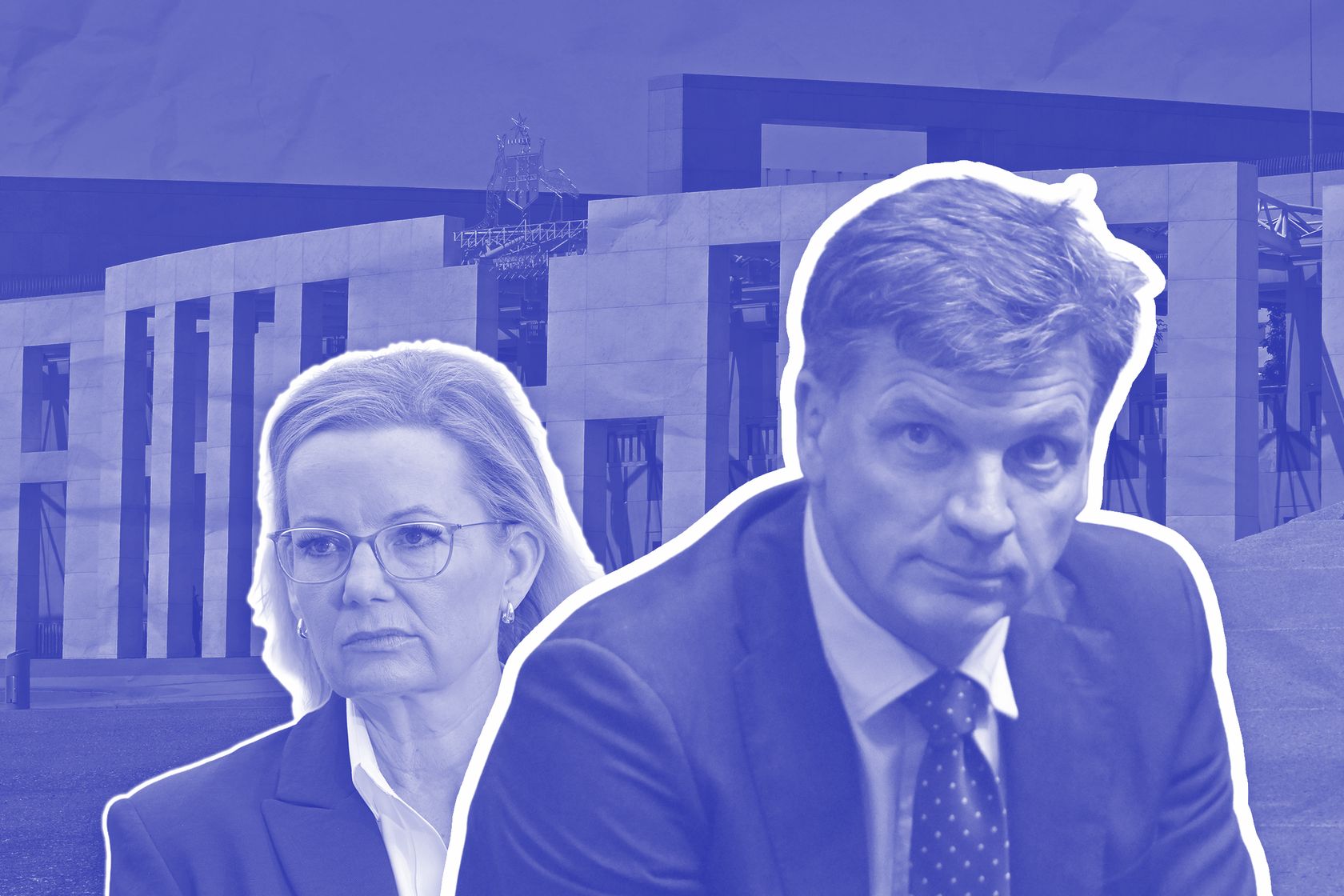
Liberal leadership: Liberal MP Angus Taylor’s resignation from the frontbench is set to trigger the party’s first challenge to a sitting leader since Malcolm Turnbull’s ousting in 2018. Raising concerns about the direction of the Liberal Party under Opposition Leader Sussan Ley, but without explicitly declaring plans to challenge her leadership, Taylor told reporters on Wednesday evening: “I don’t believe Sussan Ley is in a position to be able to lead the party as it needs to be led.” Taylor’s bid to oust Ley, well after her colleagues concluded her leadership was terminal, has dragged on longer than many of his colleagues had hoped. After weeks of posturing by possible leadership contenders Taylor and Andrew Hastie, the party’s leadership has been left to fester. Since Ley took the leadership in the wreckage of May’s federal election, a series of polls have shown Ley has failed to connect with voters, with the latest Newspoll showing the Liberal and Nationals’ vote at just 18%, while One Nation sits at 27%. Taylor's resignation, ahead of an expected leadership spill on Thursday or Friday, could finally bring an end to this period of destabilisation, either by giving Ley a fresh mandate and a right to demand loyalty or anointing a new leader. (Capital Brief)
2.
Hiring surprise: Stronger-than-expected US job growth in January pushed back expectations for Federal Reserve rate cuts, after employers added 130,000 jobs and the unemployment rate fell to 4.3%, prompting traders to pare bets on easing as soon as June. Economists had expected the number to come in between 65,000 and 70,000. Interest rate futures showed the probability of a June rate cut fell to under 50%, down from above 60% earlier in the week, according to Bloomberg. Expectations for the next reduction shifted to July, while interest rate swaps showed less than a 5% chance of a March move. Treasury yields jumped, with the two-year rising about 5 basis points to 3.5% and the 10-year up around 2 basis points to 4.16%. Revised figures from the Bureau of Labor Statistics showed just 181,000 jobs were added in 2025, down from the previously reported 584,000. The stronger labour market print coincided with comments from Kansas City Fed President Jeffrey Schmid, who warned in a speech that further rate cuts risk allowing inflation to persist. Meanwhile, Donald Trump hailed the jobs figures on Truth Social, writing “GREAT JOBS NUMBERS, FAR GREATER THAN EXPECTED!” and said the US “should be paying the LOWEST INTEREST RATE, by far,” repeating his argument that doing so would save at least USD1 trillion a year in interest payments on the national debt. (Capital Brief)(WSJ)(Bloomberg)(Reuters)(FT)
3.
Market rethink: US Treasury yields jumped and stocks lost momentum after a much stronger-than-expected jobs report saw traders push expectations for a first cut to July from June. The S&P 500 was trading little changed in the afternoon, while software stocks slumped. Bitcoin was 3.4% lower at around USD66,300 and oil was 1.5% higher. Robinhood shares dropped as much as 13% after missing revenue expectations, and Moderna fell after the FDA declined to review its flu vaccine. Mattel shares plunged as much as 28% after holiday discounting hit margins and it issued a weak 2026 profit forecast, while shares in home-listing website Zillow fell despite reporting a quarterly profit and revenue beat. Meanwhile, Instagram head Adam Mosseri is set to testify in a LA trial over social media addiction, where he will face questions about internal messages describing the app as a “drug” and its impact on teen mental health. The case, involving a 20-year-old woman who says Instagram contributed to her anxiety, is a key test for hundreds of similar lawsuits. And the US House is set to vote on a Democratic-led measure to cancel tariffs Trump imposed on Canada, in what would be the first formal congressional challenge to his trade policy since returning to office. (Bloomberg)(WSJ)(Reuters)
4.
Charm offensive: AI lab Anthropic has been quietly laying the foundations for an Australian expansion, but unlike its chief rival OpenAI, which arrived in December with a splashy launch party, it's taking a slower, low-key approach. Anthropic is working behind the scenes to establish ties in the local market, with the clearest public signal on this set to come this week when Anthropic is confirmed as a major sponsor of Blackbird's annual Sunrise conference. Capital Brief has also learned the company will send three senior leaders to speak at the event. Multiple people familiar with the company's local activity say Anthropic has held exploratory conversations with all three of Australia's major venture firms — Blackbird, Square Peg and Airtree — as it begins to map out the market. A source close to Anthropic's local activity said the company is still in the early stages of working out its Australian strategy and that no official senior leadership offers have yet been made locally. (Capital Brief)
5.
Arctic Sentry: The North Atlantic Treaty Organisation (NATO) announced it will boost its presence in the Arctic and High North, to safeguard NATO members and maintain stability in “one of the world’s most strategically significant” areas. The launch of the mission, dubbed ‘Arctic Sentry’, comes just weeks after US President Donald Trump rattled the transatlantic partnership by asserting US claims over Greenland, a territory of Denmark. Trump walked back the threats after international outcry and a meeting with NATO secretary general Mark Rutte in Davos, Switzerland. A NATO statement shared on Wednesday said the two leaders agreed NATO should collectively take more responsibility for the defence of the region considering Russia’s military activity and China’s growing interest there. NATO said that Allied Command Operations will use Arctic Sentry to better coordinate its actions in the region. NATO defence ministers are scheduled to meet in Brussels today. (NATO)(Capital Brief)
6.
Canada mourns: “The nation mourns with you,” Prime Minister Mark Carney said as Canada reels from one of its deadliest mass shootings in recent history. Nine people were killed and more than 25 injured after a gunwoman opened fire at a school and nearby home in the remote British Columbia town of Tumbler Ridge. Police said six victims were found dead inside Tumbler Ridge Secondary School, a seventh died on the way to hospital and two more were found at a residence nearby. The suspect, described in a shelter alert as a “female in a dress with brown hair”, was also found dead at the school from a self-inflicted injury. Authorities said they believe the shootings are connected but have not confirmed it. The suspect has been identified but her name has not been released. The motive remains unclear. Carney cancelled planned travel and ordered flags lowered to half-mast for a week. He thanked world leaders including King Charles III, Emmanuel Macron, Keir Starmer, and others who had reached out in solidarity. (AP)(BBC)(The Guardian)
7.
Unsustainable fiscal path: The United States budget outlook has deteriorated by USD1.4 trillion, the Congressional Budget Office warned, raising its 10-year deficit forecast after Donald Trump’s tax law and immigration policies, and calling the fiscal path “not sustainable”. The deficit is projected to be USD1.85 trillion, or 5.8% of GDP, in fiscal 2026 and climb to USD3.1 trillion by 2036. Debt held by the public is expected to exceed 100% of GDP this year and rise to 120% by 2036, surpassing its post-World War II peak by 2030. Trump’s tax law will add USD4.7 trillion to deficits, while immigration restrictions add USD500 billion. Tariffs are forecast to reduce deficits by USD3 trillion. Net interest costs will more than double to USD2.1 trillion over the decade, reaching 26% of federal revenue. The CBO projects real GDP growth of 2.2% in 2026 before slowing to 1.8%, and expects inflation to fall from 2.7% in 2026 to the Federal Reserve’s 2% target. Unemployment is forecast to average 4.6% in 2026. “Our budget projections continue to indicate that the fiscal trajectory is not sustainable,” CBO Director Phillip Swagel said. (WSJ)(Bloomberg)
8.
Comyn up roses: What does a half-year result need to do to add $20 billion to a bank’s market cap? The answer is whatever the Commonwealth Bank published yesterday (even if that includes 65 mentions of artificial intelligence). Australia’s biggest bank had its best day in six years, jumping almost 8%, beating market expectations and dragging the entire index higher. “The last six months is a good example of where the operational and strategic execution has been very good across all of the businesses,” CBA chief executive Matt Comyn told Capital Brief. Yesterday’s result was impressive, but the fact the bank lifted its pre-provision operating profit by 2.5% while its share price has climbed close to threefold suggests CBA is still trading like a high-beta stock. The question now is whether CBA can maintain its growth momentum in the second half, in what Comyn concedes is an unusually fierce market. “The key, I think, is adapting to the environment and this competitive intensity which has been increasing for some time,” Comyn said. (Capital Brief)
