Apple splashes $785b amid Trump tariff threat
Plus: US-Ukraine mineral deal edges closer, tied to ‘durable partnership’; Microsoft said to scrap US data centre capacity; Tech Council seizes on Trump threats to fight bargaining code.

Good morning. Here's what happened overnight and what you need to know today.
1.
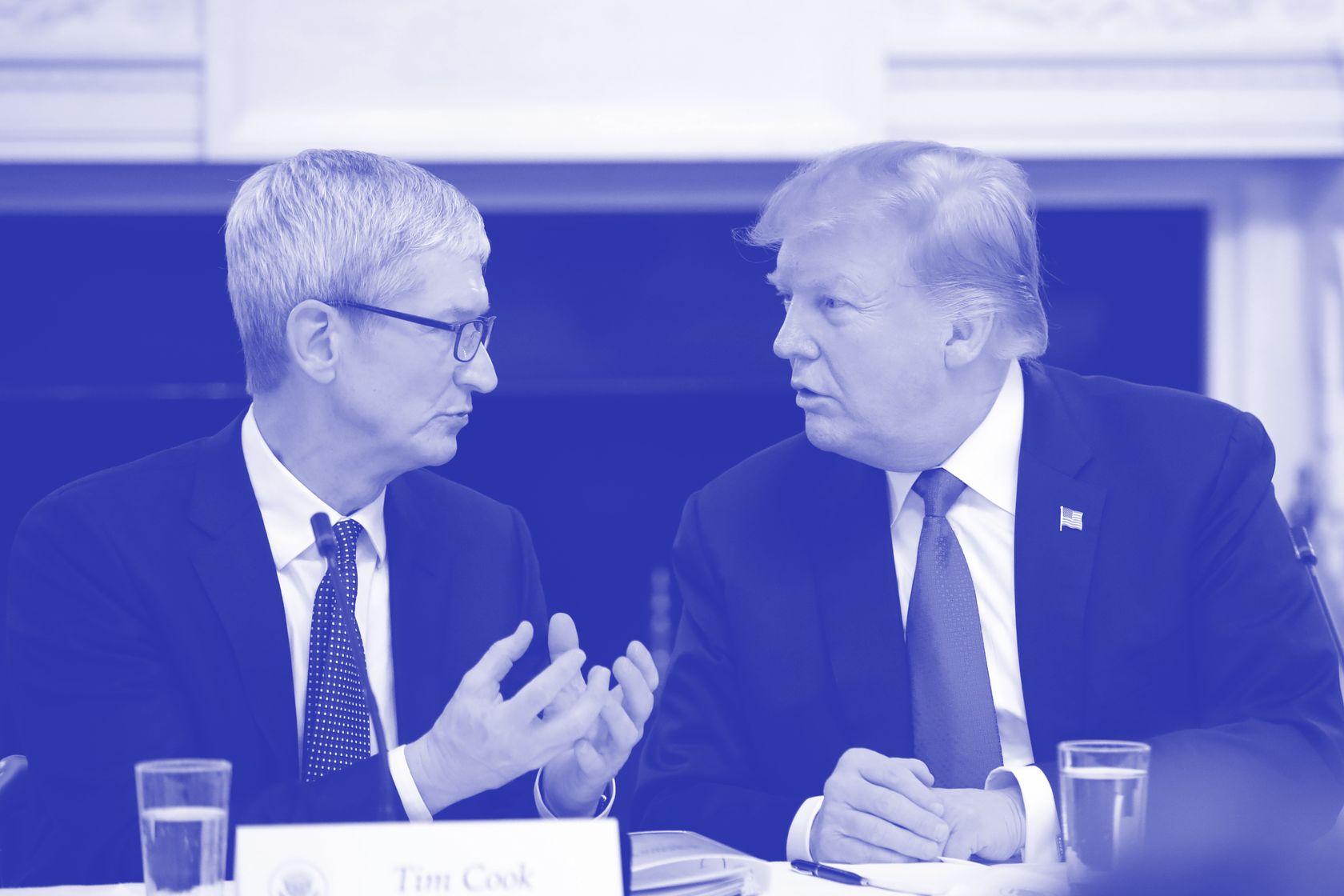
America first: Apple CEO Tim Cook announced the tech giant will hire an additional 20,000 over the next four years as tech leaders seek to gain favour with President Trump ahead of possible trade tariffs. The hires are part of Apple’s largest-ever investment plan—a USD500 billion ($785.4 billion) American spending package. It includes a new manufacturing facility in Houston to produce servers for Apple Intelligence, the doubling of Apple’s US Advanced Manufacturing Fund from USD5 billion to USD10 billion, and a training academy in Michigan. The announcement comes days after Cook met with Trump in the Oval Office, where the president said “He’s investing hundreds of billions of dollars,” implying Cook’s investment could help Apple avoid tariffs. Trump had threatened to impose an additional 10% tax on imports from China, where Apple manufactures most of its products. (Apple)(Capital Brief)
2.
Kyiv’s cut: Ukraine is finalising a deal with the US to give Washington a share of its natural resources, Bloomberg reported citing sources and Deputy Prime Minister Olha Stefanishyna. The agreement is a key part of the Trump administration’s plan to broker a ceasefire in Russia’s three-year war on Ukraine. A person familiar with the talks told Bloomberg the draft is nearly agreed upon, and Ukraine is awaiting a US response. A draft text says the US will commit to a “free, sovereign and secure” Ukraine, a “lasting peace,” and a “durable partnership” while signalling plans to invest. President Volodymyr Zelenskiy said the US dropped its demand for Kyiv to contribute USD500 billion ($785.6 billion) from resource extraction as repayment for aid, saying the figure was closer to USD90 billion. US officials maintain security guarantees are a separate issue, while Ukrainian Prime Minister Denys Shmyhal said Kyiv wants a joint investment fund with Washington. (Bloomberg)
3.
AI mosaic: Microsoft has scrapped leases for “a couple of hundred megawatts” of US data centre capacity, a TD Cowen analyst said, a rare move that may signal AI infrastructure oversupply. The company also paused converting statements of qualifications (SOQs) into leases, according to the note published Friday (Saturday AEDT). It comes as investors question AI infrastructure demand, particularly after China’s DeepSeek unveiled lower-cost AI models. A Microsoft spokesperson said its USD80 billion ($126 billion) infrastructure spending plan “remains on track,” adding “while we may strategically pace or adjust our infrastructure in some areas, we will continue to grow strongly in all regions.” The report is believed to have contributed to last Friday’s AI-linked stock sell-off. TD Cowen said Microsoft used “facility/power delays as justification” for the lease terminations. Jefferies, hosting Microsoft’s investor relations team in Sydney, said the company “strongly refuted” any change to its data centre strategy. (Capital Brief)(Reuters)(CNBC)
4.
Tariff tactics: The Tech Council of Australia is urging the government to collaborate with Donald Trump rather than confront him, after the US president vowed to push back against foreign nations attempting to regulate America’s largest technology companies. Trump signed an executive order on the weekend directing his administration to penalise countries, potentially including Australia, that “unfairly” tax US tech giants such as Meta, Google and Microsoft. The TCA, which represents Google and Microsoft but not social media platforms, says the memo signals that tech is central to Trump’s growth agenda. Meanwhile, News Corp’s top US government affairs executive, Todd Thorpe, visited Canberra as uncertainty grows over Labor’s news bargaining incentive. While sources suggest Thorpe believes Australia is not a primary target of Trump’s trade actions, the situation remains volatile. The Albanese government insists the levy is a priority, but consultations are expected to be delayed until after the federal election. (Capital Brief)(Capital Brief)
5.
AI allocation: Chinese tech giant Alibaba will invest 380 billion yuan ($82.34 billion) on artificial intelligence and cloud infrastructure over the next three years as it aims to capitalise on AI opportunities. The investment will exceed the company’s spending across AI and cloud over the past decade. Alibaba first mentioned its intentions to invest in the space last week alongside its results, but had yet to reveal a specific amount. During its earnings call last week, CEO Eddie Wu said that AI offers a “once-in-a-generation” opportunity, with Artificial General Intelligence as the company’s primary long-term objective. Wu said that cloud computing remains Alibaba’s clearest revenue driver in AI, as demand for AI hosting services continues to surge. Alibaba‘s Cloud Intelligence Group’s revenue, excluding revenue from Alibaba-consolidated subsidiaries, grew 11% year-over-year in the latest quarter, while AI-related product revenue posted triple-digit growth for the sixth consecutive quarter. (Alibaba)(Capital Brief)
6.
Market monopoly: ASIC announced new rules requiring the ASX to publish comparison fees for its clearing and settlement services against international counterparts. The requirement marks the first time ASIC has exercised new powers granted to the regulator under the Competition in Clearing and Settlement Reforms. Under the new measures, ASX must also ensure its core technology systems are designed and developed in a way that facilitates third-party access. In a media statement, ASIC chair Joe Longo said the new rules aim to limit "ASX's ability to misuse its monopoly power to deter new entrants." ASIC Chair Joe Longo said the new rules supported the agency’s goal to promote strong and innovative development of the financial system. "The clear and benchmarked pricing structure is intended to reduce competitive barriers to entry for entities unaffiliated with the ASX," Longo said. (Capital Brief)
7.
Oil’s well: BP’s chief executive will scrap a target to increase renewable generation 20-fold by 2030, refocusing on fossil fuels, as part of a strategy shift to address investor concerns over earnings, sources told Reuters. CEO Murray Auchincloss will announce the change at BP’s capital markets day on Wednesday (Thursday AEDT). BP will also abandon its target to reach USD49 billion ($76.9 billion) in core earnings (EBITDA) this year, instead setting an annual percentage growth target, the sources said. BP’s shares fell almost 16% last year, underperforming its rivals, as activist investor Elliott Investment Management, which has built a nearly 5% stake, pressures the company to scale down green energy spending and sell assets such as wind and solar. Analysts at Bank of America expect BP to announce cuts of USD2-3 billion to its annual low-carbon capex. (Reuters)
8.
Heavy industry: The Greens and Teals plan to pressure Anthony Albanese to scrap the $30 billion North West gas project extension if Labor falls into minority government. The Australian reports that data sent to Environment Minister Tanya Plibersek hasn’t eased concerns that heavy industry emissions on the Burrup Peninsula threaten around one million petroglyphs. Though still under peer review, it could derail Woodside’s plans to extend the North West Shelf project to 2070. Greens and Teals representatives have been vocal about the risk to local rock art, with Greens environment spokeswoman Dorinda Cox warning: “Should we have a power-sharing arrangement in the next parliament, we will absolutely be taking Labor to task on this, because it’s so important.” Woodside and other industry players are increasingly concerned about the impact a hung parliament could have on their operations. (The Australian)
