Assange touches down in Australia
Plus: Yen falls to 38-year low against USD; Google’s YouTube offers Warner, Sony and Universal payments for AI music licence; Dutch PM Rutte appointed NATO chief.


Good morning. Here's what happened overnight and what you need to know today.

1.
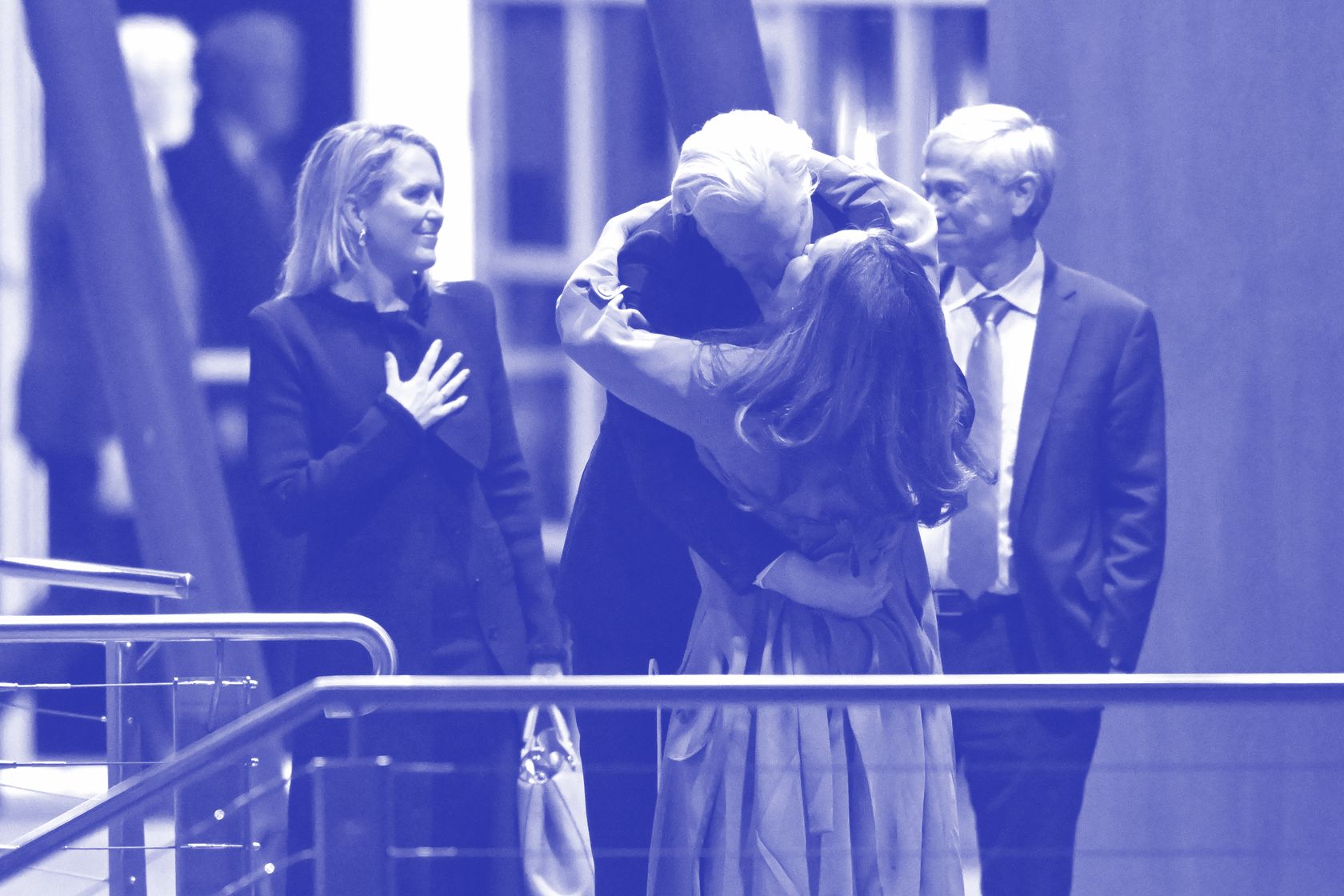
Wiki wins: Julian Assange landed in Australia following a plea deal in a US court, ending his 14-year legal battle over the release of hundreds of thousands of classified US military documents in 2010. The WikiLeaks founder arrived in Canberra from Saipan at 7:30pm on Wednesday night, where he pleaded guilty to conspiracy to obtain and disseminate classified US defence information. Upon landing, Assange kissed his wife, Stella and waved to supporters who were cheering from a distance. He was accompanied by Australian Ambassador Kevin Rudd and High Commissioner to the UK, Stephen Smith, both of whom played key roles in negotiating his freedom with Washington and London. Assange's 62-month time-served sentence credits his five years in a UK prison, allowing him to avoid further jail time in the US. Prime Minister Anthony Albanese welcomed him via a phone call. In a press conference shortly afterwards, Albanese told reporters he was “pleased that this matter is over.” (Capital Brief)(Australian Broadcasting Corporation)
2.
Yen and now: The yen plummeted to a 38-year low against the US dollar amid a wide interest rate gap between the two countries, triggering speculation that Japanese officials might need to intervene to support the currency. The yen slipped as much as 0.6% against the dollar to ¥160.62, a level last seen in 1986 and surpassing point at which Japan’s Ministry of Finance previously intervened by spending a record ¥9.8tn ($91.75 billion). Japan's low interest rates relative to US rates are driving investors towards dollar assets, weakening the yen. The Ministry of Finance voiced increased concern but did not set a specific intervention threshold. “If the moves start to get disorderly north of 160, they may come in to smooth the move,” Win Thin, global head of markets strategy at Brown Brothers Harriman & Co in New York told Bloomberg. “Buy until the BOJ tilts more hawkish, upside for USD/JPY is the path of least resistance.” Japan's zero to 0.1% cash rate and 10-year yields of around 1.03% are miles apart from the US cash rate of 5.25% to 5.5% and its 10-year bond yield of around 4.30%. (Reuters)(Bloomberg)
3.
Tone cloned?: Google’s YouTube is negotiating with major record labels, including Sony, Warner and Universal, to license songs for AI tools that clone popular music, the Financial Times reported, citing sources. YouTube is offering upfront payments to win over a sceptical industry amid lawsuits by record companies against AI startups accused of copyright infringement. Deals would likely involve one-time payments, unlike traditional music streaming royalties, the paper said. Insiders told the FT that YouTube has offered lump sums to convince more artists to participate. Despite some artists' fierce opposition, fearing it could devalue their work, labels are cautiously considering the proposal, according to the report. YouTube previously tested a generative AI tool, "Dream Track," with artists like Charli XCX, Troye Sivan and John Legend, and aims to expand participation. Talks are ongoing as YouTube also seeks to integrate AI-generated music into its Shorts platform, competing with TikTok. (Financial Times)
4.
Rutte’s NATO: Mark Rutte, the long-serving Dutch prime minister, has been named the new Secretary General of NATO, taking over from Norway’s Jens Stoltenberg on 1 October. Known for his pro-Ukraine stance and his consensus-building skills, Rutte will lead the 32-nation alliance during a challenging time with Russia’s war in Ukraine and amid a tight US presidential race that could see NATO-critic Donald Trump return to power. His appointment, favoured by US President Joe Biden, was confirmed by NATO ambassadors ahead of the alliance's 75th anniversary summit in Washington next month. Rutte served as Dutch prime minister for nearly 14 years and is recognised for his ability to build coalitions through debate and compromise, a skill essential for NATO's consensus-based operations. His appointment required diplomatic negotiation, especially with Hungarian Prime Minister Viktor Orban, who is close to Russia’s President Vladimir Putin. Rutte’s strong stance against Russia, influenced by the MH17 tragedy in which 196 Dutch citizens were killed, has led the Netherlands to boost military spending and support Ukraine with military aid. (New York Times)(Associated Press)
5.
Fentanyl vax: A new biotech startup, Ovax Inc, has raised USD10 million ($15 million) to develop a vaccine aimed at preventing fentanyl deaths by blocking the drug from reaching the brain. The vaccine, based on intellectual property from the University of Houston, has shown success in rat tests, with human trials expected early next year. The company expects to raise further funds to bring the vaccine to market. Unlike naloxone, which reverses fentanyl overdose effects, the Ovax vaccine intends to prevent overdoses by neutralising the drug’s impact. Co-founder JR Rahn, who previously launched Mind Medicine, one of the first psychedelic medicine companies to go public, said the company’s mission was “personal” in a blog post quoted by Bloomberg. “Each member of our team of doctors, scientists, drug developers and financiers all have a deep connection to overdose and the resulting carnage it’s continuously causing America.” (Bloomberg)
6.
Radical purge: The French government has ordered the dissolution of extreme-right and radical Islamist groups ahead of legislative elections that are expected to see increased support for political extremes. Interior Minister Gerald Darmanin announced the shutdown citing risks of violence, affecting groups like GUD, known for its violent and antisemitic actions and past support for Marine Le Pen. The two-round elections on 30 June and 7 July, prompted by President Emmanuel Macron, have sparked contentious debates on immigration, retirement age, and taxes. Macron's centrist alliance trails Le Pen’s National Rally in polls, potentially leading to France's first far-right government since the Nazi occupation during World War II. However, the complex voting system and potential alliances make the outcome uncertain. (Associated Press)
7.
Surging tensions: An Iranian-backed group, the Islamic Resistance in Iraq, claimed an unsuccessful drone attack on the southern Israeli port city of Eilat, while allied Yemen’s Houthi rebels were suspected of attacking a ship in the Gulf of Aden. Shipping in the Gulf of Aden and surrounding routes crucial to Asian, Middle East and European markets has drastically decreased due to the ongoing attacks, which the Houthis say will continue as long as the Israel-Hamas war rages in Gaza. Meanwhile, Turkish President Recep Tayyip Erdogan accused Israeli Prime Minister Benjamin Netanyahu of attempting to expand the conflict to Lebanon, with whom he vowed to stand in solidarity. “Israel, which has destroyed Gaza, has now set its sight on Lebanon,” Erdogan said in a speech to parliament. “We should not allow this to happen. Turkey stands by the brotherly people and state of Lebanon and we call on other countries in the region to stand in solidarity with Lebanon.” The comments came after Netanyahu flagged military forces would soon deploy to Israel’s north to confront the Iranian-backed, Lebanese militant group Hezbollah and allow tens of thousands of evacuees to return to their homes. (Reuters)(Associated Press)
8.
Secret trial: The Wall Street Journal reporter Evan Gershkovich went on trial behind closed doors in Yekaterinburg, 15 months after his arrest in the Russian city on espionage charges that he, his employer and the US government vehemently deny. The 32-year-old journalist appeared in court in a glass defendants’ cage, his head shaved. Authorities arrested the American-born son of USSR immigrants on 29 March 2023 while on a reporting trip, claiming he was gathering secret information for the US. He denies the accusations and Russians authorities have not provided any public evidence for the charges. Gershkovich is the first Western journalist arrested on espionage charges in post-Soviet Russia and faces up to 20 years in prison if convicted. The Wall Street Journal has denounced the charges and the US State Department has declared him “wrongfully detained”. The trial's next hearing is scheduled for 13 August. (Associated Press)
