AUKUS considers adding Japan as new alliance member
Plus: Netanyahu withdraws troops from Khan Younis; Chinese central bank unveils $107b relending fund; Regulator investigates ExxonMobil over leaking Bass Strait pipeline.

Good morning. Here's what happened overnight and what you need to know today.
1.
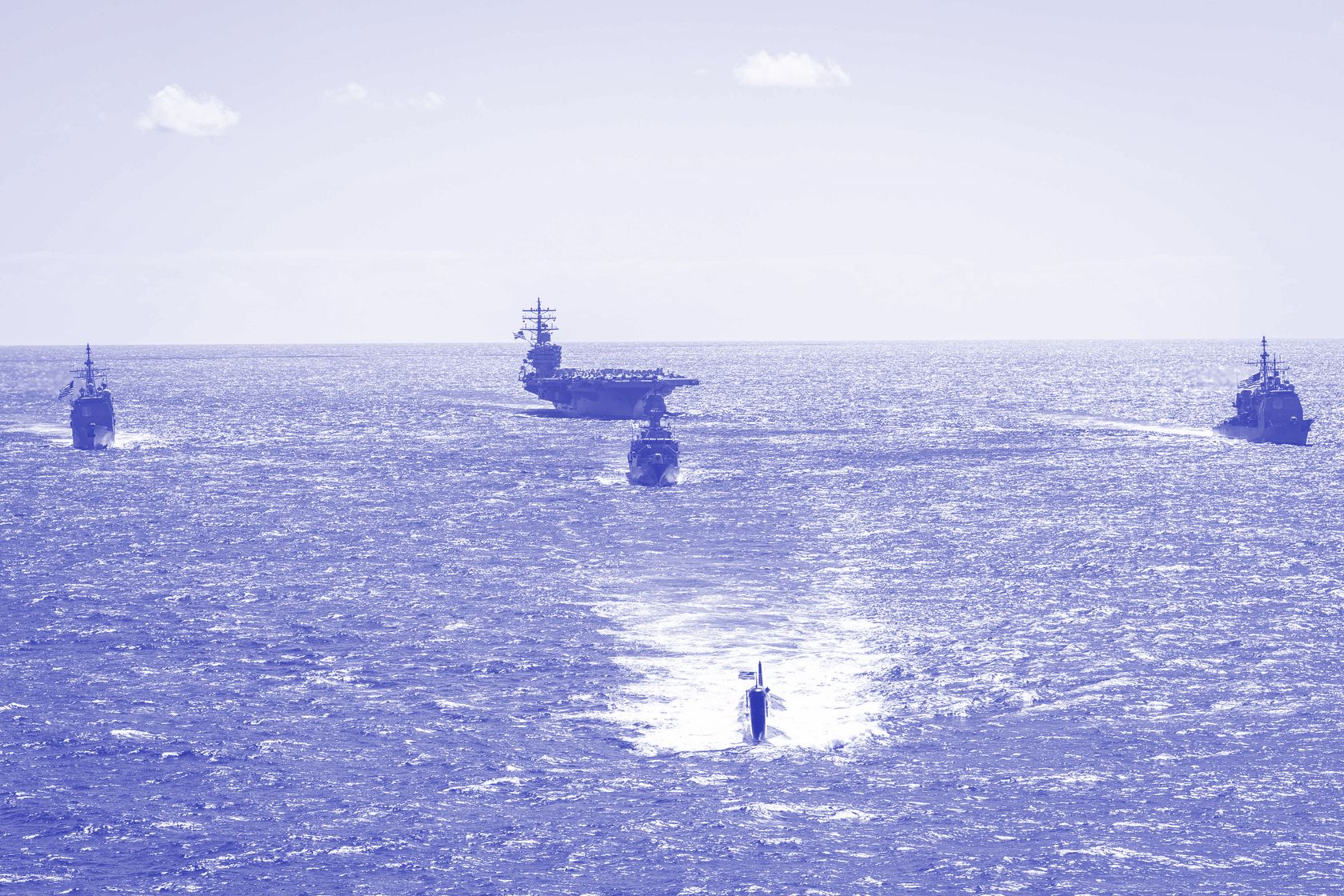
Growing alliance: AUKUS, the US, UK and Australian defence alliance, is set to begin talks on expanding membership, as the US pushes for Japan to be involved to deter Chinese expansion in the Indo-Pacific. The Financial Times reports that defence ministers will on Monday announce talks tied to the alliance’s Pillar II, which is related to collaboration on defence technology including undersea capabilities and hypersonic weapons. Last week, America's ambassador in Tokyo, Rahm Emanuel, said Japan was "about to become the first additional Pillar II partner" in AUKUS. While he didn’t specify when the official news would be released, Japanese Prime Minister Fumio Kishida is visiting Washington this week to meet with US President Joe Biden. (Financial Times)
2.
Israel-Hamas war: Israeli Prime Minister Benjamin Netanyahu said on Sunday that the country is “one step away from victory” in its war against Hamas in Gaza, and has withdrawn forces from Khan Younis in southern Gaza. Military officials said that the Israeli Defence Forces have concluded their mission in the city, and that “the division left the Gaza Strip in order to recuperate and prepare for future operations.” Netanyahu also said that there would not be a ceasefire without the return of hostages taken by Hamas militants on October 7 last year. Israel says that over 130 hostages remain, with around one quarter of those believed to be dead. Israel is currently bracing for a potential attack by Iran, following Israel’s suspected strike on the Iranian embassy in Syria last week which killed seven Iranian military personnel. (Bloomberg)
Correction: An earlier version of this newsletter incorrectly stated that Netanyahu said “that there would be ceasefire without the return of hostages taken by Hamas militants,” rather than “there would not be a ceasefire.”
1.
Opening the purse strings: The People’s Bank of China (PBOC) has announced plans to launch a 500 billion yuan ($107.3 billion) relending program aimed at supporting innovation and project upgrades in the science and technology sectors. The loans will have an interest rate of 1.75% and a term of one year, which can be extended twice for an additional year. The loan quota will be allocated to 21 banks. A statement released by the PBOC on Sunday explains that the program hopes to support small and medium-sized technology firms in the initial startup and growth stages. The central bank first announced its plans to launch the relending programs in March, alongside its aims to grow the economy by around 5% in 2024. (Capital Brief)(People’s Bank of China press release)
2.
Leaky pipe: A pipeline between two ExxonMobil oil platforms is being investigated as the source of a “sheen” spotted on the surface of the Bass Strait. Exxon notified the National Offshore Petroleum Safety and Environmental Management Authority (NOPSEMA) on Saturday that the incident is linked to its pipeline which connects its West Kingfish and Kingfish A platforms in the Gippsland Basin between Victoria and Tasmania. “The pipeline, which was reported to contain 95 per cent water at the time, has been isolated at both facility ends and is being depressurised. The facility has been offline for four weeks and continues to be so,” NOPSEMA said in a statement. “An investigation has been launched and NOPSEMA is content Esso is currently managing the incident appropriately.” (The Australian)
3.
Investment inertia: Chinese investment in Australia has fallen to a record low as Beijing reassesses its offshore spending and companies increase caution around tighter foreign investment rules in Australia. According to the KPMG Australia and the University of Sydney’s 'Demystifying Chinese Investment in Australia' report, Chinese investment has fallen 36% in 2023 to $1.34 billion, compared with $2.1 billion the year prior. The results show that new Chinese investment in 2023 hit its second lowest level since 2006. Australia was once the largest recipient of offshore Chinese investment, however the country now appears to prefer the US and nations linked to its Belt and Road initiative. (The Australian)
4.
Steely politics: Nippon Steel is pitching new investment in aging steel plants in Pittsburgh Pennsylvania, in efforts to gain the support of union workers currently opposing Nippon’s USD14.1 billion bid to acquire US Steel. A number of steel plants owned by US Steel and staffed by union workers are in dire need of significant upgrades, and Nippon has told union leaders that it will invest USD1.4 billion to upgrade the older mills in what was once considered the country's ‘Steel City.’ United Steelworkers remain unconvinced, and have said they want a formal commitment from Nippon Steel for its planned investment and other changes. US Steel shareholders are set to vote on the deal on Friday this week. (Wall Street Journal)
5.
Can(AI)dian tech: Canadian Prime Minister Justin Trudeau announced plans to launch a fund to strengthen the country’s artificial intelligence sector. The majority of the C$2.4 billion package announced on Sunday will see C$2 billion allocated toward computing capabilities and technological infrastructure for the country’s AI researchers, start-ups, and scale-ups. Trudeau made the announcement in Montreal on Sunday as part of a pre-budget tour, as his government continues to roll out its spending plans ahead of a new budget which is due to be released in mid-April. Trudeau stated: “These investments in Budget 2024 will help harness the full potential of AI so Canadians, and especially young Canadians, can get good-paying jobs while raising our productivity, and growing our economy.” (Capital Brief)
6.
Keyboard warrior: Elon Musk has responded to Brazil’s ‘forced’ order to block certain accounts on social media platform X, challenging a decision by a Supreme Court justice in Brazil who made the order as the country attempts to clampdown on fake news and hate speech online. X’s Global Affairs account posted on Saturday that the decisions forced the site to block specific accounts without specifying the reasons or which posts allegedly violated the law. Musk then posted: “We are lifting all restrictions. This judge has applied massive fines, threatened to arrest our employees and cut off access to X in Brazil. As a result, we will probably lose all revenue in Brazil and have to shut down our office there.” (Reuters)
