Australia to push Trump on metals after beef tariff backdown
Plus: Private credit use by large corporate surges, exclusive survey shows; Labor finally opens consultation on news media funding scheme; Trump buys corporate bonds tied to his policies.


Good morning. Here's what happened overnight and what you need to know today.

1.
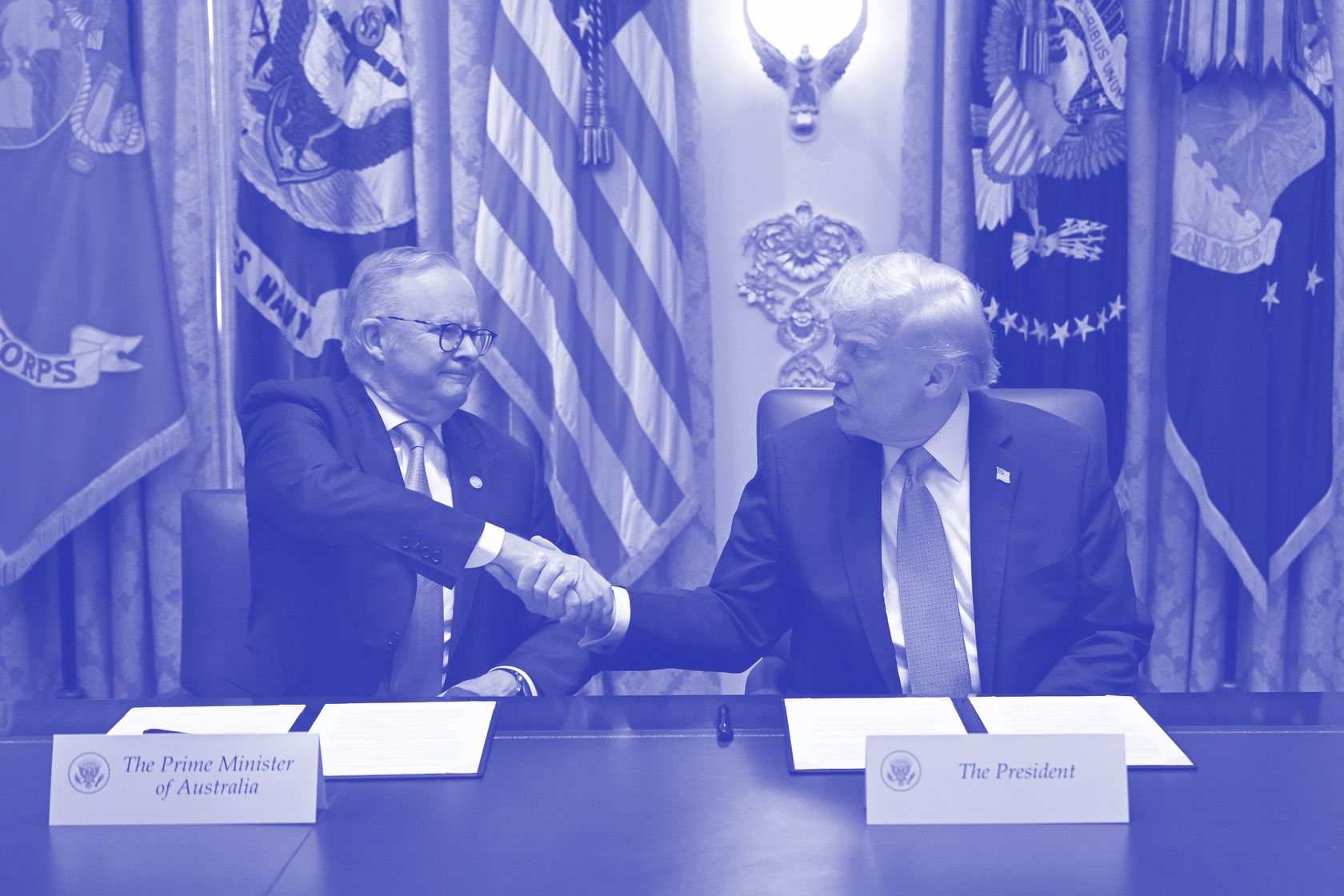
Tariff retreat: Australia will keep pressing the US to remove all remaining tariffs after Donald Trump lifted levies on more than 200 food products, including Australian beef, Friday Washington time. The tariff rollback follows rising US concern over grocery prices and applies to goods not produced in sufficient quantity domestically, according to the White House. Prime Minister Anthony Albanese said the move was a “direct result” of sustained advocacy by Trade Minister Don Farrell and three meetings Albanese held with Trump in the past month. Foreign Minister Penny Wong told ABC Insiders the government would “keep advocating our position” and said there was “very clear economic logic” to removing the remaining 50% tariffs on aluminium, steel and copper. Farrell also called the still-imposed 50% tariffs on the metals “unjustified” and said the government would keep pressing for their removal. The backflip was seen as a tacit admission the tariffs had fuelled US inflation and came after Democrat election wins driven by affordability concerns. Pressed on inflation, Trump, who has vehemently denied tariffs cause it, said they “may in some cases” raise prices. Meanwhile, Wong also said a decision on Australia’s COP31 bid is expected by week’s end, with the Prime Minister to meet rival bidder Turkey’s President Erdogan. (White House)(Penny Wong)(Reuters)(The Australian)(NYT)
2.
Shadow shift: Australian corporates are sharply increasing their use of private credit even as regulatory pressure mounts, according to exclusive research from East & Partners and Capital Brief. The research found 46% of corporates with turnover above $725 million had either accessed or expected to access private credit – up from 39% in May and 28% in October 2024. For corporates using private credit, it made up 8.6% of total funding and is forecast to reach 14.3% within a year. East & Partners global head of markets analysis Martin Smith said growing familiarity and access to alternative funding were driving the shift. He pointed to flexible covenants and the “regulatory-lite” nature of private credit as key drawcards. Despite that, 70% of corporates using or considering private credit said they felt “discouraged” by ASIC’s increased scrutiny. In September, ASIC issued interim stop orders against two La Trobe funds over target market determination deficiencies – its first formal action targeting private credit. The orders have since been lifted. The regulator has identified private credit as a top priority for 2026. Still, 65.1% of relevant corporates have no specific risk frameworks in place. (Capital Brief)
3.
The Signal: After years of pressure from the media sector, the Albanese government kicked off a four-week consultation on its News Bargaining Incentive, a proposal designed to push large tech companies to pay for news. Assistant Treasurer Daniel Mulino released the consultation paper on Thursday, marking the start of one of the most heavily contested lobbying skirmishes the media and tech sectors have seen in a decade. As Capital Brief reports, the proposed scheme targets digital platforms with more than $250 million in annual revenue and suggests a 2.25% charge on their Australian revenue, offset by 150% of eligible spending on deals with news publishers. The policy would apply whether or not the platform carries news and says deals with only major media companies won’t be enough to qualify for full offsets. Treasury also proposed that grants or initiatives supporting public interest journalism could count, though how they are valued remains unresolved. The process lands ahead of the expiry of Google’s deals with Nine and Seven, which industry estimates suggest are worth up to $80 million a year. (Capital Brief)
4.
Trump’s bond: Donald Trump bought at least USD82 million ($125.8 million) in US corporate and municipal bonds from late August through early October, including investments in companies affected by his own administration’s policies. According to financial disclosures released Saturday by the US Office of Government Ethics, at least 175 purchases were made between 28 August and 2 October. The total value of the bond purchases could be as high as USD337 million, Reuters noted. The purchases by the US president include Intel bonds, acquired after the US government, under his direction, took an almost 10% stake in the company to support domestic chip manufacturing. Trump also bought bonds from UnitedHealth Group and Netflix, both companies affected by his administration’s policies. Other corporate bond purchases included Meta Platforms, Home Depot, Broadcom, Qualcomm, CVS Health, Goldman Sachs, Morgan Stanley, Boeing and JP Morgan. He also acquired municipal bonds issued by US cities, counties, school districts, utilities and hospitals. The administration has repeatedly said Trump is not involved in managing the investments, which are handled by a third-party financial institution. (Reuters)(Bloomberg)
5.
Double inflation: Private school parents will be hit with average fee increases of 7% in 2026, more than double the 3.2% headline rate of inflation in the year to 30 September, The Australian Financial Review reported. The steepest rise identified was at Melbourne Catholic boys school St Kevin’s College, where Year 12 tuition will increase 17%, from $28,900 to $33,790. Geelong Grammar will remain the most expensive school in Australia, with Year 12 fees rising 6% to $55,380. Shore in Sydney will charge $48,100, up 4%, with compulsory levies pushing the total to $49,615. The Scots College, Cranbrook and SCEGGS Darlinghurst each charged just under $50,000 in 2025 and, based on the average rise, are expected to pass that mark in 2026. Kincoppal-Rose Bay will increase Year 12 tuition by 5.5% to $45,660. Sydney Catholic Schools, which oversees 147 schools, expects an average fee increase of 5%, with higher rises likely in wealthier areas. Canberra’s Radford College will lift Year 12 tuition almost 16%, prompting parent backlash. Schools attributed the increases to rising operational and teacher salary costs, declining federal funding and, in Victoria, new payroll tax charges that are being passed onto parents. (AFR)
6.
MAGA cracks: Donald Trump’s break with Marjorie Taylor Greene has escalated ahead of a key House vote Tuesday on whether to compel the release of Justice Department files on Jeffrey Epstein, a push Greene and a small group of Republicans support, despite resistance from Trump and Speaker Mike Johnson. Trump withdrew his endorsement, called Greene a “traitor,” and encouraged a primary challenge in her Georgia district. Greene told CNN the rhetoric could “radicalise people against me” but reaffirmed support for Trump’s administration and vowed to keep pushing for transparency. Republican congressman Thomas Massie, co-sponsoring the bipartisan bill, told ABC Trump wants to block the release “to protect a bunch of rich and powerful friends.” Elsewhere, documents released Saturday (Sunday AEDT) showed former Federal Reserve governor Adriana Kugler was under internal investigation for violating ethics rules when she abruptly resigned in August, nearly six months before her term was set to end. The disclosures revealed previously unreported trades in individual stocks during prohibited blackout periods. (Bloomberg)(NYT)
7.
Bush banking: Westpac has extended its pause on regional branch closures until 2030, two-and-a-half years beyond the moratorium agreed by the other major banks. The decision coming just days before CEO Anthony Miller faces questioning at the House of Representatives Economics Committee. As part of its expanded regional strategy, Westpac will pilot a visiting banker service in five towns, including Dungog in NSW, where staff will work from council offices or libraries one day each fortnight, with the option to increase visits based on demand. The bank will spend $65 million refurbishing 50 regional branches, invest $1.5 million annually in local events and sponsorships, and roll out a graduate program across ten regional centres. It will also open new branches in Moree, Leongatha and Smithton. Miller said just 4% of transactions are now in person, but face-to-face banking remains important, especially for vulnerable customers. He rejected a proposed sector-wide levy to support regional services, saying targeted investment was a better approach. (Capital Brief)(AFR)
8.
Turd icing: Influential fund managers say DroneShield may have irreparably damaged investor confidence after the company retracted a major contract announcement and its chief executive, chairman and further director sold down $66.8 million in shares within days. DroneShield’s share price collapsed after CEO Oleg Vornik sold his entire holding of ordinary shares for $49.5 million, with chair Peter James and director Jethro Marks selling another $17.3 million combined. The selldown also came just days after the company was forced to walk back an ASX announcement about USD7.6 million in contracts with the US government. Luke Winchester of Merewether Capital said the leadership’s full selldown “makes it very hard to believe that story and that potential”. Cyan Investment Management’s Dean Fergie called the series of events “a terrible, terrible look” and “the icing on the turd cake”. ASIC told Capital Brief it is “aware of what's happened” but said it's too early to say whether it will investigate. DroneShield has said the directors “remain fully committed” and have retained vested options. (Capital Brief)
