BHP bows out of blockbuster Anglo deal
Plus: Angus Taylor lashes out at PM’s PsiQuantum investment; Jurors begin deliberations on Trump hush-money trial; IMF upgrades China forecast after government stimulus.

Good morning. Here's what happened overnight and what you need to know today.

1.
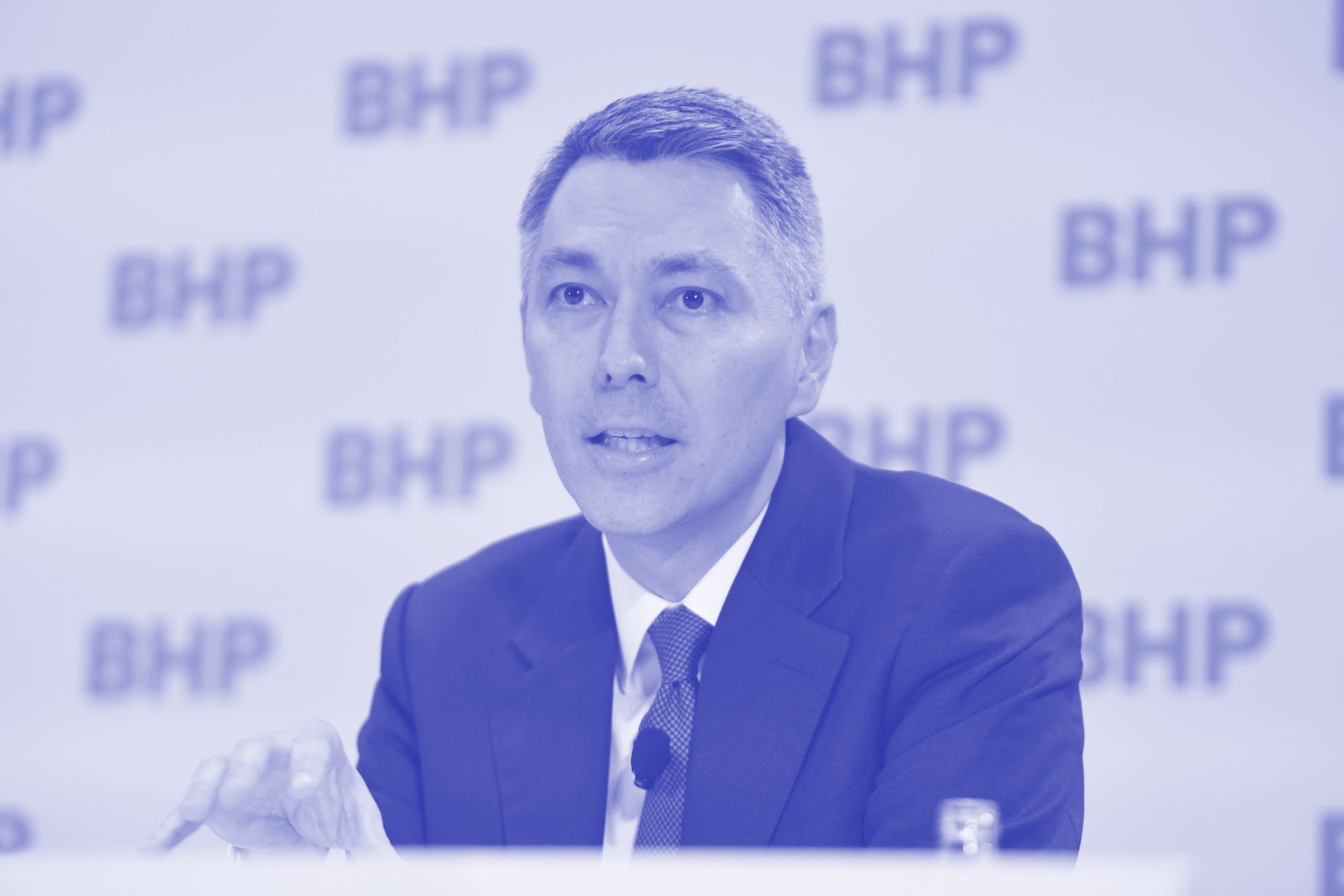
11th hour collapse: BHP has walked away from its $74 billion takeover pursuit of Anglo American just hours before the negotiation deadline was due to expire. Early Wednesday morning UK time, BHP requested a second extension to the ‘put-up-or-shut-up’ (PUSU) takeover deadline which had been extended by one week to 29 May at 5pm (GMT). BHP argued that the extension would allow for further engagement on its proposals which include measures that it believed would provide “substantial risk protection for Anglo American shareholders” and supplement “the significant value uplift that Anglo American shareholders will receive from the potential combination.” Anglo knocked back BHP's request for an extension of the deadline on its bid for the company, and also rejected measures the Australian miner proposed to pacify South African regulators about the transaction. In a statement published just one hour before the UK deadline, BHP confirmed that it had not reached an agreement to gain the support of Anglo’s board and will not be pursing the takeover further. In keeping with the UK’s PUSU rules, BHP must now walk away from the deal for at least six months. (Capital Brief)
2.
Crony capitalism: Shadow treasurer Angus Taylor has attacked the government's billion dollar investment into quantum computing startup PsiQuantum and pledged to avoid "crony capitalism" and "corporate welfarism" in a sign the Coalition will fight Labor's Future Made in Australia agenda at the next election. In a Capital Brief exclusive, Taylor insisted he was pro-technology but indicated the Coalition would not necessarily seek to directly fund companies and industries to the extent that Labor plans to. Instead, his response to a changing global economy would be to incentivise private sector investment and reform the labour market. While he said he is supportive of technology, Taylor questioned whether “a billion dollars from the Commonwealth and Queensland government to a company based out of Silicon Valley is a good use of taxpayers’ money.” Taylor is bothered by the lack of public details provided by the government over its plans, and made it clear this scepticism does not extend to the importance of embracing new technologies, like quantum, for the nation’s future. (Capital Brief)
3.
Jury is out: On Wednesday, jurors began closed-door deliberations on whether former US President Donald Trump falsified business records to cover up a hush money payment to p*rn star Stormy Daniels before the 2016 election. Trump has plead not guilty to 34 felony counts of falsifying documents and is on the cusp of making history as the first former US president to be convicted on criminal charges. The judge overseeing the six-week long trial told jurors they must not base their decision solely on the testimony of Trump’s former fixer Michael Cohen. “Even if you find the testimony of Michael Cohen to be believable, you may not convict the defendant solely on that testimony unless you find it was corroborated by other evidence,” Justice Juan Merchan said. “You must set aside any personal opinions or bias you might have in favour of or against the defendant," Merchan continued. Cohen, a convicted felon, told the jury he helped the former president identify and quash negative tabloid stories before the election, as well as arrange a USD130,000 ($200,000) hush payment to Daniels. Prosecutors face the burden of proving Trump's guilt beyond a reasonable doubt. The jurors’ decision could impact the US election, to be held in November, in which Trump is seeking to regain the White House. (Reuters)(New York Times)(Bloomberg)
4.
Dragon upgrade: The International Monetary Fund (IMF) upgraded China’s economic growth forecast for 2024 to 5%, from 4.6%, after a strong start in the first quarter and further government stimulus. After official meetings between the IMF and high ranking Chinese officials, the global lender said China’s economy would continue growing at 4.5% in 2025. The worlds’ second largest economy is targeting GDP growth of 5% this year. “Risks are tilted to the downside, including from greater- or longer-than-expected property sector adjustment and increasing fragmentation pressures,” the IMF said in a statement. While acknowledging Beijing's recent initiatives to bolster the struggling property sector, the IMF emphasised the need for additional support for the economy. The upgrades also came with a call to cut down industrial policies that could “lead to a misallocation of domestic resources and potentially affect trading partners.” The IMF expects inflation to rise but stay low as output remains below potential. (IMF press release)(Bloomberg)
5.
Market drama: Global stocks fell overnight as concerns about delayed interest rate cuts and ongoing weak demand for US government bonds sent global yields soaring. Demand for US government bonds weakened for a third consecutive auction, pushing treasury yields broadly to their highest levels in about a month. A USD44b tender of 7-year government notes priced above the pre-auction level and primary dealers absorbed a larger than usual portion. It was the third weak US government bond offering in two days. Yields on 10-year bonds rose six basis points to 4.61%. The S&P 500 dropped below 5,300 and was 0.5% down in mid-afternoon trade US time, while the Nasdaq Composite was down 0.2%. In London, the FTSE 100 closed 0.7% lower, Germany’s DAX shed 1.1% and France’s CAC 40 lost 1.5%. “Blame bond yields” for the stock market slide, Chris Turner, a currency strategist at ING told the FT. Uncertainty about when and by how much the Fed will cut interest rates has kept investors anxious all year. Stubborn inflation and central bankers' tough talk have pushed traders to scale back bets of interest rate cuts. They now expect just one cut by year-end, according to the CME FedWatch Tool, down from the multiple cuts anticipated earlier. This Friday will see the release of the Personal Consumption Expenditure index for April, one of the Fed's most closely watched inflation gauges. (Bloomberg)(Financial Times)
6.
Consolidation continues: Oil giant ConocoPhillips has agreed to buy Marathon Oil, adding another merger to a wave of consolidation across the US energy sector. The all-stock acquisition of Marathon Oil including USD5.4 billion of debt, will give Marathon an enterprise value of USD22.5 billion. Marathon Oil shareholders will receive 0.2550 shares of ConocoPhillips common stock for each share of Marathon Oil common stock, representing a 14.7% premium to the closing share price of Marathon Oil on May 28, 2024, and a 16.0% premium to the prior 10-day volume-weighted average price. The transaction is the latest in a suite of deals that have characterised the US energy sector, following ExxonMobil’s USD60 billion purchase of Pioneer and Chevron’s agreed takeover of Hess for USD53 billion. Occidental also stepped in to acquire CrownRock while Diamondback Energy moved on Endeavor Energy Partners earlier in the year. Independent of the transaction, Conoco also announced that it would increase its ordinary base dividend by 34% to 78 cents per share starting in the fourth quarter of 2024. (ConocoPhillips press release)(Capital Brief)
7.
Cashed Czech: Czech billionaire Daniel Křetínský will acquire the owner of Royal Mail, International Distribution Services, and has pledged to revive the UK postal service. Křetínský’s EP Group will take over IDS, which owns both Royal Mail and parcel business GLS, for an agreed price of 370 pence per share, valuing the group at £5.2 billion. Negotiations have been drawn out over the past month, with Křetínský vowing to not break up the group for at least three years, as well as committing to deliver letters six days a week for five years. The acquisition has gained significant political attention, given previous concerns raised about international ownership of the UK postal service. Prior to the agreed takeover, Křetínský already owned a stake of 27% in the formerly state-owned company. Other commitments in the agreement pertain to EP Group’s pledge to continue recognition of union groups CWU and CMA, as well as committing to maintain salaries, wages, and benefits and allowance packages for at least two years. The unions are expected to engage closely with the Labour party (widely tipped to win the July election) to ensure the EP Group adheres to the commitments. (Capital Brief)
8.
Sanction dodging: A slew of Chinese firms tagged as military entities are using new names and licensing arrangements to protect their business in the US, according to the Wall Street Journal. By setting up a subsidiary or affiliate, Chinese companies facing regulatory or reputational problems in the US are increasingly rebranding and creating US domiciled businesses to continue selling their products in the Western nation. The Biden administration is ratcheting up restrictions on Chinese business in the US, building sizeable blacklists not only for national security reasons, but also to protect and create opportunities for US entrepreneurs. While the actions being taken to shift production, rebrand as American or set up subsidiaries with new names are legal, the trend is increasingly gaining the attention of regulators who can’t enforce laws when the ultimate owner or operator is unclear. A proposed ban in US Congress for Chinese drone maker DJI is currently pulling the practice into the spotlight, as it seeks to stop a US citizen from licensing DJI technology to sell in the US through a US startup. (Wall Street Journal)
