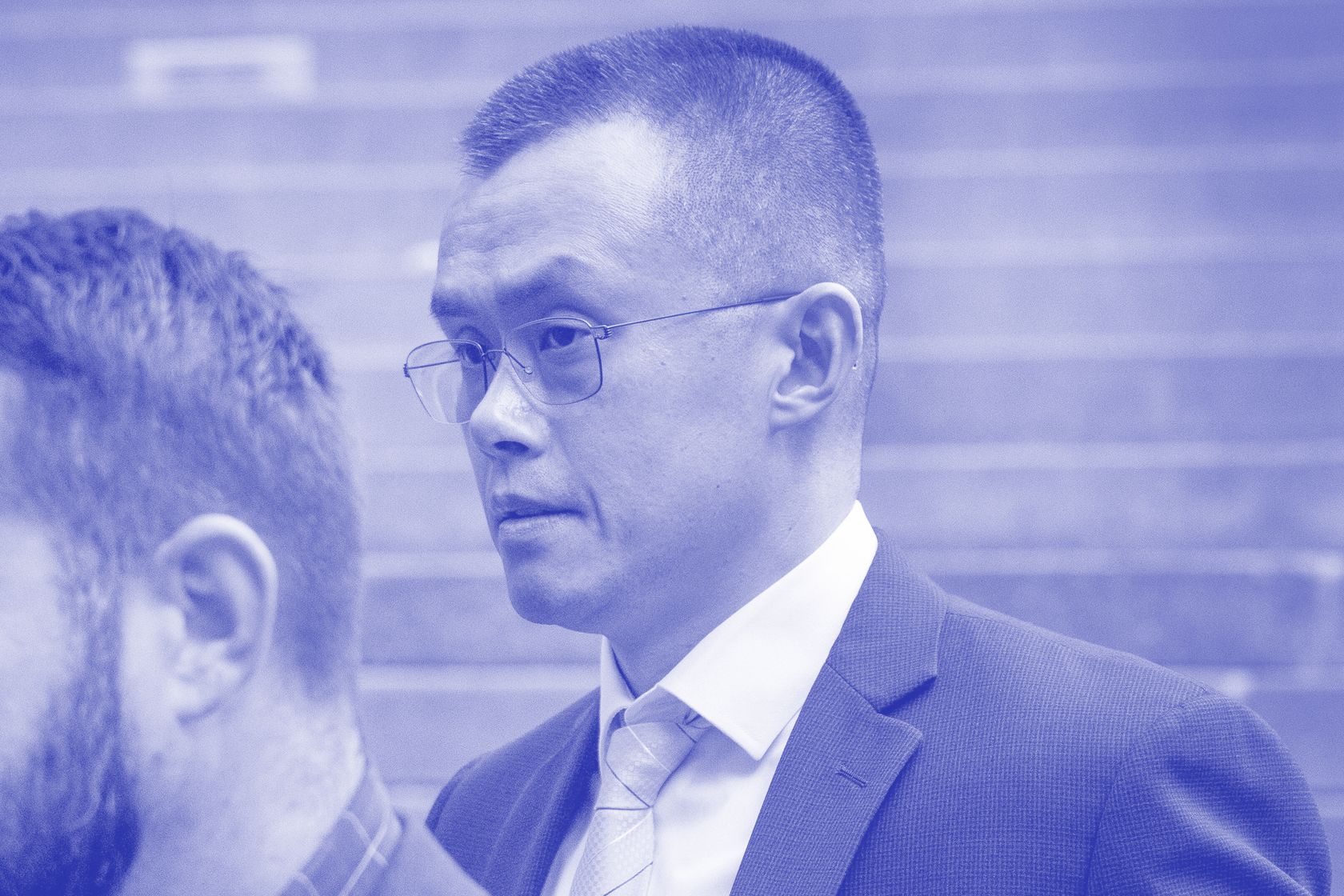
Binance founder sentenced to prison
Plus: Jim Chalmers defends government's high tech investment; Trump is fined for contempt of court; US reclassifies marijuana as a less dangerous drug.
Good morning. Here's what happened overnight and what you need to know today.
Get Standup in your inbox Signed up to Standup
1.
Crypto crook: Changpeng Zhao, the billionaire founder of the world's largest cryptocurrency exchange Binance, has been sentenced to four months in US prison for allowing criminals to launder money through the platform. US officials accused Binance and Zhao of wilful violations that threatened the financial system and national security, enabling money flow to terrorists, cybercriminals, and child abusers. Seattle court judge Richard Jones stated that Zhao prioritised the company's growth and profits "over compliance with US laws and regulations". Binance was ordered to pay a USD4.3 billion ($6.6 billion) fine after a US investigation found it helped users bypass sanctions. Zhao's sentence was far below the three years prosecutors had sought. He had already paid a USD50 million fine and stepped down as CEO in November as part of a plea deal with the US government. (Bloomberg)(BBC)
2.
Future made: Treasurer Jim Chalmers will today deliver a speech defending the government's new Future Made in Australia industry policy as a necessary response to major global economic shifts since the 2008 financial crisis. He will argue that Australia must position itself as "indispensable" to the net-zero transition and emerging high-tech sectors like quantum computing by providing targeted, temporary support to attract private investment. In his speech, Chalmers will rejects criticism that this approach picks winners by saying public funding merely unlocks needed private capital while playing to Australia's strengths given its small population. He will argue the move is necessary to adapt to a fragmented world with weak growth, supply chain shocks, slowing productivity and a "stupendous increase" in industrial subsidies by nations like the US and China that Australia cannot match but must respond to. (Capital Brief)

3.
Rafah offensive: Israeli prime minister Benjamin Netanyahu has vowed to move ahead with the planned invasion of Rafah regardless of any ceasefire deal struck with Hamas. Netanyahu is facing intense pressure from opposing factions within his coalition government over whether to accept an Egyptian and Qatari-brokered ceasefire deal that could halt fighting in Gaza for 6 weeks in exchange for releasing 33 Israeli hostages. He said Israeli forces would push into the Rafah stronghold with or without a deal. "The idea that we will halt the war before achieving all of its goals is out of the question," Netanyahu said in a statement. More than half of Gaza's population of 2.5 million people are currently living in Rafah, many having been pushed there by fighting in other areas of the territory. (BBC)(Financial Times)
4.
Green out: The US Drug Enforcement Administration (DEA) is set to reclassify marijuana as a less dangerous drug, according to anonymous sources speaking to the Associated Press, which will significantly reshape the country's multibillion-dollar cannabis industry. This shift in American drug policy, which still needs approval from the White House, would move marijuana from its current Schedule I classification alongside heroin and LSD to Schedule III, alongside ketamine and some anabolic steroids. While it would not legalise marijuana for recreational use federally, the rescheduling clears a significant regulatory hurdle and could have wide-ranging implications, such as reducing tax burden on businesses and facilitating research. Cannabis stocks soared on the news. 38 states in the US have already legalised medical marijuana and 24 have approved recreational use. (Associated Press)
5.
Wrist slap: The judge overseeing Donald Trump's criminal case in Manhattan held the former president in contempt on Tuesday, fining him USD9,000 ($13,900) and warning he could face jail time for repeatedly violating a gag order by attacking witnesses and jurors on social media and his campaign website. Judge Juan M. Merchan ruled Trump had flouted the order nine times by making public statements assailing potential witnesses Michael Cohen and Stormy Daniels, as well as insulting potential jurors, despite being barred from commenting on people involved in the case. While acknowledging Trump's First Amendment rights, Merchan said he would not tolerate "wilful violations" and could jail Trump "if necessary and appropriate". Prosecutors had argued Trump's statements threatened the trial's integrity. (New York Times)
6.
No denial: Anglo American's chairman Stuart Chambers did not rule out accepting a future bid from a competitor like BHP at the company's annual general meeting in London. Chambers read aloud from the company's Friday filing and said that the BHP offer was “way too low for us to be able to recommend to our shareholders that they consider or accept it." While blocked from further comments on the BHP bid due to British takeover rules, Chambers left the door open to a sale if the price is right. "The future is the future, and we have to think about that future when it comes," he said. Management outlined a strategy to deliver USD1.5 billion ($2.3 billion) in cost savings by the end of the year and slash capex by USD1.6 billion through 2026. It also wants to review its asset portfolio, develop options like copper and expanding Brazilian iron ore, and potentially syndicate interest in major new projects. (Australian Financial Review)
7.
Deep cut: Elon Musk is continuing his warpath at Tesla, shaking up the carmaker's senior management and laying off hundreds more employees. In an email to executives, Musk announced the departures of Rebecca Tinucci, head of Tesla's Supercharger network, and Daniel Ho, who oversaw new vehicle programs. Around 500 employees from the Supercharger team will be let go, which is particularly notable given rival automakers' reliance on Tesla's charging network. The moves signal Musk's intensifying focus on radically slashing headcount and expenses amid falling sales and disappointing first quarter results, with the CEO demanding any executive retaining over three "obviously" underperforming reports must resign starting Tuesday. The shakeup followed Musk's surprise China trip where he gained approval for self-driving software testing, buoying Tesla's share price despite the cost cuts. (The Information)(Financial Times)
8.
For sale: Luxury giant LVMH is exploring strategic options for its Marc Jacobs fashion brand amid interest from potential buyers, according to anonymous sources speaking to Bloomberg. The company has been working with advisers to study possibilities including a sale after receiving approaches from potential buyers including other consumer companies and private equity firms. The story is notable as the French company, the world's largest luxury conglomerate, rarely divests brands from its 75-label portfolio. A deal could allow it to capitalise on the years-long turnaround of the profitable Marc Jacobs brand and its roughly €600 million ($988 million) in 2023 sales, while offloading the "affordable" luxury label to focus on higher-end offerings. An LVMH representative strongly denied Bloomberg's report. (Bloomberg)