BoE cuts rates, stirs stagflation fears
Plus: US lawmakers to ban DeepSeek after hidden code found leaking logins; Trump attacks Politico, media with false funding claims; Tesla’s EU sales tank as Musk backs far-right.


Good morning. Here's what happened overnight and what you need to know today.

1.
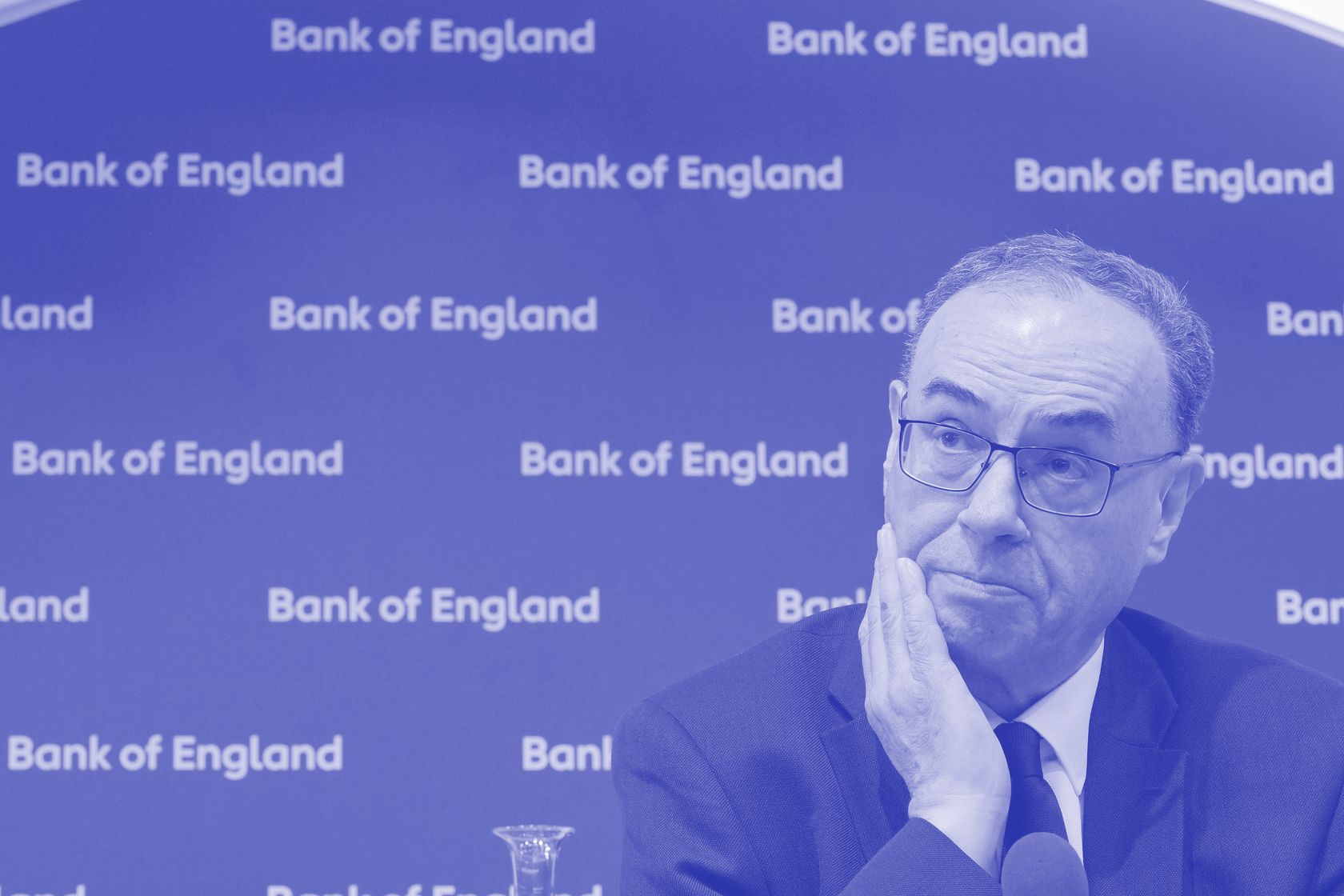
Stagflation worries: The Bank of England (BoE) cut its benchmark rate by 25 basis points to 4.5%, the lowest in 19 months, citing weak growth despite expectations that inflation—currently above target—will rise later this year. Governor Andrew Bailey attributed that to temporary factors but said a trade war could delay investment and hiring. Bailey rejected the term "stagflation," saying the UK is in a “disinflation process.” The BoE expects inflation to peak at 3.7% and the economy to grow just 0.1% in early 2025, halving growth forecasts for 2025 to 0.75%. Two policymakers pushed for a steeper 50-basis-point cut. The pound fell 1.2% against the dollar, as traders anticipate three more rate cuts in 2025, though BoE projections suggest two. (Capital Brief)
2.
DeepSeek bans: US lawmakers plan to introduce a bipartisan bill on Thursday (Friday AEDT) to ban DeepSeek’s chatbot app from government-owned devices due to security concerns, The Wall Street Journal reported. The move, led by Republican Darin LaHood and Democrat Josh Gottheimer, follows an analysis by Ivan Tsarynny, CEO of Feroot Security, that found intentionally hidden code in the app could send user login information to China Mobile, a state-owned telecom banned in the US. Some federal agencies, including the US Navy and NASA, have already blocked the app, while Texas was the first US state to ban it. Australia, South Korea and Italy have also recently taken similar steps. DeepSeek quickly became the most downloaded app in the US after launching its latest AI model last month. (WSJ)(Capital Brief)
3.
Media crossfire: US President Donald Trump and right-wing figures amplified false claims that federal agencies improperly funded Politico, citing payments listed on USAspending.gov. Trump overnight posted on social media that “billions of dollars” had been “stolen at USAID” and gone to the “fake news media” and that Politico received USD8 million ($12.76 million). But records show the payments are for subscriptions, including to Politico Pro, a policy-tracking service. USAID paid Politico USD44,000 in 2023-24 for energy and environment news subscriptions, while the total federal spending on Politico subscriptions over the past year was USD8.2 million. The Trump administration has also paid for Politico subscriptions. White House press secretary Karoline Leavitt said the administration would cancel such payments, while Elon Musk called them “not an efficient use of taxpayer funds.” Right-wing figures are now using USAspending.gov to investigate payments to other media outlets, including The New York Times, AP and Reuters. Politico denied receiving government subsidies, but right-wing figures continue spreading misinformation. (Axios)(NYT)(WaPo)
4.
Musk effect: Sales of Tesla’s electric vehicles plunged across key European markets in January, with German registrations dropping 59% year on year to 1,277 even as the country’s EV market grew 54%. That cut Tesla’s market share from 14% to 4%, the FT reported. Sales also fell 63% in France – the EU’s second-largest market behind Germany – 38% in Norway and 12% in the UK. In California, a key EV market, sales declined every quarter in 2024. Analysts attributed the drop partly to consumers awaiting the upgraded Model Y in 2025, to inventory shortages and backlash over Elon Musk’s political activism. Musk has backed the far-right AfD ahead of Germany’s 23 February election, hosted leader Alice Weidel on X and spoken at an AfD rally, sparking outrage. Amid EU emissions regulations, rivals Volkswagen, Stellantis, and Renault gained market share. Polestar’s CEO recently called Musk’s politics “totally unacceptable,” saying he instructed sales teams to target Tesla owners unhappy with Musk’s politics. (Capital Brief)(FT)(Bloomberg)
5.
Digging in: US President Donald Trump defended his proposal for the US to take over Gaza and resettle its Palestinian population elsewhere, even after his aides sought to downplay the proposal. In a social media post overnight, Trump said Israel would turn over Gaza to the US after the conflict and that no American troops would be needed. He described plans for large-scale development in Gaza, calling it a potential "spectacular" project. The proposal has drawn global criticism, with some comparing it to ethnic cleansing. Israeli Defence Minister Israel Katz has instructed the military to draft plans for Gazans who wish to leave. Meanwhile, Panama President José Raúl Mulino rejected the Trump administration’s claim that Panama agreed to allow US government vessels to transit the Panama Canal for free, calling it an “intolerable” falsehood. He told US defence secretary Pete Hegseth that he lacked the legal authority to waive fees. The Panama Canal Authority said it had made no adjustments to tolls or fees, and that the US had paid USD25.4 million ($40.42 million) for the transit of warships and submarines over the past 26 years, or less than $1 million per year. “It’s not like the canal fees are bankrupting the United States economy,” Mulino said. (Bloomberg)(NYT)(Reuters) (CNN) (WSJ)
6.
Honeywell unspun: Honeywell will split into three independent, publicly listed companies, breaking up one of the last major US industrial conglomerates. The company will separate its aerospace and automation businesses and spin off its advanced materials unit, months after activist investor Elliott Management took a USD5 billion ($7.95 billion) stake and pushed for a break-up. CEO Vimal Kapur said the move would “unlock significant value for shareholders and customers.” The aerospace unit, which accounted for 40% of Honeywell’s 2024 revenue and counts Boeing and Airbus among its customers, has previously been valued by analysts at up to USD120 billion, including debt. Honeywell shares fell as much as 7.27%, also after its 2025 profit and sales forecasts missed expectations. The separation is expected in 2H of 2026 and follows similar moves by General Electric, 3M and United Technologies in recent years. Analysts have mixed views, noting spin-offs have often outperformed but gains take time to materialise. (Honeywell statement) (Reuters) (FT)(AP)
7.
Claims climb: US initial jobless claims rose by 11,000 to 219,000 for the week ending 1 February, exceeding forecasts of 213,000, according to the Labor Department. Unadjusted claims were led by rises in California and New York, while the four-week average climbed to 216,750. Continuing claims increased by 36,000 to 1.89 million. Job cuts neared 50,000, the lowest January total since 2022, despite high profile layoffs and wildfires. However, major firms like Workday and Salesforce have already announced layoffs in February. “January was relatively quiet in terms of job cut announcements. However, we’ve already seen major announcements in early February, so this quiet is unlikely to last,” said Challenger executive Andrew Challenger. It comes as Friday’s jobs report (Saturday AEDT) is expected to show 170,000 new payrolls and a steady 4.1% unemployment rate. Meanwhile, a judge delayed Trump administration's deadline for federal workers to apply for a delayed resignation offer until Monday afternoon. (Capital Brief)
8.
Test cancelled: The US Fed told JPMorgan, Citigroup Goldman Sachs, BoA, Wells Fargo and Morgan Stanley, that they will not need to submit data for climate stress tests this year, Bloomberg reported citing unnamed sources. The Fed’s Climate Scenario Analysis Exercise, which was launched as a pilot program in 2023 and had no capital or supervisory consequences, has been shut down. The decision follows the Fed’s withdrawal from the Network of Central Banks and Supervisors for Greening the Financial System, announced just before Donald Trump’s inauguration. Fed Chair Jerome Powell had previously flagged climate is not a key policy issue for the central bank. In contrast, the ECB has conducted climate stress tests since 2022 and has signalled its readiness to impose financial penalties on banks that fail to address climate risks. In Australia, APRA also conducts climate stress tests on banks to assess their management of climate risks. (Bloomberg)
