BoE holds rates steady, keeps June cut on the cards
Plus: 80,000 flee Rafah as Israel strikes city; Trump promises oil execs he will reverse Biden’s environmental policies; UK banks pressure government to soften proposed China business rules.

Good morning. Here's what happened overnight and what you need to know today.
1.
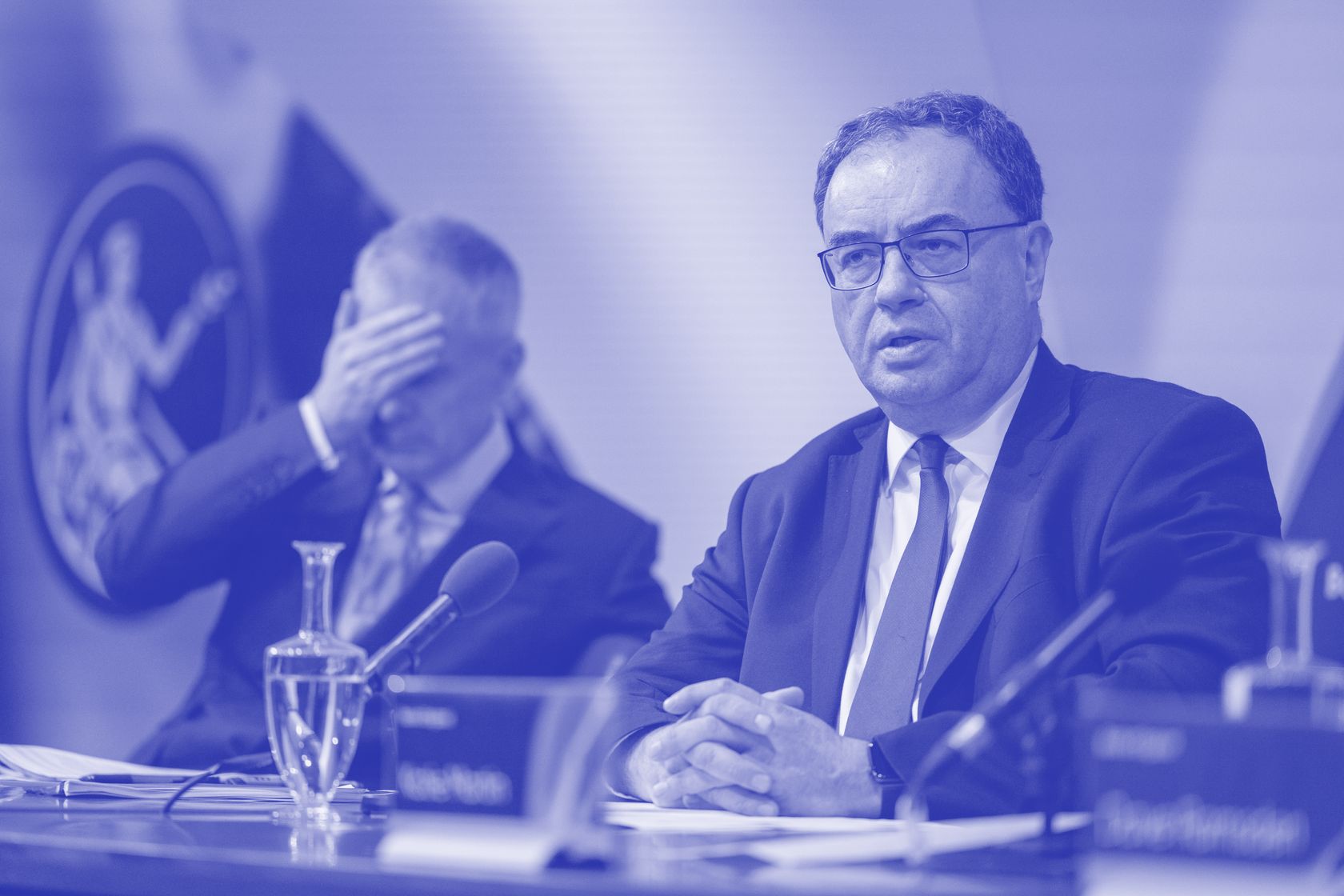
Hold steady: The Bank of England has held rates at a 16-year high of 5.25% and signalled that it is likely to cut rates over the coming months if inflation continues its downward trajectory. The UK’s inflation rate is currently sitting at 3.2%, above the central bank’s target of 2%. The BoE's Monetary Policy Committee voted by a majority of 7-2 to maintain the bank rate at 5.25%, with two members preferring to reduce the rate by 0.25 percentage points to 5%. Governor of the central bank, Andrew Bailey, told a press conference following the rates announcement that a rate cut at the BoE’s June Committee meeting was neither “ruled out nor a fait accompli.” Bailey also explained that the Committee now expects inflationary pressures to ease slightly faster than previously assumed, cutting the CPI forecast to 2.5% in 2024, down from the 2.75% forecast in February. (Bank of England press release)(Bloomberg)
2.
Israel-Hamas war: Over 80,000 people have fled the city of Rafah in Southern Gaza since Monday according to the United Nations, as Israeli tanks and warplanes strike parts of the city. Israel’s military has said that its ground forces are conducting targeted activity in the Rafah's east, after the latest round of negotiations held in Cairo ended, seeing Israel proceed with its planned operation. The attacks come after President Joe Biden halted the shipment of US weapons to Israel over concerns that they would be used for attacks in the civilian-dense Rafah. On Thursday, Israel’s military spokesperson said that the IDF has the necessary weapons to push ahead with its offensive in the city. (Associated Press)(BBC)
3.
Greasing hands: Donald Trump promised executives from oil majors that he will reverse dozens of the Biden administration’s environmental policies should he win the Presidency. According to a report by the Washington Post, Trump also used the opportunity to request USD1 billion ($1.51 billion) in funding for his presidential campaign. The meeting, which reportedly took place in Trump’s Mar-a-Lago estate last month, saw Trump take aim at President Biden’s rules on emissions, electric vehicle promotion and his suspension on awarding permits for new liquefied natural gas exports. Around two dozen executives from oil majors including Chevron, Continental Resources, Exxon, Cheniere Energy and Occidental Petroleum among others, were told that the reversals would be made with immediate effect if Trump's bid was successful. (The Washington Post)
4.
China disclosures: The UK government is facing pressure from banks and corporations to soften proposed restrictions on doing business with China. The draft national security legislation aims to boost transparency around dealings with countries that pose a potential risk to the UK. Executives are pushing for minsters to refrain from including China in the strictest risk category, as they argue that would impede business and prompt negative publicity if companies are forced to declare their relationships. The Foreign Influence Registration Scheme is a measure within the proposed legislation, which would require firms doing business with certain countries categorised in the ‘enhanced tier’ to declare their involvement with entities deemed to be controlled by the Chinese state. (Bloomberg)
5.
Starlink secured: SpaceX and the Pentagon have joined forces to block Russia from accessing and using Starlink internet terminals on the battlefield in Ukraine. The Defense Department’s outgoing space policy chief, John Plumb, said that the US has been working with the government of Ukraine and SpaceX to counter illicit Russian use of the terminals. He said that while Russian use of the terminals has been curbed, “I am certain Russia will continue to try and find ways to exploit Starlink and other commercial communications systems.” Without disclosing details on how Russia’s use of Starlink has been curtailed, Plumb said that SpaceX has made a “very reliable partner” in “providing services that are useful to the Defense Department.” By May 2022, Ukraine had received 10,000 Starlink terminals which are used to provide communications as it fights Russian invasion. The Pentagon subsequently awarded SpaceX with a 12 month, USD23 million contract which is due to expire this month. (Bloomberg)
6.
Budget balancing act: Finance Minister Katy Gallagher told Capital Brief that this year’s Budget has been the most difficult yet, due to the competing challenges of inflation, cost of living and slowing growth. Gallagher conceded that it has become more difficult to find savings in each budget, but revealed the government’s ongoing spending audit has this year identified $27.9 billion in savings and reprioritisations - bringing the total to $77.4 billion since Labor came to government. The Finance Minister also said she was not surprised by economists’ concerns that Albanese’s answer to Joe Biden’s Inflation Reduction Act, the Future Made in Australia Act, could risk wasting taxpayer money by trying to “pick winners” and create a new class of businesses forever reliant on subsidies. (Capital Brief)
7.
Labour cool-off: The number of Americans applying for unemployment benefits rose to its highest level in over eight months last week, signalling that the US’ labour market may be softening. Claims for the week ending 4 May rose by 22,000 to 231,000, an increase on the 209,000 claims made the week prior. The US Department of Labor’s unemployment claims data is used as a proxy to gauge the amount of layoffs seen in a given week. The news follows data release last week that the US economy added the fewest number of jobs in six months during April, with job openings also dropping to a three-year low in March. A cooling labour market could add to motivation for the Federal Reserve to cut rates. (Reuters)(Department of Labor press release)
8.
Winds of growth: French AI startup Mistral AI is reportedly nearing a deal to raise funds at a valuation of USD6 billion, which would see it triple its valuation in a period of just six months. According to unnamed sources cited by the Wall Street Journal, existing Mistral AI investors General Catalyst and Lightspeed Venture Partners will lead a new funding round of around USD600 million. Mistral had raised over USD500 million as of December last year. Appetite for AI investment remains strong, and the European AI platform which was founded only two years ago by former Google and Meta researchers has been garnering attention as a dedicated proponent of open-source generative AI tools, aiming to grow an ecosystem of users for its tools. Mistral plans to challenge industry behemoths including OpenAI and Google by designing and commercialising more affordable AI solutions that compete at the same level. (Wall Street Journal)
