Bondi attack lifts One Nation as Albanese backflips on royal commission
Plus: Trump fuels defence rally ahead of tariff rulling; Nvidia shares hit amid reports of strict upfront payment terms for Chinese buyers; Airwallex and peers erode big banks’ FX dominance.

Good morning. Here's what happened overnight and what you need to know today.

1.
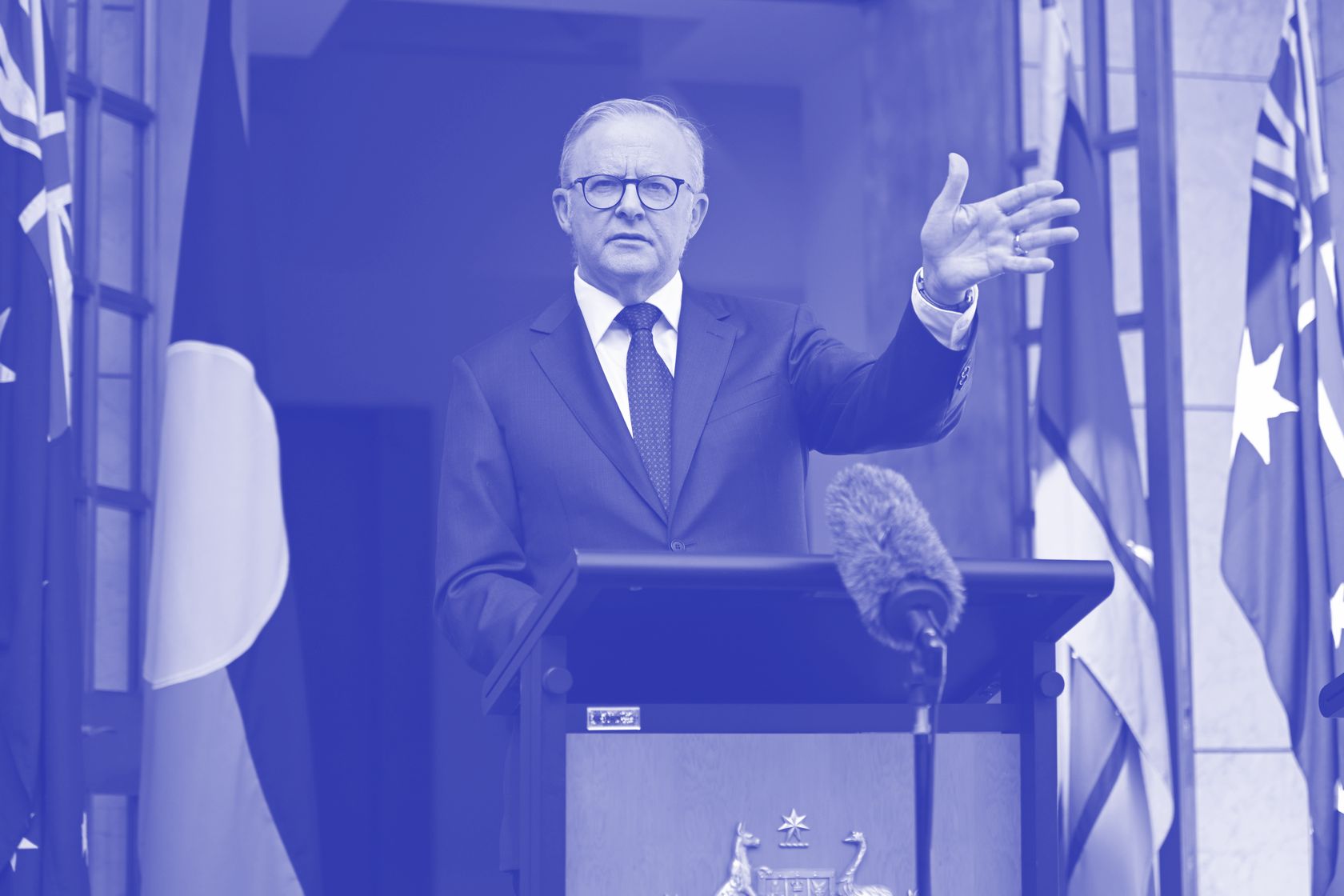
Bondi fallout: One Nation’s primary vote is now level with the Coalition’s according to new polling from DemosAU conducted exclusively for Capital Brief, as the right-wing minor party’s post-election surge continues in the wake of the Bondi terror attack. The survey, which polled more than a thousand Australians, found 23% would cast their first preference for One Nation if an election were held today — the same number as those backing Ley’s Coalition. Labor would still comfortably retain power on preferences, leading the Coalition 52–48 on a two-party-preferred basis. The polling comes as Anthony Albanese bowed to pressure and announced a royal commission in the wake of the Bondi terror, with former High Court justice Virginia Bell to lead the inquiry. Labor had for weeks resisted calls to implement a royal commission into the attack, arguing it would take too long to produce a result and platform hate speech. While Bell’s appointment has received a mixed reaction from the Jewish community, Albanese said he had “consulted widely” on the decision. Meanwhile, NSW Premier Chris Minns said the state royal commission would now not proceed and that NSW would instead fully cooperate with the Commonwealth inquiry. (Capital Brief)(The Australian)(AFR)
2.
Defence rally: Donald Trump’s call for a USD1.5 trillion military budget, up 50% from current levels, sparked a sharp rally in defence stocks and drove a broad market rotation away from big tech. Shares in Lockheed Martin, Northrop Grumman, RTX and L3Harris jumped after rebounding from losses a day earlier, as Trump threatened to block dividends and buybacks unless contractors accelerated weapons production. The S&P 500 aerospace and defence sub-index hit an all-time high, while the Nasdaq was down 0.64% in afternoon trading, as tech stocks slid. Alphabet was the exception, rising around 1% to surpass Apple as the second-most valuable US company. Meanwhile, US Treasury yields climbed after jobless claims came in below expectations and the trade deficit narrowed 39% in October to USD29.4 billion (the lowest since 2009) partly driven by a sharp drop in pharmaceutical imports. Meanwhile, investors are watching for Friday’s US payrolls report and a possible Supreme Court ruling on Trump’s emergency tariff powers. And a UN report forecast global economic growth will ease to 2.7% in 2026. (Bloomberg)(WSJ)(Reuters)(Capital Brief)
3.
Hedged sales: Nvidia is reportedly demanding full upfront payment from Chinese customers for its H200 artificial intelligence chips as it navigates uncertainty over whether Beijing will approve the shipments, Reuters reported. Citing two unnamed people briefed on the matter, the agency said the strict terms mean orders cannot be cancelled, refunded or changed once placed, though in some cases customers may use commercial insurance or asset collateral instead of cash. According to the news agency, Chinese tech companies have ordered over 2 million H200 chips at around USD27,000 each, exceeding Nvidia’s inventory of 700,000. The move comes after Nvidia last year had to write down USD5.5 billion in inventory after the Trump administration banned it from selling its chips to China. Beijing has reportedly asked some firms to pause orders while regulators decide how many domestic chips must be bought with each import. Meanwhile, Bloomberg reported China plans to approve some imports this quarter for select commercial use, excluding the military and state-linked sectors. Nvidia shares were trading up to 2.7% lower Thursday afternoon in New York. (Reuters)(Bloomberg)(The Information)(Capital Brief)
4.
Payments land grab: When it was founded in 2015, Airwallex was a scrappy fintech with a fledgling cross-border payments business. A decade later, it processes USD235 billion ($348 billion) a year and continues to raise funds at an accelerating valuation, despite alleged red flags around its operations. Its runaway success places Airwallex among a cohort of unicorns raiding what was once a lucrative foreign exchange (FX) business for the big banks, while rapidly expanding into the broader payments ecosystem. Collectively, this group — including UK startups such as Wise and Revolut — now processes more than USD1 trillion annually, according to a tally of each company's claims conducted by Capital Brief. In siphoning capital and customers from legacy institutions, they're also reshaping risk across the financial services sector. Their success has been enabled by the evolving regulatory landscape for deposits, but financial crimes watchdogs have been tightening their focus on payments companies operating at the riskier end of the spectrum. Separately, Worldpay’s Colin Baines warned the NPP could “fall by the wayside” unless governments increase use. (Capital Brief)
5.
Power rebuff: The US Senate voted 52–47 to advance a resolution requiring President Trump to seek congressional authorisation for any further military action in Venezuela following the surprise US military raid that removed president Nicolás Maduro. Five Republican senators joined Democrats in voting to advance a resolution invoking the War Powers Act. While the resolution faces steep hurdles, including a likely veto by Donald Trump, its advancement reflects rare bipartisan concern over escalating US military involvement without congressional approval. Meanwhile, Russia’s foreign ministry warned the US seizure of the reflagged Russian tanker Marinera this week risked provoking military escalation at sea and accused Washington of violating international law, the Financial Times reported. Also, Venezuelan authorities announced they would release “an important number” of political prisoners, both Venezuelan and foreign nationals, within hours. And Reuters reported the Trump administration is considering lump‑sum payments of up to USD100,000 per person to Greenlanders as part of a plan to acquire the Danish territory. (NYT)(Reuters)(Bloomberg)(FT)
6.
Sale scrutiny: China said that it will investigate Meta’s acquisition of AI startup Manus to assess whether the deal violates the country’s technology export controls. China’s Ministry of Commerce said on Thursday that it will conduct an assessment and investigation into how the acquisition complies with laws and regulations tied to export controls, technology import and export, and overseas investment. “The Chinese government has always supported enterprises in conducting mutually beneficial and win-win transnational operations and international technological cooperation in accordance with laws and regulations,” Ministry of Commerce spokesperson He Yadong said at a press briefing. The ministry will work with relevant departments to conduct an assessment and investigation into the consistency of this acquisition with laws and regulations, He said. While terms of the deal were not disclosed, the WSJ in December reported that the transaction will see Meta acquire the startup which has been touted as the next DeepSeek for over USD2 billion ($3 billion). (Xinhua)(NYT)(CNBC)(Reuters)(Capital Brief)
7.
Not constructive: The Stokes family-controlled SGH and Nasdaq-listed Steel Dynamics have been left reeling by BlueScope’s blunt rejection letter, in which chair Jane McAloon scolded the suitors for trying to buy the group “on the cheap” with an offer that “drastically undervalued” its assets. One source told Capital Brief that “The tone is not constructive,” noting that BlueScope had “not engaged with the bidders in any way” since the proposal was tabled on 12 December. BlueScope’s announcement on Wednesday included a breakdown of its asset value, amounting to a combined $16 billion figure, which equates to roughly $36.50 per share, dwarfing the consortium’s $30-per-share proposal. BlueScope shares last closed at $29.87. Another source told Capital Brief that BlueScope feels aggrieved that Steel Dynamics submitted a fourth bid at an even lower valuation than its rejected third proposal. Despite the bad blood, SGH and Steel Dynamics may remain at the negotiating table. (Capital Brief)
8.
Uncomfortable comps: Versant Media’s share slump has become Paramount’s key weapon in its fight to derail Netflix’s bid for Warner Bros Discovery, with the studio saying the planned cable spinoff central to Netflix’s offer is effectively worthless. In a statement Thursday New York time, Paramount reaffirmed its USD108.4 billion, USD30-per-share bid, saying its proposal offers more value than Netflix’s USD27.75-per-share cash-and-stock offer, which excludes Warner Bros’ cable assets and would hand shareholders equity in a new company, Discovery Global. Paramount said the poor debut of Versant (a recent Comcast cable spinoff) combined with Discovery Global’s USD15.1 billion in debt, supports its zero valuation of the unit. That came after the Warner Bros’ board again rejected Paramount’s offer, citing an “extraordinary amount of debt financing,” saying its bid poses greater risks and uncertainties than Netflix’s USD82.7 billion offer. Shareholders remain divided. Pentwater Capital said the board breached its fiduciary duty by refusing to engage. Gabelli Funds said it is “likely” to support Paramount. Harris Oakmark backed the board but remains open to a better offer. Paramount’s tender closes 21 January. (Reuters)(Bloomberg)
