💰 Budget 2024: Chalmers' last stand
It's unclear whether this is an election budget, but Treasurer Jim Chalmers is setting up a stark choice for voters.

You didn’t need to look very far to find the needle the government is trying to thread in the 2024-25 budget. The main brochure distributed to journalists in the lockup was called: “Cost of living help & a future made in Australia”.
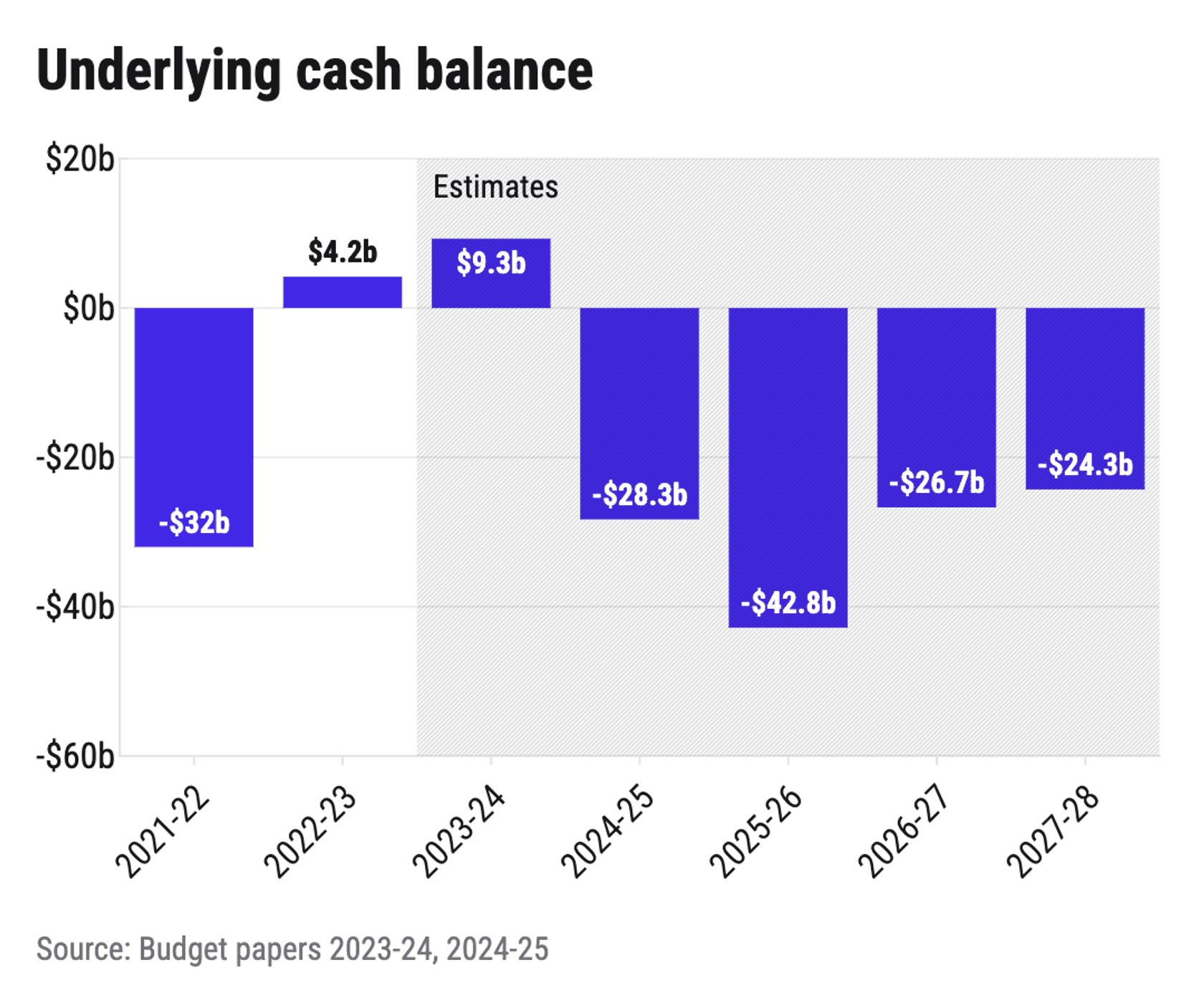
The two seemingly disparate aims spoke volumes about the challenge Treasurer Jim Chalmers faced as he put together the document. Posting a surplus of $9.3 billion in 2023-24, Chalmers needed to convince Australians the government was doing enough on the cost of living, while also selling Prime Minister Anthony Albanese’s ambitious interventionist green policy which is all about setting the country up for prosperity years from now.
On the first point, apart from the changes to the stage 3 tax cuts announced in January, Chalmers has focused most of his attention on power bills with $300 rebates to every household and $325 to around one million small businesses from 1 July, at a cost of $3.5 billion. Far from the rebates adding to inflation, Chalmers is claiming they will shave 0.5 percentage points off the headline inflation rate — but economists will be sceptical (as they will be about Treasury’s forecasts of bigger deficits and higher growth in the years ahead, yet inflation still moderating).
At the same time, the budget has committed $22.7 billion over the next decade to deliver Albanese’s flagship Future Made in Australia Act. The policy was announced last month as the Prime Minister’s answer to Joe Biden’s Inflation Reduction Act with a glaring lack of detail.
