Canada’s Prime Minister Justin Trudeau resigns
Plus: Trump denies WaPo report of pared-back tariff plans; Qualcomm, Alphabet, Intel make waves ahead of Nvidia's CES moment; Fed’s top regulator resigns, clears way for Trump pick.


Good morning. Here's what happened overnight and what you need to know today.

1.
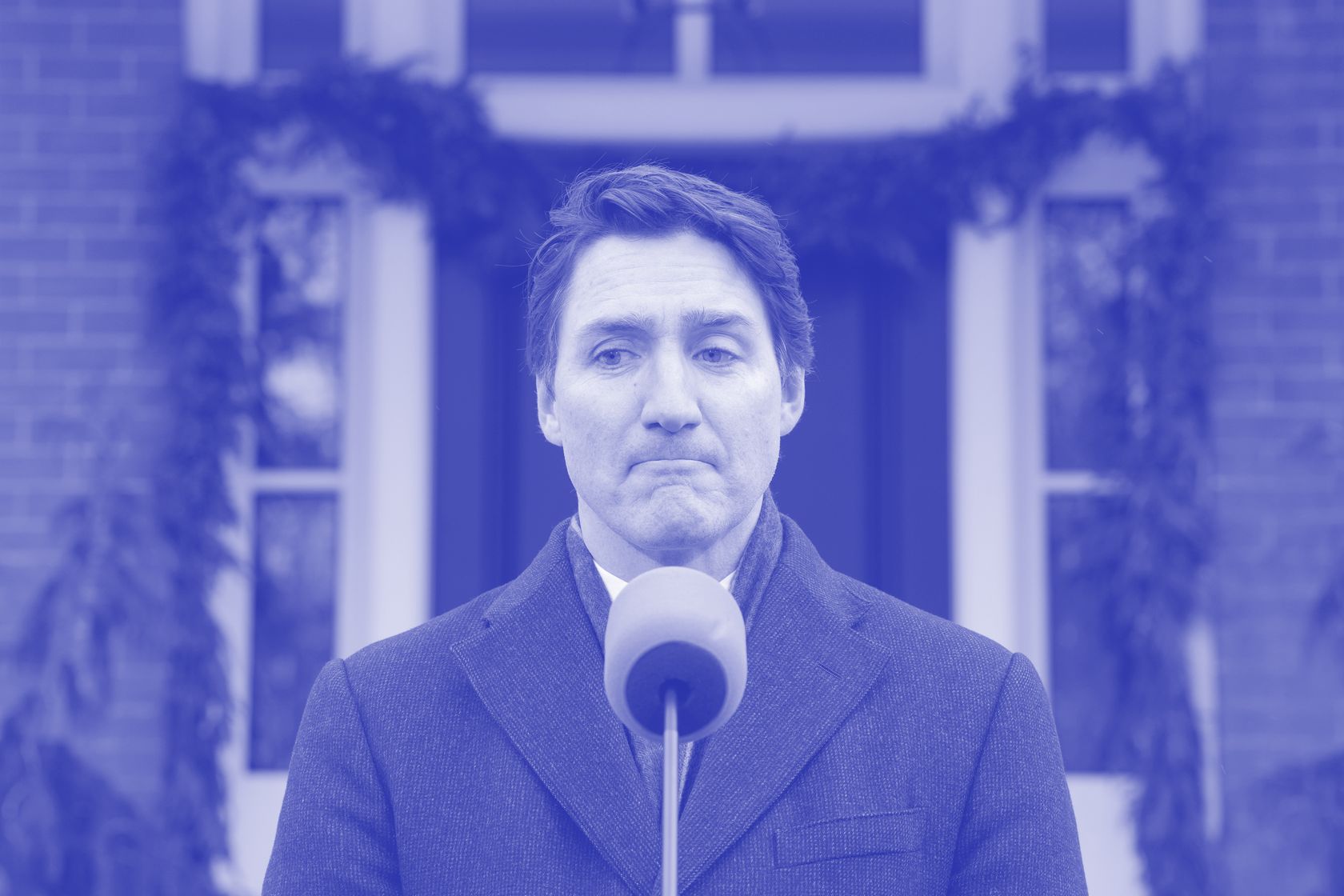
Trudeau exit: Canadian Prime Minister Justin Trudeau announced his resignation as Liberal Party leader and prime minister after nine years in power. Under mounting party pressure and plummeting polls ahead of this year’s election, Trudeau, 53, said he would step down once a successor is chosen through a nationwide leadership race. Currently the longest-serving leader of any G7 country, Trudeau will remain in office until the process is complete, with Parliament suspended until 24 March to facilitate the transition. Trudeau cited internal party tensions and his inability to fight both internal and external battles effectively. His leadership has faced growing dissent, declining public support, and criticism, including over rising prices and a housing shortage that have eroded his popularity. Deputy Prime Minister Chrystia Freeland’s December resignation, following his attempt to demote her, further intensified calls for him to step aside. Trudeau urged Canadians to support the next Liberal leader as the country faces political challenges and economic uncertainties, including US President-elect Donald Trump’s proposed tariffs. “I reflected over the holidays and told my family last night. It’s time for a reset... for the people to have a fresh start in Parliament,” he said. “This country deserves a real choice in the next election.” (Capital Brief)(Bloomberg)(NYT)(Reuters)
2.
Tariff plans: Aides to President-elect Donald Trump are reportedly considering tariffs targeting imports from all countries but limited to critical sectors, The Washington Post reported, citing three unnamed sources. However, Trump denied the claims on a social media post, calling them "Fake News". If implemented, the plan would significantly narrow Trump’s campaign promise of 10-20% universal tariffs on all imports, reportedly in response to concerns about inflation and political backlash. The report suggested the proposed plan, still under discussion, would focus on defence (steel, aluminium, copper), medical supplies (syringes, vials, pharmaceutical materials), and energy materials (batteries, rare earth minerals, solar panels). The US dollar fell 1%, the Euro and the Australian dollar rallied, and European and US markets rose on the news, even as the Post noted no final decisions had been made. (WaPo)(Reuters)(Capital Brief)
3.
CES fest: Qualcomm unveiled its new Snapdragon X Platform chips, designed to power personal computers running advanced AI software at prices starting from USD600 ($961.48), stepping up its challenge to Intel and ADM. Announced at the CES trade show in Las Vegas, formerly known as the Consumer Electronics Show, the platform integrates an 8-core Oryon processor, a graphics unit and a dedicated AI chip. It will support Microsoft’s Copilot+ software, with laptops and small desktop machines from Dell and Lenovo set for early 2025 release, the chipmaker said. Qualcomm, led by CEO Cristiano Amon, claims its chips maintain full performance on battery power, unlike rivals that require throttling. Earlier Monday at CES, Intel announced new chips that it claims seize back battery life, Alphabet said it will bring Gemini AI to TV sets running its software, and Amazon’s Ring home security unit announced upgrades. Meanwhile, Nvidia shares rose over 5% to USD152.15 ahead of CEO Jensen Huang's keynote, putting the stock on track to surpass its USD148.88 record close last November. (Bloomberg)(Yahoo Finance)
4.
Fed moves: Federal Reserve Vice Chair for Supervision Michael Barr announced he will resign on 28 February, more than a year before his term ends, citing the “risk of a dispute” over his job as a potential distraction. His departure clears the way for President-elect Donald Trump to appoint a new bank regulator and pursue a more industry-friendly agenda. Barr, a Biden appointee, had pushed for tougher banking rules, which faced significant opposition from the financial sector. Barr said he will remain as a Fed governor, which limits Trump’s ability to name a replacement due to the lack of open seats on the seven-member board, Reuters noted. Fed Governor Michelle Bowman, a frequent critic of Barr’s regulatory efforts, is widely seen as a likely candidate for the role. Barr’s exit comes amid broader concerns about preserving the Fed’s independence, with reports that Trump’s advisers are seeking ways to increase presidential influence over the central bank. (Fed release)(Reuters)
5.
PE plans: Private equity firms plan to lobby the incoming Trump administration to access US retirement savings, a move that could unlock trillions in US retirement savings for private investments, The Financial Times reported citing industry executives. The USD13 trillion ($20 trillion) industry wants to expand deregulatory measures introduced during Trump’s first term, allowing tax-deferred plans like 401ks to include private investments such as leveraged buyouts and illiquid property, the FT said. Industry leaders like Apollo’s CEO Marc Rowan have argued retirement savings overly rely on liquid index funds. Historically limited to institutional investors, private investment funds carry higher fees and risks, and some have expressed concern about individual investors' ability to discern credible funds. (FT)
6.
Steel suit: US Steel and Nippon Steel sued President Joe Biden, alleging his decision to block their proposed USD14.1 billion ($22.57 billion) merger violated constitutional rights and was politically motivated to secure union support ahead of the 2024 election. The lawsuit seeks to overturn the decision, with the companies claiming Biden influenced the Committee on Foreign Investment in the US (CFIUS) to prevent a fair review. A second suit accuses Cleveland-Cliffs, its CEO Lourenco Goncalves and union leader David McCall of collusion and anticompetitive behaviour. Cliffs had attempted to acquire US Steel in 2023 with union backing but was outbid by Nippon in December. The merger was blocked after a year-long CFIUS review, citing national security risks. The suit comes amid media reports alleging Biden ignored advice from his top national-security advisers. A White House spokesperson defended the decision as necessary to protect US national security, while Nippon Steel vowed to fight the block. “We can’t back down after being treated unreasonably. We will fight back thoroughly,” Nippon vice chair Takahiro Mori said. (Capital Brief)(Nikkei)(Reuters)(WSJ)
7.
Streaming deal: Disney has taken a controlling 70% stake in a merged venture with FuboTV, combining their live TV streaming services into a USD6 billion ($9.62 billion) powerhouse with over 6.2 million subscribers, the companies said. The deal will create the second-largest online pay-TV provider in North America, behind YouTube TV, and resolves a high-stakes lawsuit over Venu Sports, a joint streaming platform by Disney’s ESPN, Warner Bros Discovery and Fox, which Fubo alleged was unfairly restricting access to critical sports channels. The settlement includes a USD220 million payment to Fubo by the parties, and a USD145 million loan commitment from Disney in 2026. While Hulu + Live TV and Fubo will remain distinct offerings, the merger strengthens Fubo’s sports and news focus with expanded access to Disney networks, including ESPN+. The combined company anticipates surpassing USD7.5 billion in revenue by 2028. (WSJ)(FuboTV and Disney statement)
8.
Tech blacklist: The US Defence Department added Tencent Holdings, CATL, Changxin Memory Technologies, Quectel Wireless and Autel Robotics to its Section 1260H list of 134 companies alleged to have ties to China’s military, according to media reports citing a Federal Register notice. The designation does not impose immediate sanctions but acts as a warning to US businesses and may lead to Treasury Department action. Tencent and CATL have denied the allegations, calling their inclusion a mistake. The Pentagon removed six firms, including Beijing Megvii Technology and China Railway Construction from the updated list. The list stems from a 2020 executive order barring US investment in Chinese military-linked companies. Tencent’s US shares fell nearly 10%, while major shareholder Prosus NV dropped 9.6%. Some companies, such as Xiaomi in 2021, have successfully contested their inclusion. DJI and Hesai Technologies remain on the list despite previous lawsuits.(Reuters)(Bloomberg)
