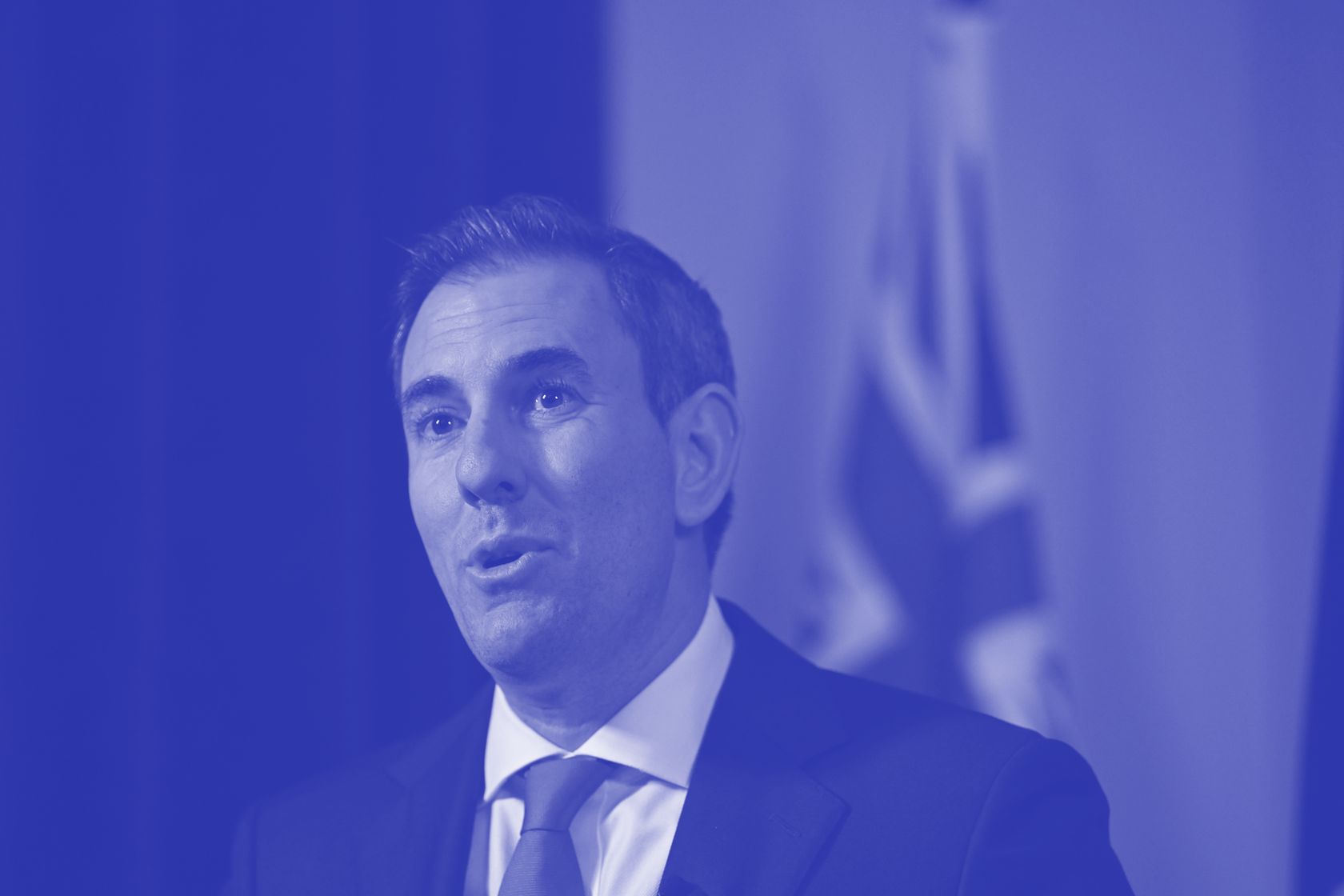
Chalmers flags bigger deficits over next 4 years
Plus: Israel shuts down local Al Jazeera operations; President Xi Jinping begins his tour of Europe; Bonza owner 777 Partners sued for alleged fraud.
Good morning. Here's what happened overnight and what you need to know today.
Get Standup in your inbox Signed up to Standup
1.
Cash splash: Treasurer Jim Chalmers is expected to unveil a loosening of fiscal policy in next week's federal budget amid an anticipated $25 billion increase in tax revenue over the next four years. While this extra revenue will largely be banked, spending increases and cost blowouts are projected to more than offset it, leading to a worsening budget position from 2024-25 onwards compared to December's mid-year forecasts, with more substantial deficits. Chalmers flagged a smaller than expected revenue upgrade, citing a fall in commodity prices and a softer labour market. “We are realistic about the challenges facing our economy and our budget,” Chalmers said. The treasurer aims to strike a balance between supporting economic growth, easing cost-of-living pressures, building fiscal buffers and getting inflation under control. However, some economists urge spending restraint to avoid adding to inflationary forces, advising savings measures to offset any new spending initiatives. The government yesterday announced a change to HECS-HELP indexing, wiping $3 billion in student debt. (Australian Financial Review)(The Australian)
2.
Shut down: Israeli officials raided and seized equipment from Al Jazeera's Jerusalem offices on Sunday, hours after the government ruled that the Qatar-based network could not operate in Israel. Communications ministry inspectors, accompanied by police, confiscated equipment and cut off Al Jazeera's broadcasts and website access throughout Israel. Communications Minister Shlomo Karhi, a key advocate for terminating Al Jazeera's activity in Israel, posted a video of inspectors confiscating equipment during the raid. Al Jazeera denounced the "criminal act" as a violation of human rights, while the Association for Civil Rights in Israel petitioned the Supreme Court against the move, which the Foreign Press Association condemned as aligning Israel with "authoritarian governments" targeting media. The shutdown stems from a new law allowing Israel to act against foreign outlets deemed harmful based on consultations with security officials. (Reuters)(Financial Times)

3.
Xi in Europe: Chinese president Xi Jinping is on tour in Europe for the first time in five years, aiming to ease escalating China-EU tensions that threaten a potential trade war. His visit comes amid EU investigations into Chinese companies, including a major anti-subsidy probe into electric vehicles that could lead to substantial tariffs on Chinese imports. While Xi faces tough talks in France over trade issues and Ukraine, he expects a warmer welcome in Serbia and Hungary, where soaring Chinese investment highlights both the benefits of close Beijing ties and EU divisions. Beijing is determined to counter a perceived drift in Europe-China relations, planning a "charm offensive" alongside warnings against EU protectionism. Discussions on the war in Ukraine, where Europe wants China to pressure Russia, loom large despite Beijing's resistance. (Financial Times)(CNN)
4.
Powered Paris: The French government is set to sign a comprehensive agreement with the automotive industry and unions on Monday, coinciding with President Xi's state visit and amid trade tensions in the EV sector. The "strategic sector contract" aims to boost the sales of 100% electric vehicles to 800,000 units by 2027, a fourfold increase from current levels. It also targets a sixfold increase in electric light commercial vehicle sales to 100,000 units annually by 2027. While the agreement does not specify new subsidies, the government pledges to continue supporting EV purchases and leases. The pact includes a chapter on "ensuring our sovereignty" by stress-testing supply chains for critical materials. This move comes as France and other nations raise concerns over overcapacity in China's EV market, potentially overwhelming domestic industries. (Bloomberg)
5.
Fraud alarm: Lenders to 777 Partners, the Miami-based investment firm that owns collapsed budget Australian airline Bonza, have accused the firm and its co-founder Josh Wander of fraud in a lawsuit. The allegations claim 777 Partners borrowed against USD350 million ($530 million) in assets it didn't actually own, didn't exist or had already pledged as collateral to other lenders. The lawsuit alleges that 777 Partners co-founder Josh Wander admitted to fundamental breaches of loan agreements, including double-pledging assets as collateral. It also claims that 777 Partners admitted to fundamental breaches of agreements and that its operations are effectively controlled by New York-based insurance company Advantage Capital Holdings, to which 777 Partners owes over USD2.2 billion. (Bloomberg)(The Australian)
6.
Seeing green: Shell sold millions of carbon credits to major oil sands companies operating in Canada, despite these credits not being backed by actual CO₂ reductions, the Financial Times reported. As part of a subsidy program, the Alberta government allowed Shell to register and sell carbon credits equivalent to twice the volume of emissions avoided by its Quest carbon capture facility between 2015 and 2021, even though the facility did not achieve those reductions. Shell was then able to register 5.7 million credits without corresponding reductions and sell them to companies like Chevron, Canadian Natural Resources, ConocoPhillips, Imperial Oil, and Suncor Energy. While Shell defended the need for market incentives to realise the potential of carbon capture, environmental groups criticised the sale of unearned credits as exacerbating climate change. (Financial Times)
7.
Succession plan: At Berkshire Hathaway's annual meeting on Saturday, legendary investor Warren Buffett praised the executives expected to succeed him – Vice Chairmen Greg Abel and Ajit Jain – saying they have proven themselves ready to lead the USD862 billion ($1.3 trillion) conglomerate after he departs. Berkshire trimmed its massive USD174.3 billion Apple stake by 13% in Q1 amid the tech stock's 11% price drop, but Buffett heaped praise on the company and described the iPhone as potentially the "greatest product of all time" and an even better business than Coca-Cola and American Express, pledging it would remain Berkshire's biggest equity investment. Berkshire's operating profit jumped 39% to a record USD11.2 billion and cash swelled to USD189 billion. (Reuters)
8.
Hot deal: Paramount Global's special board committee met Saturday to evaluate offers for the company after ending exclusive negotiations with Skydance Media on Friday. The committee reportedly signed off on beginning deal talks with a bidding group of Sony Pictures and Apollo Global Management, with Apollo potentially taking the broadcast license for CBS. That deal is reportedly valued at USD26 billion ($39.3 billion). Meanwhile, Skydance is evaluating its options after months of failed talks with Paramount and controlling shareholder Shari Redstone. Paramount, which owns Australia's Network Ten, has struggled with impacts from Hollywood strikes, a soft ad market, falling cable subscriptions, and lagging subscriber numbers for its Paramount+ streaming service compared to Netflix and Disney+, leading to a 65% stock drop since 2019. Hollywood heavyweights including director James Cameron and "super agent" Ari Emanuel have backed the Skydance bid. (Reuters)(Financial Times)