Chalmers pushes back on critics ahead of reform summit
Plus: Trump uncertainty forces one-in-five Aussie companies to pause M&A; Trump to push Ukraine peace deal tied to security guarantees; Eyes on Powell at Jackson Hole for rate cut signals.

Good morning. Here's what happened overnight and what you need to know today.

1.
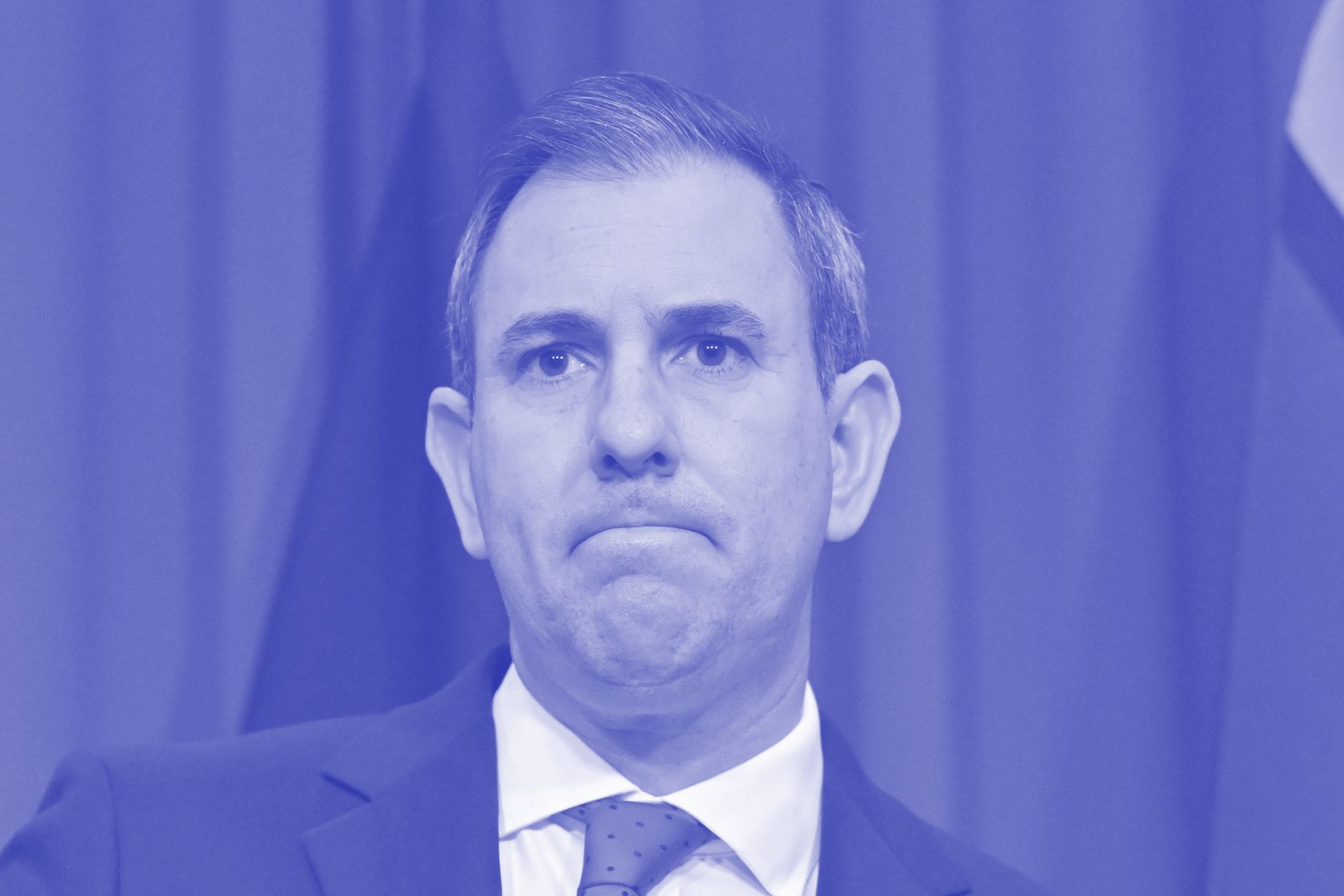
Red-tape reform: Despite some expectations management from the federal government, all eyes will be on Canberra this week and the Economic Reform Roundtable, which is expected to provide ideas for immediate and long-term policy change to lift productivity. Treasurer Jim Chalmers doesn't want to pre-empt the outcomes of the Roundtable, but he is keen to counter critics, including those who suggest his ambitions have caused tension with Prime Minister Anthony Albanese. “I see this as three days to help inform the next three budgets,” Chalmers told Capital Brief. One of his first unprompted points was to “pre-empt the critics that say that this is not worth the effort”. Meanwhile, the Productivity Commission will say today that growth has slipped from governments’ priority lists and called on the Albanese government to act decisively, or risk being judged on its outcomes. While the Alliance of Industry Associations will call for a 25% reduction in red tape by 2030, planning and major project approvals reform, an innovation agenda, and a process for productive tax reform that doesn’t raise costs for consumers or businesses. (Capital Brief)
2.
Boardroom freeze: Sharemarkets might be at record highs, but the unpredictability of US President Donald Trump’s second term is denting confidence inside Australia's biggest boardrooms. Around one in five (21.5%) of Australia's largest corporates is pausing M&A due to Trump-related uncertainty, according to exclusive data from East & Partners. Fewer than one in ten are actively hunting acquisition targets, despite 78.5% saying they are planning or open to M&A over the next 12 months. In Q1 2025, Australia recorded USD11.7 billion worth of transactions, a 23% drop year on year. The new M&A Index, released in partnership with Capital Brief, shows dealmakers and external advisors remain active, with 15.1% of decision makers being pitched and 14% considering divestments or spin-offs. Companies estimated their M&A activity grew 12.2% in the 12 months to July and expect 11.7% of business growth over the coming year to come from acquisitions. AI-related capex and expectations of interest rate cuts continue to drive activity. (Capital Brief)
3.
Russia-Ukraine war: European leaders committed to join Ukrainian leader Volodymyr Zelensky when he meets with Donald Trump on Monday in Washington, as Zelensky faces intensifying pressure from the US to agree to a peace deal with Russia that involves relinquishing territory. Trump said he will urge Zelensky to make a deal following his Friday summit with Vladimir Putin in Alaska, seeming open to Putin’s demand of Ukraine ceding territory. EU leaders are sceptical that a peace deal will be achieved quickly and are unconvinced that Putin is looking to reach an agreement. Trump spoke with EU leaders after the Friday meeting, telling them he was prepared to contribute to security guarantees with Europe, Bloomberg reports. The talks on Monday are expected to include territorial issues, security guarantees, and continued support for Ukraine in its defence against Russian aggression. (Bloomberg)(WSJ)(Politico)(FT)(Truth Social)(Capital Brief)
4.
Jackson’s focus: US Federal Reserve Chair Jerome Powell is set to speak at the Jackson Hole Symposium this week, where he is expected to unveil the Fed’s new policy framework and possibly drop hints about the outlook for rate cuts ahead of the September meeting. Markets are pricing in a near-certain quarter-point rate cut in September, with at least one more by year-end. Policymakers, however, are divided and Powell is not expected to be as frank as last year, when he used Jackson Hole to telegraph that the Fed was ready to cut rates. The settings are complex, with inflation still above the Fed’s 2% goal and the labour market showing signs of slowing. After a three-day tour through parts of Alabama and Mississippi, Atlanta Fed President Raphael Bostic said consumers were growing more stressed and tariff costs were real. Bostic is not a voter on rates this year. (FT)(Bloomberg)
5.
Tariff pain: US delays on agreed tariff cuts are leaving businesses in the UK, EU, Japan and South Korea facing mounting losses and growing frustration over fears of ‘forever negotiations’, Bloomberg reports. In Japan alone, carmakers are losing millions of yen every hour as they wait for the US to sign off on the tariff changes announced last month. More than three months after UK Prime Minister Keir Starmer declared that US tariffs on British steel would be cut to zero, the relief has not yet become reality. Similar delays affect Japan, the EU and South Korea, all of which have announced deals with Washington but continue to face heavy US auto tariffs. With Europe, the document formalising the EU-US deal has been reportedly delayed by squabbles over language on “non-tariff barriers”, including the bloc’s digital rules. Some are warning the EU could face pressure to retaliate if implementation continues to stall. (Bloomberg)(FT)
6.
Copyright conundrum: The Albanese government signalled it will not consider any proposals related to Australian copyright laws until at least later this year, despite a controversial Productivity Commission recommendation aimed at helping train AI models. The recommendation triggered a wave of backlash from media executives, rights holders and creators earlier this month, prompting senior ministers to play down any suggestion that Labor plans to loosen copyright laws imminently. Attorney-General Michelle Rowland, who has oversight of copyright, has no current plans to make changes, according to a senior source with direct knowledge of her position. Rowland has not yet spoken publicly on the issue. Industry Minister Tim Ayres, who broadly represents the innovation sector, is also not pushing for copyright reform, Capital Brief has confirmed. Treasurer Jim Chalmers has similarly indicated he does not support the idea. (Capital Brief)
7.
Asylum granted: Former pro-democracy activist Ted Hui has been granted asylum in Australia, more than four years after he left Hong Kong to evade charges on national security. Hui said via a Facebook post that he had received notice from the Australian Department of Home Affairs granting protection visas to him, his wife, children and parents. “This decision reflects values of freedom, justice, and compassion that my family will never take for granted,” he said. Hui is a longstanding critic of the Hong Kong and Beijing authorities and is among a number of activists targeted in 2023 by police bounties of HK$1 million ($200,000) each. In response to the decision, the Hong Kong government said that it disapproved of “the harboring of criminals in any form by any country.” Hui also called on Canberra to do more for those still imprisoned by Hong Kong authorities. (Ted Hui Facebook)(Hong Kong government)(Capital Brief)(ABC)
8.
Capital case: Litigation finance pioneer Burford Capital is seeking to buy stakes in US law firms in a bet that the world’s largest legal market is on the cusp of an ownership revolution. Co-founder Jonathan Molot told the Financial Times Burford is in talks with several firms about buying minority stakes, using a structure that splits firms into two legal entities. The managed service organisation (MSO) model, already used to allow outside investors into accounting and medical practices in the US, separates client work from firm assets and back-office services. Most US states ban non-lawyers from owning firms, but a February Texas ethics ruling indicated support for the MSO approach. Burford previously bought a stake in London-based firm PCB Litigation but did not disclose the amount allocated to a possible investment in the US. Molot said he is confident the model would become a bigger part of the market. (FT)
