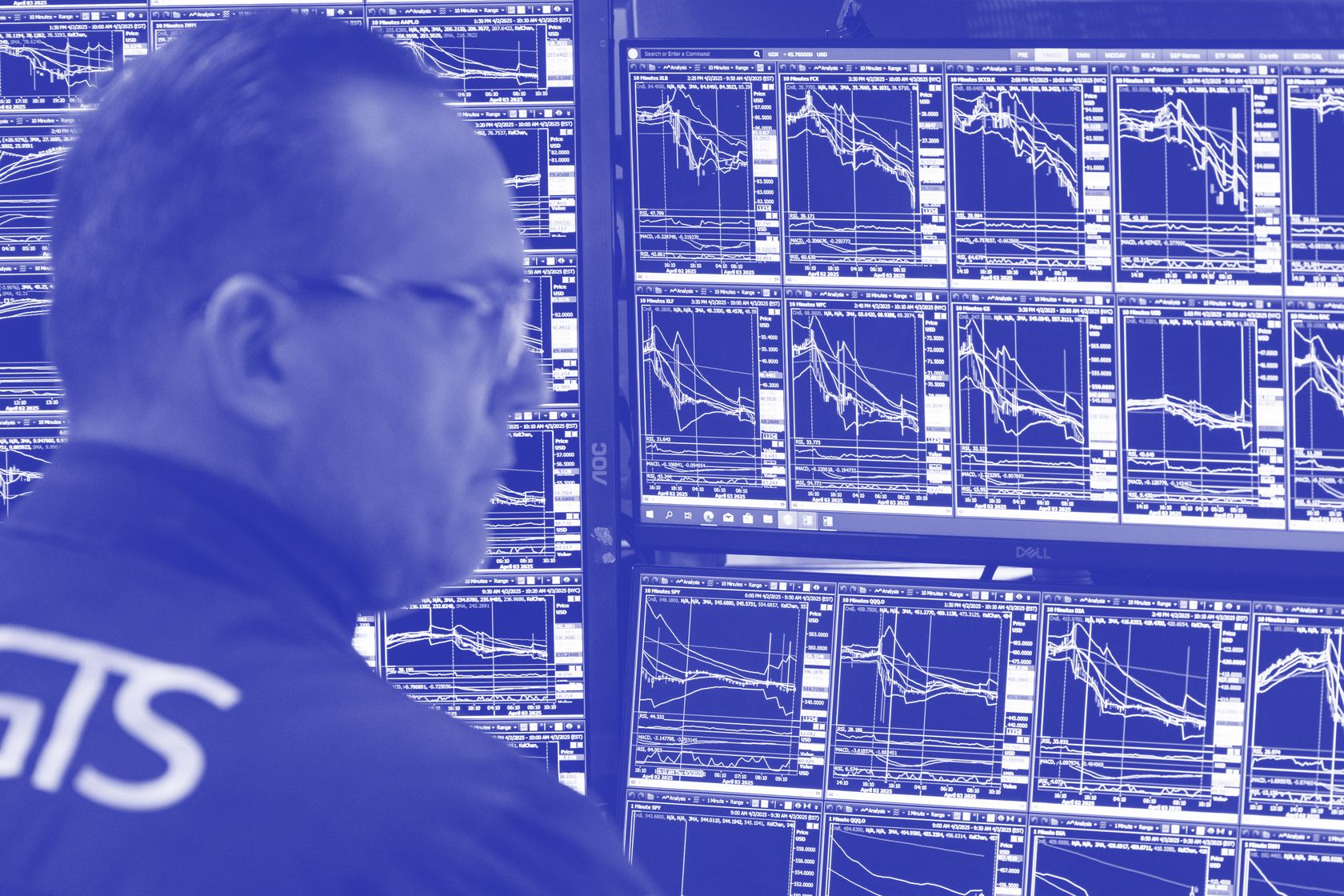
Today’s deep market seizures were a predictable outcome of Donald Trump’s radical tariff rollout, which has roiled the globe and tested the diplomatic infrastructure that has governed it for decades.
Trump generally follows the classic pattern of charismatic strongman politics: instinct first, ideology later. His instinct, rightly or wrongly, is that America is being taken to the cleaners. Tariffs satisfy his primal urge to hit back at countries he thinks are cheating. Many of the attempts to rationalise his agenda on global trade look like thin intellectual scaffolding around something much more reactive.
It’s clear that Trump’s inner circle contains a variety of diverging views on what the tariffs are for, how long they should be in place and what the ultimate outcome should look like. But the clearest throughline is a sort of neo-mercantilist reindustrialisation. The strategy isn’t about maximising short-term GDP growth or economic efficiency. Instead, it’s about forcibly restoring American productive capacity, especially in strategic sectors.
Trumpworld sees the US trade deficit not as a statistical artefact of controlling the world’s reserve currency, but as a sign of national weakness and the bleeding out of sovereignty. With this administration clearly viewing the deep US integration with China as a decades-long strategic mistake, its policies can be understood as a blunt instrument of disentanglement and decoupling.