China slump hits budget as poll tips Dutton
Plus: Software startup Databricks in record $15b VC raise; TikTok running out of time as US court rejects appeal; Trump eyes US Postal Service privatisation, says WaPo.


Good morning. Here's what happened overnight and what you need to know today.

1.
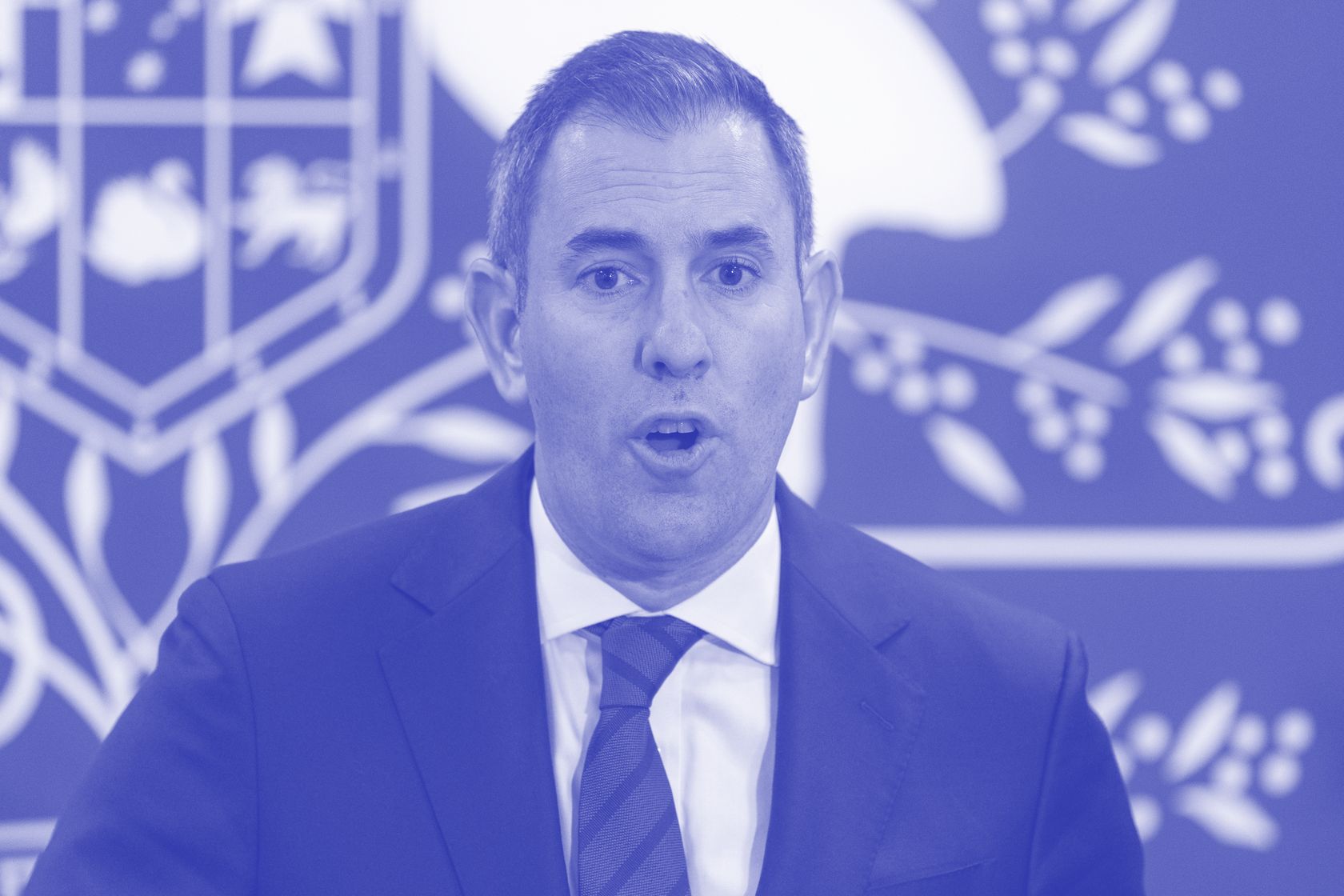
Budget update: The government will downgrade mining exports and revise down company tax receipts in Wednesday’s Mid-Year Economic and Fiscal Outlook (MYEFO), citing weaker commodity values and challenges in the Chinese economy. Mining exports are projected to fall by over $100 billion across four years to 2027-28, while company tax receipts will be cut by $8.5 billion—the first downward revision since 2020. "Challenges in the Chinese economy will have flow-on effects for our own budget," Treasurer Jim Chalmers said. "Pressures on the budget are intensifying, global volatility is a big part of the story, and you'll see that in the mid-year update." Meanwhile, the latest AFR/Freshwater Strategy poll suggests voters are anticipating a minority government in Australia’s next election, with expectations favouring Peter Dutton as the next leader. (Capital Brief)(AFR)
2.
VC records: Software analytics firm Databricks is nearing a USD9.5 billion ($14.94 billion) funding round led by Thrive Capital, Andreessen Horowitz, Insight Partners, and GIC Reuters reported. The twice oversubscribed raise at USD92.50 per share would value the 11-year-old, yet-to-be-profitable company at over USD60 billion and fund buybacks of expiring employee stock units. The San Francisco-based firm, a competitor to Snowflake, projects USD3.8 billion in revenue next fiscal year, according to Reuters. The round, which could be finalised next week, may still be upsized. Concurrently, Databricks is seeking USD4.5 billion in private debt, including a USD2.5 billion term loan and USD2 billion revolving credit facility, arranged by JPMorgan with lenders like Blackstone. Riding the AI boom, Databricks helps clients use their data to build and use AI applications. The fundraising reflects deep venture capital coffers and a trend toward keeping leading AI firms private longer. (Reuters)(Capital Brief)
3.
Must go: A US federal appeals court rejected TikTok's request to delay enforcement of a law requiring its Chinese parent, ByteDance, to sell TikTok by 19 January or face a ban. Without intervention, TikTok would have to shut down, affecting over 170 million American users. TikTok and ByteDance sought more time to appeal to the Supreme Court, citing First Amendment concerns and arguing the law relies on hypothetical risks, not proven threats. But the court denied the request, noting the companies failed to present a precedent where an Act of Congress was paused while awaiting Supreme Court review. The companies are expected to appeal to the Supreme Court, which may weigh in on the novel issues surrounding social media, national security, and the First Amendment. In the meantime, TikTok’s fate remains uncertain as ByteDance seeks intervention from the incoming Trump administration, with President-elect Trump having promised to “save” the app. (Capital Brief)(AP)(Reuters)
4.
Trump stamp: President-elect Donald Trump has expressed keen interest in privatising the US Postal Service (USPS), citing its $9.5 billion ($14.94 billion) fiscal 2024 loss and long-term financial struggles, The Washington Post reported. Trump has asked a group of transition officials for their views and held discussions with the co-chair of his presidential transition team and commerce secretary pick, Howard Lutnick, about it, unnamed sources told the paper. USPS has faced USD100 billion in losses since 2007. USPS is pursuing modernisation efforts, including cutting 45 million work hours and aiming to save USD3.6–3.7 billion annually. The Post notes privatisation could disrupt the trillion-dollar e-commerce industry, particularly small and rural businesses, and Amazon, USPS’s largest client. Trump’s transition team is also reportedly considering cancelling USPS contracts to electrify its delivery fleet, including multibillion-dollar deals with Oshkosh and Ford for battery-powered trucks and charging stations. (WaPo)(Reuters)
5.
Tech chips: OpenAI CEO Sam Altman will donate USD1 million ($1.57 million) of personal funds to President-elect Donald Trump's inauguration, the company told media Friday. Altman’s pledge matches recent contributions from tech heavyweights Amazon, Meta and Perplexity, highlighting a shift in Silicon Valley’s stance on Trump ahead of his second term. Once a critic who called Trump’s 2016 win “the worst thing to happen in my life,” Altman now joins a wave of tech leaders seeking rapprochement. The tech pivot appears aimed at avoiding AI and crypto regulation. Trump pledged a tough stance on Big Tech but courted the sector with fundraisers and podcast appearances, including on David Sacks’ All-In. Sacks was earlier this month nominated as Trump’s incoming AI and crypto czar. The donation comes amid tensions with Elon Musk, now also a close adviser to Trump, amid Musk lawsuit over OpenAI’s transition to a for-profit model.(Capital Brief)
6.
List drain: The London Stock Exchange (LSE) is on track for its worst year of company departures since the 2008 financial crisis, with 88 delistings or transfers and only 18 new listings expected in 2024. It’s the largest net outflow since 2009, with new listings at their lowest in 15 years. Seven FTSE 100 companies, including Ashtead, Flutter, and CRH, have moved their primary listings to New York since 2020, citing larger investor pools and better liquidity. Together, these departures represent about 14% of the FTSE 100’s current market value. Critics say UK reforms to attract listings have been insufficient, with a widening valuation gap to the US and limited domestic investor interest. Analysts identified 18 large companies as at risk of leaving, while Canal+’s London IPO — valued at over €6bn — could bring some optimism. Chancellor Rachel Reeves welcomed the listing as a sign of confidence in UK markets, despite ongoing challenges. (FT)
7.
Steel deal: The US Treasury informed Nippon Steel the panel reviewing its USD14.9 billion ($23.43 billion) bid for US Steel has not reached a consensus on addressing security concerns, raising the likelihood that President Joe Biden will block the deal, The Financial Times reported. Ahead of a 23 December deadline to send a recommendation to Biden, the nine agencies in the Committee on Foreign Investment are split, with opposition led by US Trade Representative Katherine Tai. Other agencies support a mitigation plan while the Treasury, Pentagon and State Department had concluded the deal posed no security risks. Biden and President-elect Donald Trump have both publicly opposed the acquisition, citing union support in Pennsylvania. Japanese Prime Minister Shigeru Ishiba has urged Biden to approve the deal, warning of harm to US-Japan relations. If CFIUS cannot agree, Biden must decide, and sources told the paper he intends to block the transaction. (FT)
8.
Cyclone deaths: Several hundred people, possibly thousands, are feared dead after Cyclone Chido devastated Mayotte, the deadliest storm to hit the French territory in over 90 years. “I think there are some several hundred dead, maybe we’ll get close to a thousand. Even thousands … Given the violence of this event,” Prefect François-Xavier Bieuville told local media. Official reports confirm at least 14 dead and over 250 injured, with makeshift homes, government buildings and the main hospital among the worst hit. Winds exceeding 225 km/h flattened entire communities, cutting electricity, water and internet services. French authorities deployed 250 rescue workers and military supplies, with President Emmanuel Macron pledging full support for Mayotte, one of the EU’s poorest regions. The storm continued to northern Mozambique on Sunday, where UNICEF warned of widespread destruction, damaged infrastructure, and the risk of landslides, heightening dangers for isolated communities. (Reuters)(BBC)
