Chip stocks fall for a second day on fresh AI cooling fears
Plus: US hiring slows sharply as workers quit the labour force; Investors keep pulling billions from Blue Owl’s private credit funds; Sydney brothers near billionaire status on IREN.


Good morning. Here’s what happened overnight and what you need to know today.
1.
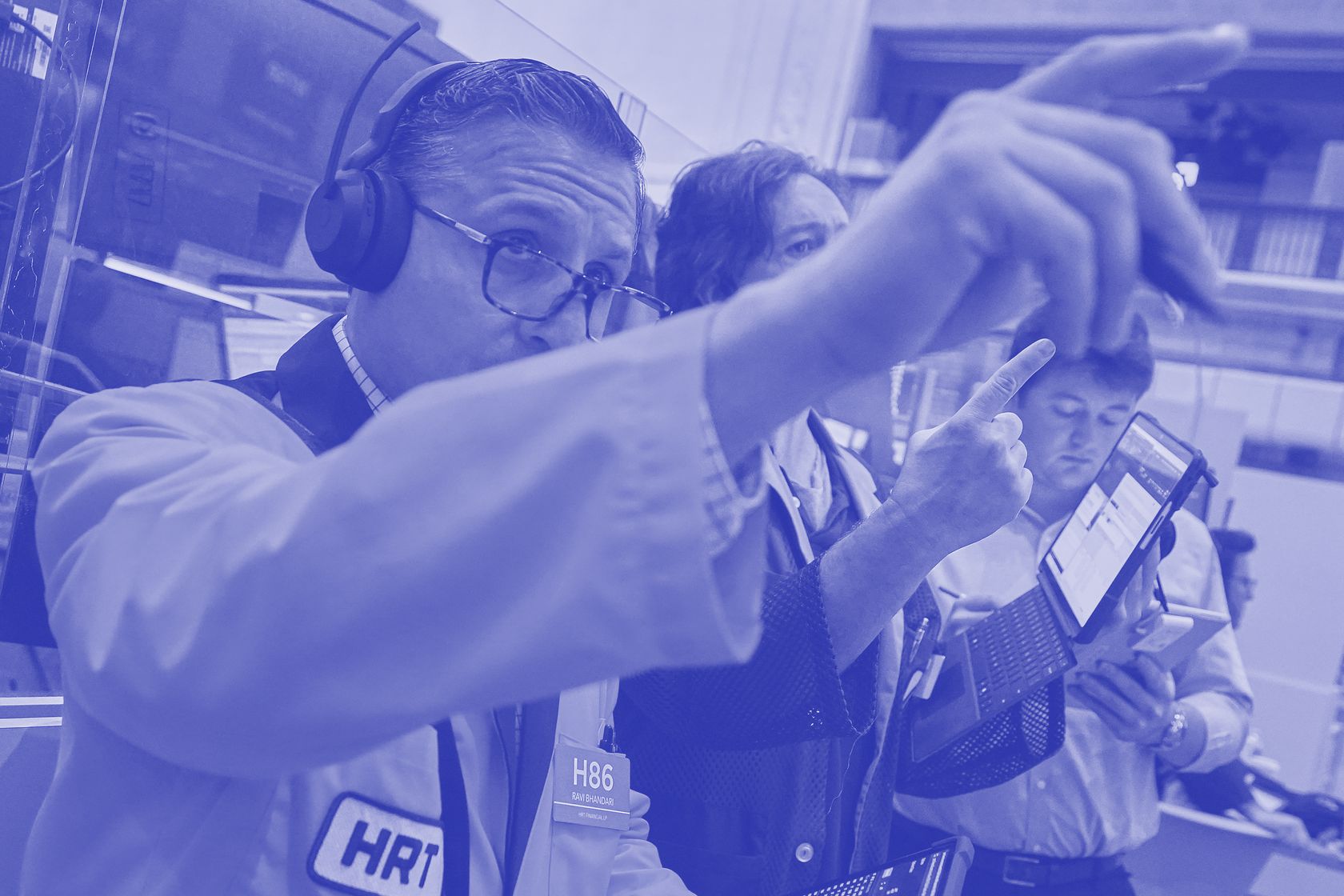
AI wobbles: US technology stocks slid for a second straight session overnight, dragging the Nasdaq 0.8% lower even as a softer US jobs report eased fears the Federal Reserve could soon raise interest rates, helping old economy sectors like consumer staples, utilities and healthcare book gains. Chipmakers led the retreat after The Information reported that Anthropic is in talks with Samsung Electronics to manufacture a custom AI chip, read as a sign the AI-spending boom that has powered Wall Street this year may be cooling. BTIG chief market technician Jonathan Krinsky wrote in a note that evidence continued to grow the AI trade was “at best entering a period of significant consolidation, and at worst putting in a meaningful top.” The Philadelphia Stock Exchange Semiconductor Index fell 5.4%, as investors rotated into defensive consumer staples, utilities and healthcare stocks for a second day. The Dow, by contrast, rose 1.14% to a record close, notching its fourth straight weekly gain. Tesla shares fell sharply despite quarterly deliveries coming in above estimates. US markets will be closed on Friday for Independence Day. (Reuters)(Bloomberg)
2.
Slow down: US nonfarm payrolls increased 57,000 in June, the Labor Department’s Bureau of Labor Statistics said, well below the forecast of a 110,000 rise from economists polled by Reuters. Payroll gains for April and May were revised down by a combined 74,000 jobs. The unemployment rate fell to 4.2% from 4.3% in May, but this was driven by what ING economists described as “bad reasons”, namely over 700,000 people leaving the labour force and pushing the participation rate down to 61.5%, the lowest level since March 2021. Leisure and hospitality payrolls dropped 61,000, the largest decline since December 2020, which the BLS said reflected “weaker than usual seasonal hiring”. Financial markets lowered the odds of a Federal Reserve rate hike in September to about 60% from roughly 75% before the report, according to Reuters. Stephen Stanley, chief US economist at Santander US Capital Markets, said most policymakers would still regard the labour market as stable. (US BLS) (Reuters)
3.
Exit queue: Redemption requests at two Blue Owl Capital private credit funds eased slightly in the second quarter but stayed far above the firm’s 5% withdrawal cap, according to letters it sent to shareholders. Redemption requests at the Blue Owl Technology Income Corp fund fell to 38.1% of shares from 40.7% in the prior quarter, while requests at the larger Blue Owl Credit Income Corp fund fell to 18.8% from 21.9%. Roughly 90% of investors remained invested in the credit fund, the company said. Blue Owl co-president Craig Packer and OCIC president Logan Nicholson said in the letter that “OCIC does not need to sell a single private loan to satisfy the tender offer.” It comes as Blackstone, Apollo, Ares and Morgan Stanley all capped withdrawals from private credit funds at 5% in the quarter. Redemption requests across 20 private credit funds The Financial Times tracks totalled more than USD22 billion ($31.8 billion) in the quarter, with a median request of 8.7% of assets, up from 7.1% in the prior quarter. Blue Owl, which manages USD315 billion in assets, has raised more than USD72 billion from wealthy individual investors since its 2016 launch. Blue Owl shares rose 4.6% overnight, though the stock remains down about 40% for the year. (Blue Owl)(Reuters)(FT)
4.
Billionaire brothers: The Sydney brothers at the helm of Nasdaq-listed data centre operator IREN are on track to earn billionaire status after securing a mammoth USD394.2 million ($568 million) incentive package amid a fierce talent war. Already among the highest paid Australian executives, co-CEOs Dan and Will Roberts held existing shares worth around USD600 million each before the new stock awards, which vest over four years and cannot be sold for a further two years after vesting. An IREN spokesperson told Capital Brief the package is “designed to attract, retain and motivate high-calibre leaders while aligning compensation with the creation of long-term shareholder value”. Industry group Data Centres Australia CEO Belinda Dennett said boards here are competing with the rest of the world for a small, globally sought-after group of experienced leaders. The grant dwarfs the roughly $25 million total target remuneration for Xero CEO Sukhinder Singh Cassidy in 2025, while NextDC CEO Craig Scroggie is chasing a package that could be worth up to $112 million if growth and share price targets are met by August 2030. The former bitcoin miner’s shares are up 184% in the last 12 months since its pivot into AI infrastructure. (Capital Brief)
5.
Table turned: Blackstone-owned data centre developer QTS abandoned plans to build its portion of a 2,100-acre data centre campus in Virginia, handing a win to residents who spent years fighting the project, Bloomberg reported. Citing people familiar with the matter, the report said QTS executives decided it was not worth pressing forward in court due to recent legal actions and compounding regulatory hurdles. The firm’s attorneys plan to inform the court of the decision as soon as this week, it added. The retreat is the latest blow to Virginia’s Digital Gateway project, a data centre mega site roughly twice the size of New York’s Central Park that was expected to bring in about USD100 billion ($144.6 billion) in spending. Blackstone, which acquired QTS in 2021, holds more than USD150 billion in data centre assets globally. Brookfield-backed Compass Datacenters, which had also been set to build on the site, pulled out in May. Virginia courts upheld a ruling in March that zoning approvals for the project were invalid because public notices for a 2023 hearing fell short of state and local rules. Separately, Blackstone’s sandwich chain Jersey Mike’s filed for a US initial public offering seeking a valuation of up to USD12 billion, the FT reported. (Bloomberg)
6.
Fine print: ASIC has accepted it will likely have to wear almost $90 million in unpaid fines, recognising a one-off impairment of $87.47 million in long overdue penalties, according to internal data released to Capital Brief under freedom of information. The regulator assessed the fines as unlikely to be recovered “due to individuals filing for bankruptcy and/or entities entering into external administration”. The charge does not extinguish the debt but recognises the long odds it will ever be paid, and the figure may grow higher still with the $300 million penalty levelled at collapsed CFD issuer Union Standard unlikely to ever be recovered. As of the end of May 2026, ASIC was waiting on another $39.21 million in overdue fines from its record $800 million enforcement year. The largest is the $14 million owed by BPS Financial over the Qoin Wallet crypto product, which appointed liquidators last month. Many names on the list have folded in the aftermath of ASIC’s court wins. If the collective overdue fines aren’t recovered, it could take ASIC impairments to more than $420 million next time around. (Capital Brief)
7.
Trading places: Donald Trump made more than 21,000 securities trades in his first year back in office, often in intense bursts tied to market events he created, according to the US president’s 2025 financial disclosure. The total value of the trades was somewhere between USD600 million ($866.7 million) and USD1.86 billion, Bloomberg reported. Just 10 days accounted for about a quarter of all trades executed in 2025, according to the news outlet’s analysis. Many came during heightened volatility after Trump had already announced policy changes, it said, including 616 trades on 3 February, a day before tariffs on Canada, Mexico and China were scheduled to take effect. The Trump Organization said the president’s holdings are independently managed by third-party institutions that control all investment decisions, with the family playing no role and receiving no advance notice. In the same report, Trump disclosed earning at least USD1.4 billion from crypto and memecoin-related businesses in 2025. Trump said he was profiting because the stock market was going up. Separately, an online gun retailer known as the “Amazon of guns” where Donald Trump Jr is a shareholder and board member could benefit from a proposed new rule that would make it easier to ship guns directly to buyers’ homes, Reuters reported. (Bloomberg)(WSJ)(Reuters)
8.
Kyiv hit: Russia launched hundreds of drones and dozens of missiles at Kyiv in the early hours of Thursday local time, killing at least 25 people and wounding more than 90, Reuters reported. The Ukrainian air force said Russia fired 74 missiles and 496 drones, adding the number of ballistic missiles was unusually high and the interception rate for them was low. Around 130 buildings were damaged in one of the biggest attacks of the war. President Volodymyr Zelenskiy, who cut short a visit to Ireland, later visited the site of a damaged residential building and said “if our partners had delivered on their promises in a timely manner, I think we could have saved more homes and lives today,” referring to air defence missile supplies. Russia’s defence ministry said the strikes were retaliation for Ukrainian attacks on Russian civil infrastructure. Ukraine said it had hit an oil refinery in Russia’s Nizhny Novgorod region, where the regional governor reported one person killed. (Reuters)(NYT)
