Chipmakers smashed by Fed hike bets, IPO oversupply fears
Plus: Meta shares fall as FT flags mega share sale ahead; SpaceX USD75b IPO already oversubscribed; Blowout jobs number cements Fed hike bets before year end.



Good morning. Here’s what happened overnight and what you need to know this weekend.
1.
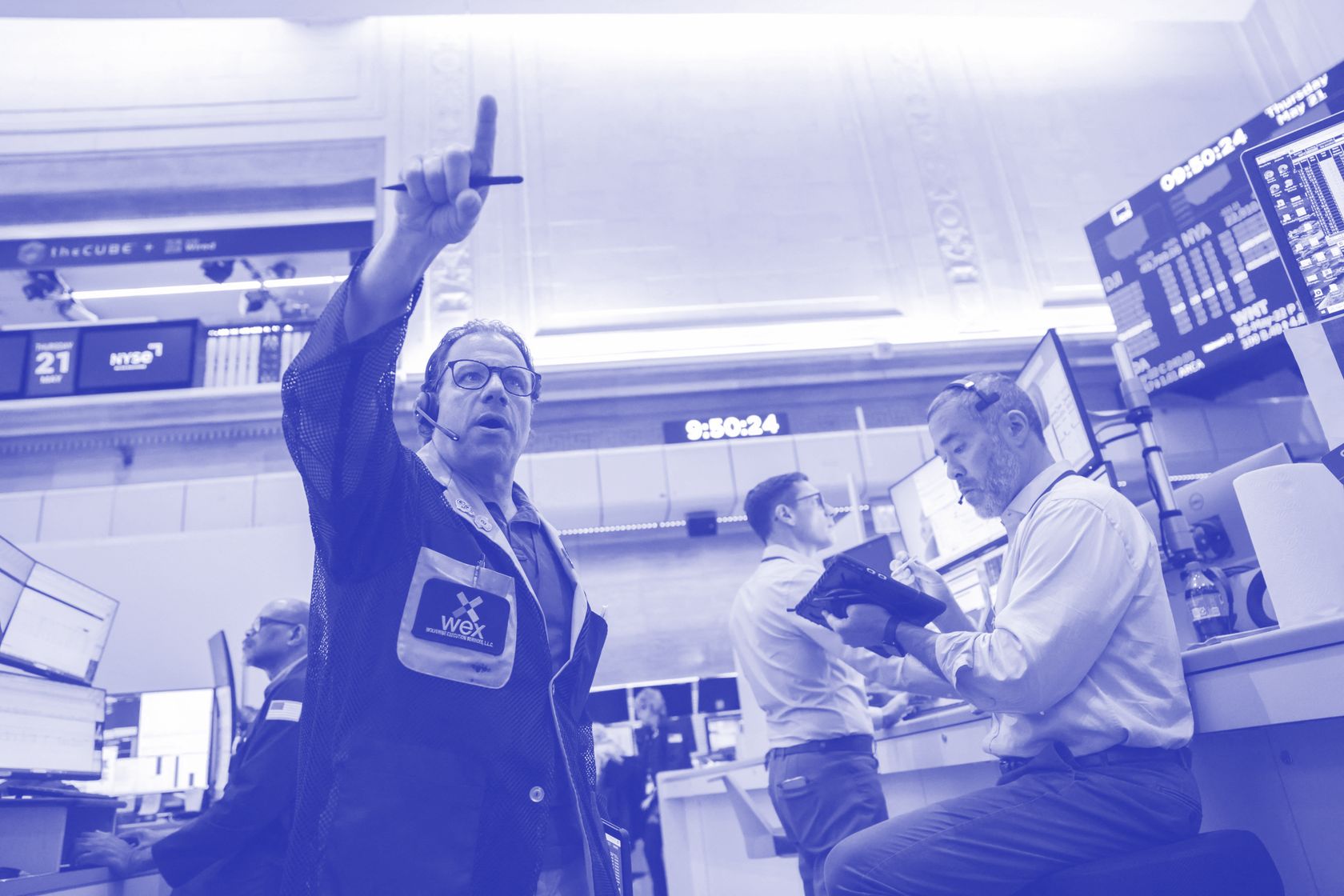
Friday selloff: US chipmakers shed more than USD1 trillion ($1.42 trillion) in market value overnight as a stronger-than-expected jobs report fuelled bets on a Fed rate hike, rattling markets already stretched by an historic AI rally and braced for a wave of fresh equity supply from the SpaceX IPO next week. The Philadelphia Semiconductor Index suffered its largest single-day drop since the onset of the Covid pandemic in March 2020, compounded by Broadcom’s disappointing quarterly guidance two days earlier. Nvidia fell 6.2%, Broadcom 7.9%, Micron 13.2% and AMD 10.9%. The Nasdaq Composite dropped 4.18% for its worst week in more than a year and the S&P 500 fell 2.64%, ending nine consecutive weeks of gains, according to Reuters. Meta also fell after the FT reported the company was weighing a large share sale to fund AI projects. Consumer staples bucked the trend as investors rotated into defensive stocks. Two-year Treasury yields hit their highest level in about a year and Bitcoin fell to USD59,112, its lowest intraday level since October 2024. Trump posted on social media that “stocks should go up, not down" after the jobs report, adding “growth does not mean inflation,” while White House economic adviser Kevin Hassett told Bloomberg markets were “terribly wrong” to interpret the data as signalling a rate hike. (Reuters)(Bloomberg)(WSJ)
2.
ECM bandwagon: Meta shares fell as much as 7.12% before closing down 5.51% after The Financial Times (FT) reported executives were considering selling tens of billions of dollars in shares to fund AI projects after Alphabet’s landmark USD85 billion($120 billion) raise this week. The social media company needs major funds to support CEO Mark Zuckerberg’s goal for “personal superintelligence,” and the huge data centres needed to train the required AI models. Meta’s AI spending could reach USD145 billion this year, and higher in 2027, the FT noted. If Meta pursued the raise, in the wake of Alphabet, it would join the list of offerings causing concern over an ECM glut. IPOs on the horizon from SpaceX, Anthropic and OpenAI threaten to divert tens of billions of dollars away from existing shares — a drag that could go on for years, Research Affiliates founder Rob Arnott warned. (FT) (Capital Brief) (Reuters)
3.
Rocket fuel: SpaceX’s USD75 billion IPO was oversubscribed after just one day of investor meetings, Bloomberg reported citing unnamed sources adding orders had already exceeded the number of shares on offer. The Texas-based company is offering 555.6 million shares at a fixed price of USD135 each, implying a valuation of roughly USD1.75 trillion. The deal is expected to price on June 11 and begin trading the following day, with the largest retail allocation ever attempted in a megacap IPO. According to the FT, as much as a quarter of the float is reserved for individual investors. Separately, SpaceX disclosed a USD920 million-a-month cloud computing deal with Google in an SEC filing. The agreement runs from October this year through June 2029, with capacity ramping up through September at a reduced fee. The compute capacity includes approximately 110,000 Nvidia GPUs, CPUs, memory and other related components. If SpaceX fails to deliver the GPUs by 30 September, Google has the right to terminate the deal with a one-month grace period, the filing says. Also of note, S&P Dow Jones Indices said it would not fast-track SpaceX’s inclusion in the S&P 500, meaning the company must wait at least 12 months after listing to qualify. (Bloomberg)(FT)(Capital Brief)
4.
Jobs jump: The US economy added 172,000 jobs to its payroll in May, beating analyst expectations and cementing market bets on a Federal Reserve interest-rate hike by year-end. Leisure and hospitality, local government and healthcare led hiring the US Bureau of Labor Statistics said, while financial activities and the information sector shed jobs. It was the strongest three-month advance in the labour market in more than two years, according to Bloomberg. The unemployment rate held at 4.3% for a third consecutive month. Following the report, interest-rate swaps pointed to a quarter-point increase by the December policy meeting, with a roughly 60% chance of a move as early as October, Bloomberg reported. Two-year Treasury yields also surged. The print comes as newly Trump-appointed Fed chair Kevin Warsh prepares to preside over his first policy meeting on June 16-17, facing growing pressure among colleagues for rate hikes rather than the cuts the US president has argued for. (BLS)(Bloomberg)
5.
Mercury poison: Dexus stood down key executives, axed its financial advisers JPMorgan and launched a strategic review of its $7.3 billion infrastructure business as it reels from a court ruling that will force the sale of its stake in Melbourne Airport. A NSW Supreme Court judgment last month found Dexus had materially and irremediably breached a shareholders’ deed by sharing confidential airport information during a failed attempt to sell part of its stake. The court extended a temporary freeze on the forced sale until 22 June, giving the investors whose APAC shares are subject to that sale (known as the Dexus Bloc shareholders) time to decide whether to lodge an appeal, Dexus said in a statement. The company agreed to fund the Bloc shareholders’ legal costs for any appeal filed, it added. According to media reports, JPMorgan were the financial advisers running the failed sale process, codenamed Project Mercury. Dexus said it had commenced a strategic review of five infrastructure vehicles acquired as part of its 2023 purchase of AMP Capital’s real estate and infrastructure platform. That business represents about 20% of Dexus’s total third-party funds under management and approximately $35 million in annual management fees, Dexus said. An update will follow at or before the FY26 results briefing in August. (Dexus)(AFR)(The Australian)
6.
Hit pause: Anthropic called for governments and AI developers to collectively agree on a mechanism to pause or slow what it called “frontier AI development” before the technology escapes human control. In a blog post co-authored by co-founder Jack Clark and Anthropic Institute lead Marina Favaro, the AI giant said the industry is closer to what they called “full recursive self-improvement” than previously expected. While the benefits of AI self-improving without human intervention would be significant for health and science, it carries with it a great risk to humanity, Favaro and Clark wrote. “When I look down at the car we’re driving, all I have is a gas pedal. I don’t have a brake pedal, and surely at some point in the future we might want that option,” Clark told CNN. The missive comes days after Anthropic confidentially filed for a US IPO that could value it at USD1 trillion. Separately, Reuters reported that tensions with the White House over the company’s supply-chain risk designation appear to be easing, despite the company’s continuing legal battle with the Pentagon. Anthropic is also reportedly helping the US National Security Agency use its Mythos tool for offensive cyber operations, with one person close to the situation telling the FT that Mythos would be useful for infiltrating the networks of nations such as China or Iran. (Anthropic) (CNN) (Reuters) (FT)
7.
Data boom: Australian data centre operator AirTrunk signed letters of intent to invest USD30 billion ($42.4 billion) in five gigawatts of data centre capacity in India by 2030, with a few caveats. The investment is subject to customer demand, the availability of supporting infrastructure, subsea cables and support from local state governments, the company said. AirTrunk CEO Robin Khuda was in India over the past week for a series of meetings with federal government representatives and state ministers in Andhra Pradesh and Maharashtra. Earlier in the week, AirTrunk signed a letter of intent for a land allotment in India’s western state of Maharashtra where it could invest USD21.05 billion ($29.76 billion) in a three-gigawatt capacity data centre. The company also signed a LOI with the Maharashtra state government to invest in a two-gigawatt data centre. In April AirTrunk announced it was buying up Lumina CloudInfra for USD5 billion in a bid to expand into India. Whether AirTrunk follows through on these letters of intent is still conditional on support from local state governments. (AirTrunk) (Bloomberg) (Capital Brief) (India Today)
8.
ISS leak: Five astronauts aboard the International Space Station briefly took shelter in a docked SpaceX capsule after NASA ordered safe-haven procedures amid a worsening air leak on the Russian section of the orbital laboratory. Russian cosmonauts Sergey Kud-Sverchkov and Sergei Mikayev were using a saw to break into an area where they believed they could access the crack leaking air, a senior NASA official told Reuters. NASA officials disagreed with the repair method, prompting mission control in Houston to order the safe-haven procedures, the unnamed NASA official said. They added the leak had escalated from one pound of air per day to two pounds. Russia’s state space corporation Roscosmos said two oxygen leaks had been detected but that there was no immediate threat to the crew, Interfax reported. The first leak was quickly sealed and preparations were underway to seal the second, according to that report. NASA spokesperson Bethany Stevens said the crew was later asked to end safe-haven procedures and return to planned operations after Roscosmos paused its repair efforts. Astronauts have never had to evacuate the ISS in its 27-year history, Reuters reported. (NASA spokesperson)(AP)(Reuters)
