Deadly crash halts Carney’s Canada push
Plus: Albanese bests Dutton in fiery debate, keeps poll lead; ASX to review shareholder rules after James Hardie backlash; Bessent ducks Xi talks as economic discontent grows.

Good morning. Here's what happened overnight and what you need to know today.

1.
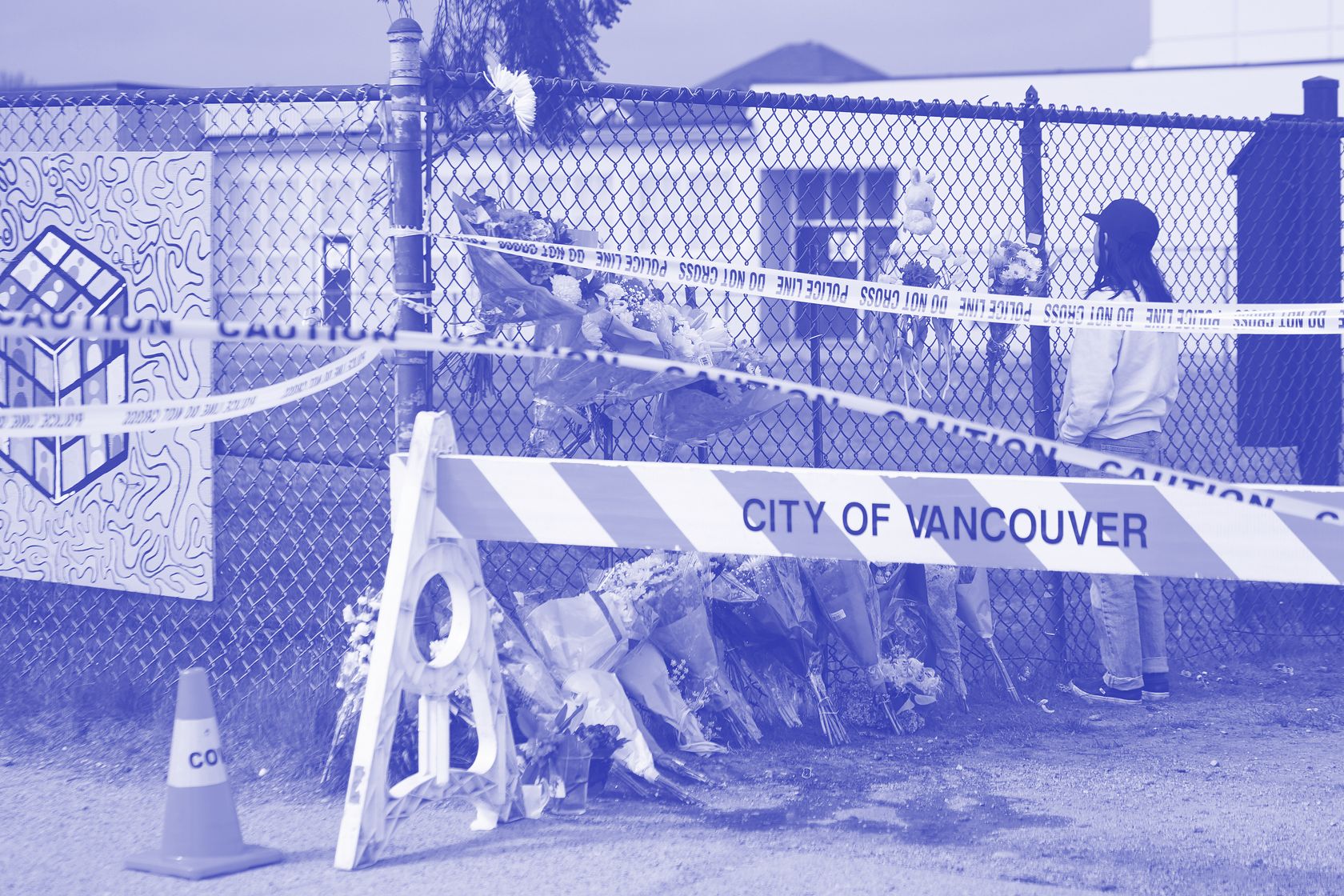
Election(eve) tragedy: Eleven people were killed and several others injured after a car drove into a crowd of people celebrating Lapu Lapu Day (a Filipino festival), in Vancouver on Saturday evening. Vancouver police said they are confident that the incident was not an act of terrorism. Responding to the incident, Canadian Prime Minister Mark Carney said he would pause campaigning on Sunday, the final day to make pitches to voters ahead of the country’s election on Monday. Carney offered condolences to the Filipino community, while his key rival, conservative leader Pierre Poilievre, said he was “shocked” by the “senseless attack.” Carney is currently ahead of Poilievre in the polls, with the conservative leader struggling to shake off an association with US President Donald Trump. His ‘common sense’ campaign which gained endorsements from Trump allies including Elon Musk and Joe Rogan has been poorly received by Canadian voters. (Capital Brief)(Reuters)(FT)
2.
Debate defensive: Prime Minister Anthony Albanese bested Peter Dutton in Sunday night's final leaders debate, winning over 50% of Seven’s room of 60 undecided voters. Defence was a key focus, with Dutton calling China Australia's biggest threat, while Albanese spoke of Chinese “influence” rather than a threat. Over the weekend, China seized a disputed reef near a key Philippine military outpost in the South China Sea. Labor also faced scrutiny after reports claimed the Albanese government knew of Russia’s request to use Indonesian airfields for long-range aircraft weeks before the story became public and before the election campaign launch. Newspoll figures show Labor leading (52–48) for a fourth week. Of the 1,254 voters surveyed, 62% did not believe Dutton and his team were ready to govern, a view particularly strong among women, with 66% expressing little or no confidence in the Coalition compared to 58% of men. (Bloomberg)(The Australian)(ABC)
3.
Rule benders: The ASX will review its shareholder approval rules for mergers and acquisitions after James Hardie Industries’ $14 billion takeover of AZEK sparked backlash from super funds and asset managers. First reported by the AFR, the review follows meetings between ASX chief Helen Lofthouse and ASX investors, including AustralianSuper and UniSuper. The ASX received a wave of inquiries after allowing James Hardie to buy the home decking provider without a shareholder vote. The ASX has given little explanation for waiving the usual requirement for a vote when more than 15% of stock is issued. Treasurer Jim Chalmers had raised concerns directly with the ASX chairman. (Capital Brief)(AFR)(Bloomberg)
4.
Trade pain: Treasury Secretary Scott Bessent declined to confirm that President Donald Trump had spoken with China’s President Xi Jinping, after Trump last week claimed talks were happening and Beijing denied they had taken place. Bessent said he did not know if Trump had spoken to Xi, but defended the administration’s economic agenda, even as voter discontent with the administration’s economic stewardship is sinking Trump’s popularity at the 100-day mark of his second term. CNN and NBC polls show only 39% approval for his handling of the economy and tariffs. Meanwhile, officials warned Saturday the US may restrict Mexican livestock imports over screwworm concerns. Elsewhere, two US citizen children were deported alongside their undocumented mothers to Honduras, with a federal judge saying there was a “strong suspicion” the government had deported “a US citizen with no meaningful process”. Secretary of State Marco Rubio said the Trump administration would decide whether to continue pursuing peace negotiations in Ukraine. (NYT)
5.
Chip wars: Huawei is preparing to test its most powerful AI processor yet to compete with rival Nvidia’s high-end chips. According to the WSJ, the tech giant hopes its Ascend 910D AI processor will replace some of Nvidia’s key products, after the US government informed Nvidia it will require a licence to export H20 graphics processing units to China. Given the restriction on US chips, Huawei is poised to ship around 800,000 Ascend chips to customers including Chinese state-owned telecoms carriers and private AI developers such as ByteDance. The move comes as tensions between Washington and Beijing continue to impact global trade and companies scramble to manage soaring operational costs. Chinese fast-fashion giant Shein has hiked US prices as much as 377% ahead of tariff rises, while the LNG industry warned the Trump administration it cannot comply with new rules forcing them to use US transport vessels by imposing levies on Chinese-built ships docking at US ports. (WSJ)
6.
Price pop: Fast-fashion giant Shein Group raised US prices of its products from dresses to kitchenware ahead of imminent tariffs on small parcels, Bloomberg reported. Most of the hikes occurred on Friday, with the average price for the top 100 products in the beauty and health category increasing by 51%, women’s clothing by 8%, and home and kitchen products and toys by more than 30%, including a 377% jump for a 10-piece set of kitchen towels. Shein and Temu face a 120% tariff after the US government’s decision to end the “de minimis” exemption for goods under USD800 from China and Hong Kong, with postal fees rising from 2 May. In general, Shein’s prices rose about 10% from 24 to 26 April across a 50-item sample, with 30 of the 43 remaining items showing increases of more than 10%. In contrast, Shein’s prices in the UK stayed mostly unchanged. (Bloomberg)(Fortune)
7.
Empire buyout: Toyota Motor said it is exploring "various possibilities, including partial investment" in a potential buyout of key supplier Toyota Industries, following Bloomberg’s report of a possible ¥6 trillion ($65.2 billion) deal. Toyota Industries, which has a market value of about 4–4.3 trillion yen, said it had received proposals about going private through a special purpose company but "denied it had received a buyout proposal from the Toyota chairman or the Toyota group." Two sources familiar with the matter told Reuters the proposal did not come from Akio Toyoda or the Toyota group and that Toyota Industries is considering tapping Toyota, its group companies and major banks to fund a buyout. The Financial Times had earlier reported Akio Toyoda was considering investing personal money to lead a buyout, with financing from the country’s three biggest banks. Both Toyota and Toyota Industries said nothing has been decided. Private equity groups have also explored participating, according to the FT. (FT)(Reuters)
8.
Nuclear neighbours: Tensions between India and Pakistan continued to intensify over the weekend, with troops exchanging fire in Kashmir for the third night running. India has accused Pakistan of supporting cross-border terrorism, while Islamabad has denied any involvement and called for a “neutral” investigation into last week’s attack which saw terrorists kill 26 Indian tourists in the disputed territory. India on Wednesday suspended the World Bank-mediated Indus Waters Treaty that ensures water for 80% of Pakistani farms, saying it would last until "Pakistan credibly and irrevocably abjures its support for cross-border terrorism." While India cannot stop water flows into Pakistan immediately, it can stop sharing vital information around hydrological flows, which would not only impact agriculture, but could hit electricity generation and cripple the Pakistani economy. (Reuters)(France24)
