DoJ accuses Apple of monopolising smartphone market
Plus: Bank of England leaves rates unchanged; EU to hit big tech with aggressive new probes; US circulates draft UN resolution for ceasefire in Gaza.

Good morning. Here's what happened overnight and what you need to know today.

1.
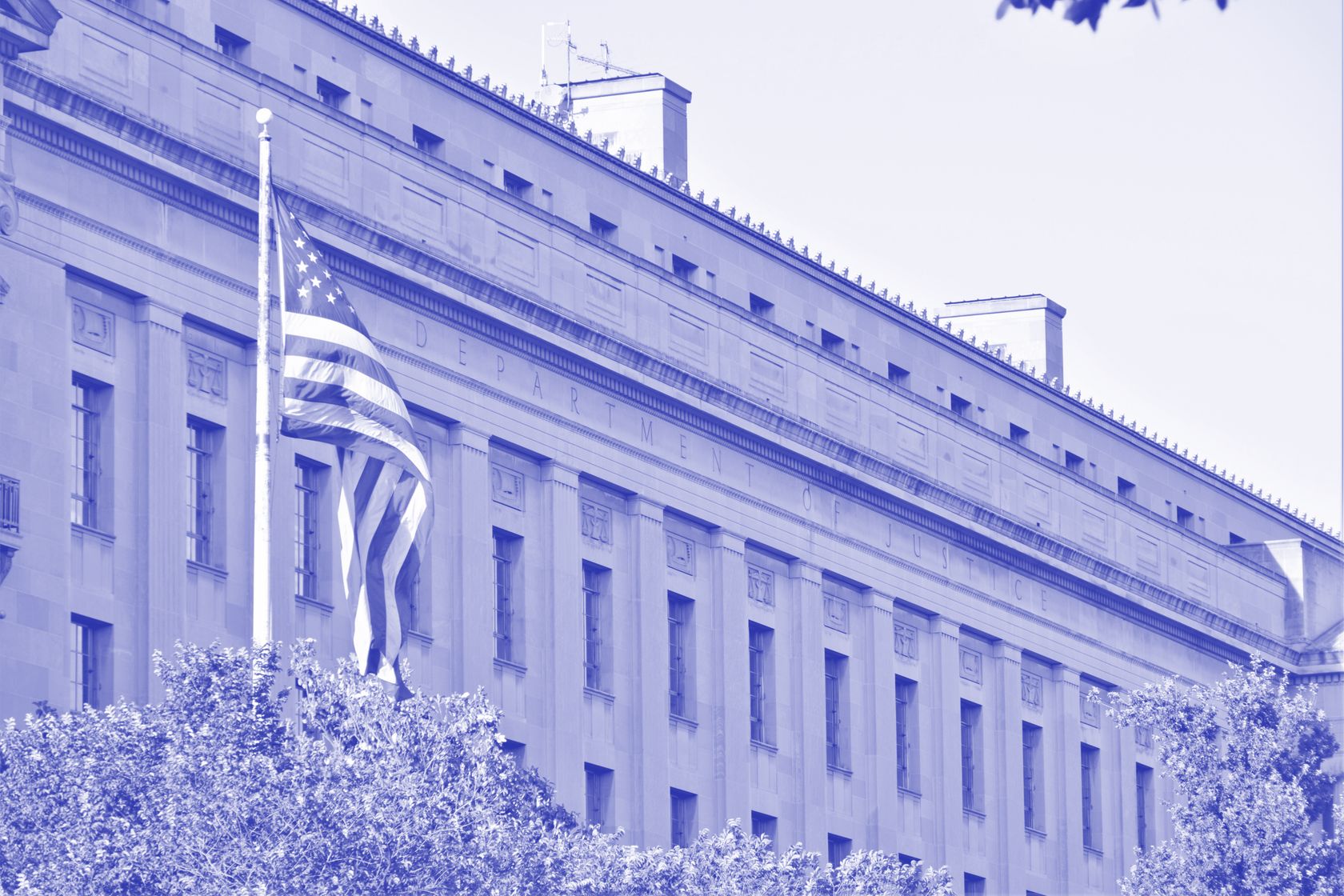
Competition crackdown: The US Justice Department and 15 states launched an action against Apple on Thursday, arguing the tech giant used demand for its iPhone and other products to hurt smaller rivals. The DoJ’s complaint, filed in a New Jersey court, alleges that Apple is monopolising the market for smartphones, stifling innovation and the development of apps and related technology. The Justice Department is seeking to unwind Apple’s business model of charging users a premium for technology products where Apple dictates all details around how the device can be used. The suit accuses Apple of making its product worse for consumers in order to block competitors, negatively affecting consumers and developers. US Attorney General Merrick Garland said: “Consumers should not have to pay higher prices because companies violate the antitrust laws.” (AG Merrick Garland remarks on the lawsuit)(Reuters)
2.
Steady she goes: The Bank of England has left rates unchanged for the fifth consecutive meeting, and signalled that it is moving closer toward cutting borrowing costs. The central bank left rates at 5.25%, with a majority 8-1 voting to maintain the bank rate at its 16-year high. BoE governor Andrew Bailey said that as things are “moving in the right direction” on inflation, after data in recent weeks showed encouraging signs that inflation is continuing to move down toward the BoE’s 2% target. The central bank expects inflation to fall below its target rate during Q2 this year, and that even after rates are cut they will remain high enough to ward off inflation. Traders in swaps markets have fully priced in three 0.25 percentage point cuts for the year, putting the likelihood that they would begin by June at 73%. The FTSE 100 climbed 1.8% on the news, pushing the UK index to its highest level since May 2023. (Financial Times)(Capital Brief)
3.
Mo’ control mo’ problems: Big tech firms including Apple, Google and Meta are expected to be hit by European Union investigations in the coming days, as the bloc prepares to announce probes under its landmark Digital Markets Act (DMA). According to sources cited by Bloomberg, Apple and Google’s new fees, terms and conditions for app store developers will come under the EU’s focus, while a proposal from Meta Platforms to leverage a monthly fee on users for accessing Facebook and Instagram could also be targeted. The DMA allows the bloc to issue penalties of 10% of a company’s total annual worldwide revenue, and up to 20% for firms who repeatedly flout the rules. Apple received a €1.8 billion ($2.97 billion) fine under the DMA just last week, and was hit with a new US lawsuit for anti-competitive behaviour on Thursday. (Bloomberg)
4.
Israel-Hamas war: The US has submitted a draft US resolution calling for an immediate ceasefire in Gaza, tied to the release of Israeli hostages. Calling for an “immediate and sustained ceasefire” in Gaza, the language of the resolution is the strongest wording seen from the US on the conflict and is likely to add significant pressure on Israel to reach a pause in fighting. “I think that would send a strong message, a strong signal,” Secretary of State Antony Blinken said in an interview overnight. With regard to an anticipated operation in Gaza’s city of Rafah, Blinken stated: “What we don’t want to see is a major ground operation because we don’t see how that can be done without doing terrible harm to civilians.” The draft resolution is likely to face pushback from other member states as it include wording about restarting operations after a pause in fighting. (Wall Street Journal)
5.
Deepened dependence: Australia and Britain are deepening their ties in the face of rising Chinese power with a new defence and security agreement. As part of the treaty, the Australian Financial Review reports that Australia is set to invest almost $5 billion to subsidise an expansion of British production lines for Australia’s first nuclear-powered submarines, as well as provide a downpayment on design work for the project. Australian defence minister, Richard Marles and the UK’s secretary of state of defence, Grant Shapps, signed the treaty following the annual bilateral ministerial defence talks in Canberra on Thursday. The agreement includes a status of forces agreement, making it easier for the respective forces to operate together in each other’s countries, as well as a range of defence initiatives. Marles, Shapps and foreign minister Penny Wong are expected to reveal details on the submarine project on Friday. (Richard Marles media release)(Australian Financial Review)
6.
Disney drama: Activist investor Nelson Peltz has won the support of Institutional Shareholder Services, a proxy advisory firm, in his battle for a seat on Disney’s board. ISS recommended that shareholders support all but one of Disney’s nominees and did not endorse a separate recommendation by Peltz’s Trian Partners, former Disney finance chief Jay Rasulo. A Barclays report published last year found that 75% of nominees backed by ISS get elected. The move comes after Star Wars creator George Lucas, one of the company’s biggest individual shareholders, came out in favour of the company earlier this week. The battle is expected to become Disney’s most expensive board fight to date and the companies are expected to spend more than a combined USD70 million on on the campaign ahead of April’s shareholder vote. (Wall Street Journal)
7.
Tie-up confirmed: Nationwide Building Society has confirmed its plans to acquire Virgin Money for £2.9 billion, two weeks after the companies agreed to initial terms. The transaction will see Nationwide pay 218 pence in cash for each share of Virgin Money and a final dividend of 2 pence. When completed, the group will have total assets of around £366 billion, making it the second largest mortgages and savings provider in the UK. Virgin Money is currently the sixth largest retail bank in the country, with around 6.6 million customers, while Nationwide is the UK’s largest building society with around 8 million customers. Nationwide said it would continue to use the Virgin Money brand initially, but plans to phase it out in the medium term. Virgin Money will pay a £250 million exit fee to the Virgin group to cease using its branding, and £15 million in annual fees while it continues to do so. (Financial Times)
8.
Air-carrier contracts: Airbus has scored orders for 65 jets from two of Boeing’s key Asian customers, as the US plane maker continues to suffer from the fallout of a mid-flight panel blowout and ongoing safety investigations from regulators. Japan Airlines and Korean Air have said they will buy 42 and 33 jets respectively from the European plane maker. While Japan Airlines did not disclose financial details of its purchases, Korean Air’s deal would be valued at USD13.7 billion. The airlines are the latest to enter the competitive market for long-haul aircraft as demand for international travel returns to pre-Covid-19 levels. (Reuters)(Korean Air press release)
