Dutton pushes gas plan as Albanese eyes 3 May vote
Plus: Government moves to plug record winter gas shortfall; Global car stocks fall on Trump tariff threat, minus Tesla; RFK Jr eyes 10,000 layoffs at US health department.

Good morning. Here's what happened overnight and what you need to know today.
1.
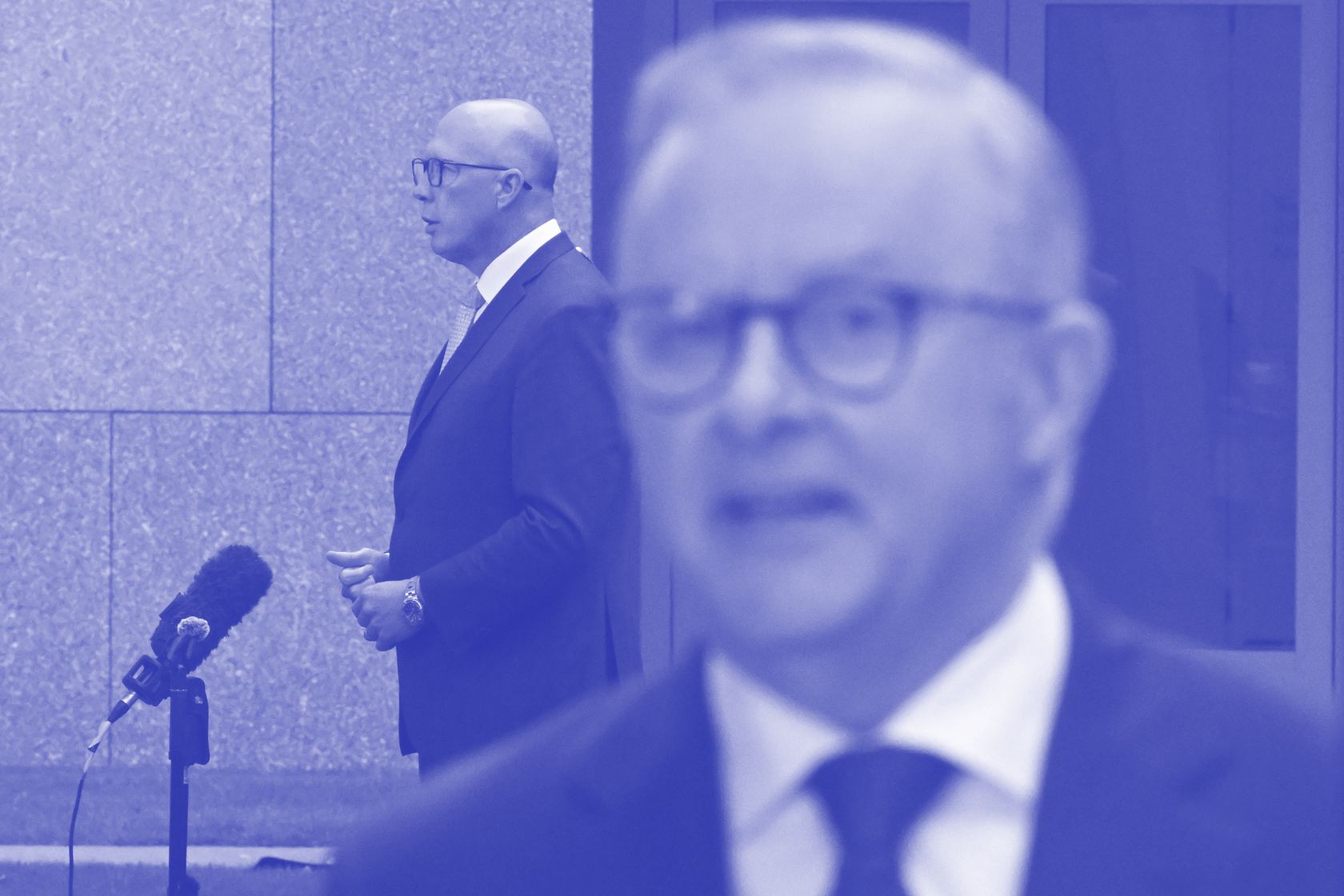
Power play: Peter Dutton delivered an energy-focused pre-election pitch, vowing to force more gas into the domestic market and cut fuel prices as part of a broader cost-of-living agenda. In his budget reply speech last night, just hours before Anthony Albanese’s expected visit to the Governor-General to call a 3 May election, Dutton outlined a plan to reserve up to 20% more east coast gas to decouple local prices from global markets, cutting wholesale costs from over $14 to under $10 per gigajoule. He also pledged to halve the fuel excise for a year at a cost of $6 billion, calling it faster and more meaningful than Labor’s tax cuts, which he said the Coalition would repeal if elected—though economists have labelled the excise cut a sugar hit. Dutton also promised to scrap Labor’s $20 billion Rewiring the Nation and $10 billion housing funds, axe $16 billion in green energy credits, reverse the hiring of 41,000 public servants, cut migration by 25% and ban foreign buyers from purchasing existing homes. (Capital Brief)(AFR)
2.
Record shortfall: Following Opposition Leader Peter Dutton’s budget reply, Resources Minister Madeleine King announced she had secured the necessary gas for domestic use to bridge a record winter shortfall. According to a government statement, King has been meeting with major east coast gas exporters to assess the outlook for gas supply in the coming months, and has secured a commitment from LNG providers to make additional gas available for the domestic market in Q3. The ACCC said on Thursday that the forecast gas shortfall in south-eastern states is expected to reach a record high of 40 petajoules in the September quarter. The projected shortfall in the period is 3 petajoules higher than last forecast, and twice as large as the shortfall in Q3 2024. The new commitments mean there will be a buffer of gas supply during times of peak demand. (Capital Brief)(Capital Brief)
3.
Auto slide: Shares in global carmakers fell after US President Donald Trump said he would impose 25% tariffs on automotive imports from 2 April. General Motors dropped nearly 8%, Ford 3%, Stellantis 1%, and international rivals like BMW, Toyota and Hyundai also declined. Tesla rose more than 4%, with analysts citing its US production and “substantial” local sourcing. The United Auto Workers union called the move “a major step in the right direction.” Morgan Stanley estimated vehicle prices could rise 11–12%, while Goldman Sachs projected increases of $5,000 to $15,000 and dealers expect a reduced range of models. Ferrari said it would absorb the tariff on some cars. Rental and used-car companies like Hertz and Avis surged on expected demand. The European Union vowed a “robust” response, Mexico promised a “comprehensive response,” and South Korea pledged measures to limit the impact. Meanwhile, drugmakers are stockpiling and flying medicines to the US ahead of Trump’s 2 April “Liberation Day” tariff announcement. (WSJ)(Bloomberg)(Reuters)
4.
Deep cuts: US Health and Human Services Secretary Robert F Kennedy Jr announced 10,000 further job cuts and the closure of half of HHS’s regional offices in a major restructuring. Including recent buyouts and terminations, the workforce will shrink from 82,000 to 62,000. The 10,000 new layoffs follow an earlier 10,000 departures through buyouts and terminations. The overhaul reduces 28 divisions to 15 and creates a new Administration for a Healthy America to coordinate chronic care and disease prevention programs. The cuts include 3,500 at the US Food and Drug Administration, 2,400 at the Centers for Disease Control and Prevention, 1,200 at the National Institutes of Health and 300 at the agency overseeing Medicare and Medicaid. HHS said essential services won’t be affected. Core functions like HR, IT, communications, procurement and policy will be centralised. Kennedy said the department had become “wasteful and inefficient” and that the changes would have estimated annual savings of USD1.8 billion ($2.9 billion). (Reuters)(NPR)
5.
Trade blackout: The US has paused its contributions to the World Trade Organization for 2024 and 2025, Reuters reported, citing three unnamed trade sources. A US delegate told a 4 March WTO budget meeting that payments were on hold pending a review of contributions to international organisations, and that Washington would inform the WTO of the outcome at an unspecified date, two sources said. A third source confirmed the account and said the WTO was working on a "Plan B" in case of a prolonged pause. As of end-December 2024, the US had arrears of 22.7 million Swiss francs ($40.8 million), according to a WTO document obtained by Reuters. The US is now in “Category 1 arrears”, meaning its representatives can no longer preside over WTO bodies or receive formal documentation. The WTO’s 2024 budget is 205 million Swiss francs, and the US was due to contribute about 11%, based on a fee system proportionate to its share of global trade. (Reuters)
6.
GDP growth: The US economy expanded at a faster clip than expected in the October to December period last year as corporate profits increased. GDP surged at a 2.4% rate in the quarter, as corporate profits with inventory valuation and capital consumption adjustments increased USD204.7 billion ($325 billion) in the fourth quarter, in contrast to a decrease of USD15 billion the previous quarter. The rise in after-tax profits of 5.9% for the quarter is the highest increase seen in corporate profits for over two years. The figures may signal that US firms have more headroom for absorbing additional costs brought about by tariffs, without passing the increases on to consumers. The data published by the Bureau of Economic Analysis also covered real gross domestic income which rose 4.5% in the period compared with an increase of 1.4% in Q3. (BEA)(Bloomberg)(Capital Brief)
7.
Unequal footing: TikTok has for a second time taken aim at Labor’s decision to offer YouTube an exemption from its new social media age restrictions and claimed the move would further entrench Google’s market power. In a submission to Treasury’s work on a new ‘ex ante’ digital competition regime seen by Capital Brief, TikTok raised concerns about the decision and the inconsistencies it highlights in how social media platforms and digital services are categorised across Australian tech policy. The government’s decision to exempt YouTube from new social media age restrictions shows how a failure to properly understand service categories risks entrenching market power, it reads. Despite the ACCC categorising YouTube as a social media service, the government proposes exempting YouTube from the rules, “avoiding the need for Google to compete on equal footing with any other so-called ‘social media platform’ and entrenching their power further.” (Capital Brief)
8.
Productivity problems: The Productivity Commission has warned that low productivity levels are becoming a long-term trend, with its latest quarterly bulletin revealing a 0.1% decline in labour productivity over the December quarter and a 1.2% decline over the year. Languishing labour productivity levels translate into limited growth in living standards, and both sides of the political aisle have varied views on how to tackle the issue, with significant disagreement over industrial relations policies in particular. While economists argue technology (like AI) will boost productivity, the Commission wants "targeted reforms" to address productivity directly and is currently undergoing specific research to make recommendations to the government. "The data makes it clear that our productivity problem is not a flash in the pan – this is a long-term, structural challenge," said Productivity Commission deputy chair Alex Robson. (Capital Brief)
