ECB holds rates steady and is ‘not Fed dependent’ on June cuts
Plus: Vietnamese tycoon given death penalty for US$12.5b fraud; Biden’s antitrust enforcement turns to private equity; Lufthansa halts Tehran flights over Middle East tension.

Good morning. Here's what happened overnight and what you need to know today.

1.
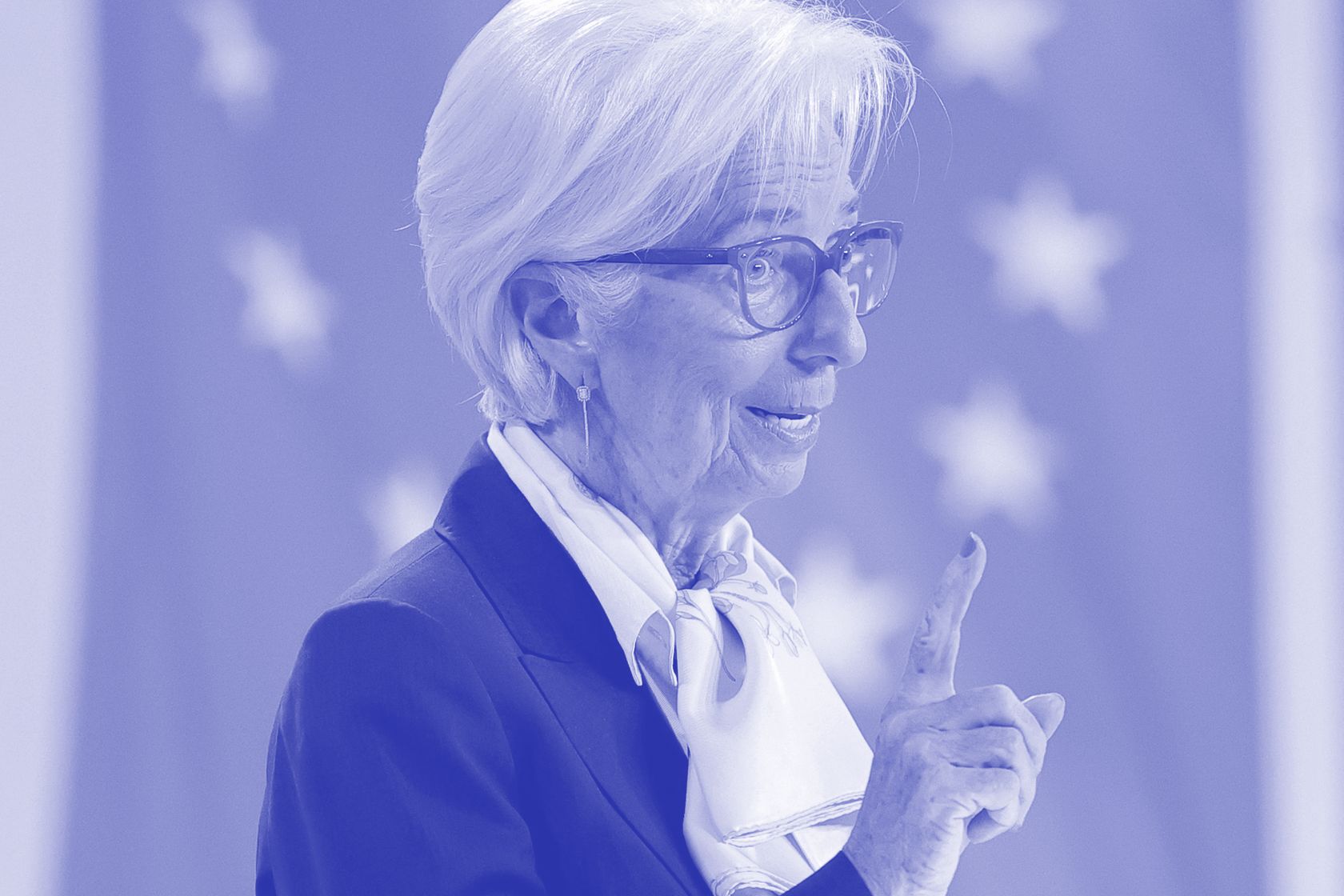
Euro rates: The European Central Bank held rates at a record high on Thursday and indicated that it is getting closer to rate cuts, despite the road to monetary easing by the US Federal Reserve becoming less clear. The ECB’s key interest rates remain unchanged at 4.50%, 4.75% and 4.00%. The ECB explained that if its inflation outlook, the dynamics of underlying inflation, and the strength of monetary policy transmission were to further “increase our confidence that inflation is converging to our target in a sustained manner, it would be appropriate to reduce the current level of monetary policy restriction”. After yesterday’s hot US inflation figures, investors are pulling back from bets on a June rate cut by the US Fed. ECB President Christine Lagarde insisted that the EU is on track to cut rates in June, regardless of what the US Fed decides to do: “We are not Fed dependent,” Lagarde asserted. (ECB press release)(Financial Times)
2.
Capital offence: Vietnamese property tycoon, Truong My Lan, has been sentenced to death after being found to have embezzled USD12.5 billion ($19.16 billion) and illegally controlling a Vietnamese bank for 10 years. At the time of her arrest in 2022, the amount Lan embezzled was equivalent to around 3% of Vietnam’s GDP. In the country’s largest ever fraud trial, the 67-year-old chair of real estate company Van Thinh Phat was found guilty of fraudulent activities which took place between 2012 and 2022. Along with accomplices, Lan siphoned-off USD12.5 billion from the Saigon Joint Stock Commercial Bank (SCB), which, through the use of proxies, Lan effectively controlled. The state was forced to bail out SCB in in 2022, after Lan’s arrest led to a run on the bank’s deposits. The court said that the harshness of the penalty was due to the seriousness of the case and that there was no possibility that the money would be recovered. (Vietnam Net)
3.
Full disclosure: Biden’s aggressive antitrust enforcement has turned its focus to private equity, as the Federal Trade Commission and Department of Justice (DoJ) probe whether some PE firms intentionally withheld information from antitrust enforcers during deal reviews to avoid acquisitions being blocked. Speaking at a conference, Richard Mosier, former special counsel for private equity, US Justice Department, said that the agency has a renewed focus on ensuring PE comply with the HSR Act which requires a hefty slew of documentation about potential deals. Concerns are revolving around the completeness of the HSR submissions, and companies that “try to game the system, they run the risk of having that HSR and perhaps prior HSRs scrutinised.” KKR has previously disclosed that the Justice Department was looking at the accuracy of its merger notification filings for some transactions in 2021 and 2022, but Mosier did not name any companies caught up in the probe. (Bloomberg)
4.
Tense airspace: Lufthansa has halted flights to and from the Iranian capital, Tehran, through to Saturday, after the US warned that an Iranian attack on Israel is imminent. The German airline made the decision to extend its suspension of flights announced last week that was meant to end on Thursday 11 April. A Lufthansa spokesperson told the Wall Street Journal that the group is constantly monitoring the situation in the region and keeps in close contact with authorities: “The security and safety of our guests and crew members have top priority for Lufthansa.” While the decision currently only impacts Lufthansa flights, the carrier group also owns Swiss, Austrian Airlines, Brussels Airlines and Eurowings. (Wall Street Journal)
5.
Amazon’s AI: Amazon chief Andy Jassy has claimed that the generative AI boom will be built on Amazon Web Services (AWS) infrastructure. In the company’s annual letter to shareholders, Jassy said: “While we’re building a substantial number of GenAI applications ourselves, the vast majority will ultimately be built by other companies[…]We’re optimistic that much of this world-changing AI will be built on top of AWS.” Jassy touted that gen-AI could be the largest technology transformation since the cloud, and “perhaps since the Internet.” He also spoke to the tech giant’s commitment to cost-cutting measures, stating that Amazon will continue efforts its reduction of “cost to serve” on a per unit basis, and that it has found several areas in its fulfillment network where he believes Amazon can lower costs even further. (Amazon annual CEO letter)(Bloomberg)
6.
Tax dispute: Asset management giant, BlackRock, has lost an appeal tied to UK tax it tried to reclaim from HM Revenue and Customs on its 2009 acquisition of Barclays Global Investors (BGI). The USD13.5 billion ($20.72 billion) purchase of BGI saw BlackRock use USD4 billion in loans from its US entities to buy the US arm of the Barclays business, however, the corporate part of the deal included a UK tax resident entity. BlackRock’s UK tax entity claimed tax relief for interest costs tied to the loans to reduce the UK tax bills of other profitable companies in the BlackRock group, by setting the tax losses against profits. The Court found that the tax deductions for the interest on the loans were disallowed under the 'unallowable purpose rule', arguing that the UK entity’s main purpose was to gain a tax advantage. (UK Court of Appeal Judgment)(Financial Times)
7.
AI Macs: Apple is preparing to overhaul its entire line of Macs with AI-focused M4 chips. Unnamed sources cited by Bloomberg say that the tech giant is nearing production of the next generation M4 processor, which will come in at least three main varieties. Apple wants to update every Mac model with the new family of in-house processors which are made to highlight artificial intelligence – an upgrade on its Macs with M3 chips released five months ago. The M4 chip line includes an entry-level version dubbed Donan, a more powerful Brava and a top-end processor codenamed Hidra – which will be reserved for the Mac Pro. The company wants to highlight the AI capabilities of the new processors and how they’ll integrate with the new macOS, set to be announced in June at Apple's developer conference. While the timeline could shift, Apple plans to begin releasing the new computers later this year. (Bloomberg)
8.
Fat packet: AstraZeneca shareholders have approved a controversial payrise for CEO Pascal Soriot, pushing his 2024 remuneration to as high as £18.9 million. Of the 1.18 billion total votes cast, 64.43% were in favour of the decision that will take the maximum annual bonus Soriot can receive to three-times his base salary, as well as make him eligible for long-term performance based share awards. The share awards can amount to as much as 8.5 times his salary. Rajiv Jain, CIO of GQG Partners, one of AstraZeneca’s major shareholders, told the Financial Times that Soriot deserves a proposed £1.8 million payrise. Jain said that the company has a compensation issue and that “the CEO is massively underpaid […] given AstraZeneca’s impressive turnaround since he joined more than a decade ago.” (Reuters)
