ECB in fourth 2024 rate cut as growth slows
Plus: US producer prices jump, fuelled by avian flu; Software startup ServiceTitan stuns in Nasdaq debut; China pledges measures to boost domestic consumption.


Good morning. Here's what happened overnight and what you need to know today.

1.
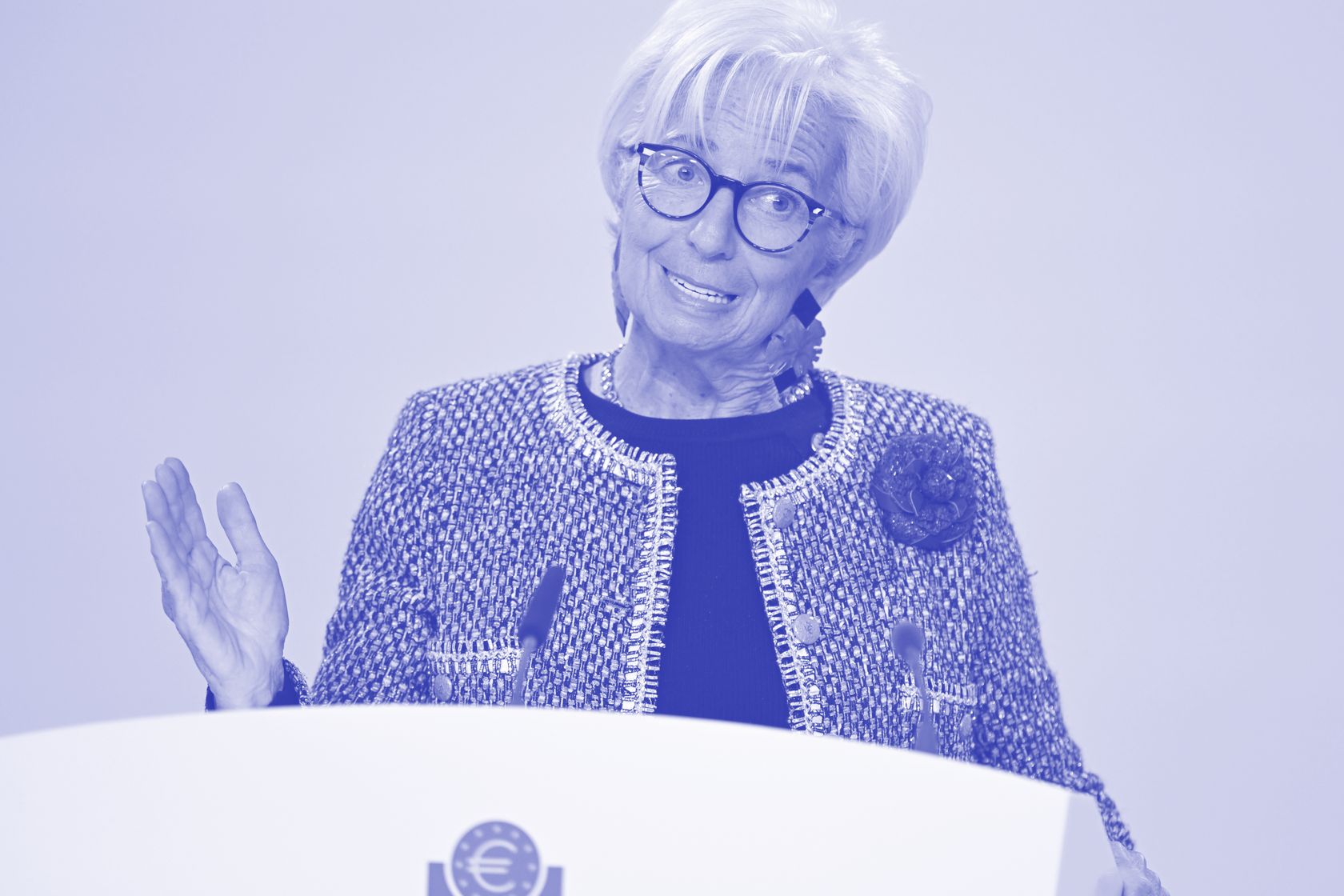
Bloc growth: The European Central Bank (ECB) cut interest rates by 25 basis points to 3%, its lowest level since March 2023, marking the fourth reduction since June. The unanimous move comes as inflation in the 20 countries that share the euro nears the 2% target and economic forecasts weaken. The ECB now projects Eurozone growth of 1.1% next year, down from 1.3% in September, with further cuts to 2026 and 2027 forecasts reflecting risks from global trade frictions, including potential US tariffs under Donald Trump’s incoming administration. “What has changed are the downside risks, particularly to growth,” ECB President Christine Lagarde said, adding that Trump’s tariffs are not factored into the baseline scenario. If imposed, tariffs could further hurt the export-reliant Eurozone. The euro dipped while swap markets showed five more 25-basis-point rate cuts are expected by next September, bringing the deposit rate to 1.75%. Elsewhere, the Swiss National Bank cut interest rates by 50 basis points, its biggest reduction in almost a decade, responding to weaker inflation and addressing the franc’s recent appreciation. (Capital Brief)(ECB)(FT)(Reuters)
2.
Inflation mark: US producer prices rose 0.4% in November, the largest gain in five months and above forecasts, driven by a 55% surge in egg prices due to avian flu. Economists polled by Reuters had expected a 0.2% monthly increase, matching October’s rise. Year-on-year, the PPI rose to 3.0%, up from 2.6% in October, according to the US Bureau of Labor Statistics. Goods prices excluding food and energy increased 0.2%, while food prices jumped 3.1%, the steepest rise in two years. Bloomberg noted over 33 million eggs and young birds have been culled this year, doubling 2023’s total. Services prices edged up 0.2%, the smallest gain in four months. The report follows official data showing consumer prices posted their biggest jump in seven months in November. (Capital Brief)(BLS)(Bloomberg)(Reuters)
3.
Startup titan: ServiceTitan, a cloud-based software company, saw its shares jump 42% in its Nasdaq debut on Thursday (Friday AEDT), opening at USD101 ($158.41) per share, above the IPO price of USD71. The surge brought the company’s valuation to $8.97 billion. ServiceTitan is among a limited number of venture capital-backed firms to go public in 2024, alongside Reddit and Rubrik. The US IPO market has seen renewed activity this year, supported by strong equity markets, interest rate cuts and hopes for an economic soft landing. Meanwhile, IPO candidate and once-fintech startup Klarna told Bloomberg it has stopped all hiring to instead invest in artificial intelligence that’s doing the work of hundreds of staff across the firm. Siemiatkowski said AI-driven productivity gains have supported higher salary growth for remaining staff. Founded in 2005, Klarna confidentially filed for a US IPO last month, with analysts valuing it at USD14.6 billion. (Reuters)(Bloomberg)
4.
Inviting demand: China’s Central Economic Work Conference concluded with leaders pledging measures to address weak growth, including raising the fiscal deficit ratio, increasing bond issuance—potentially doubling ultra-long special bonds to RMB 2 trillion ($431 billion) in 2025—and lowering interest rates. Domestic consumption was named a top priority, with plans to expand demand “in all directions” and campaigns to boost spending next year. The limited details on the measures disappointed investors, with Chinese A-share futures dropping 1.2%. Meanwhile, Trump, who on Thursday rang the NYSE opening bell after he was named “Person of the year” for a second time by Time magazine, invited Xi Jinping to attend his inauguration next month in a move intended to create “open dialogue”, despite heightened tensions over Taiwan and export controls. The Chinese embassy has yet to comment on whether Xi will attend. At the event, Trump repeated pledges to cut taxes, including slashing the rate to 15% for companies manufacturing in the US. (FT)(NYT)
5.
Claims jump: US jobless claims unexpectedly rose last week, with initial claims jumping 17,000 to a seasonally adjusted 242,000 for the week ending 7 December, surpassing economists' 220,000 forecast. The figure, a two-month high, was attributed to seasonal Thanksgiving volatility rather than a labour market shift. Continuing claims, seen as a proxy for ongoing unemployment, increased by 15,000 to 1.886 million for the week ending 30 November, approaching a three-year high. California, Texas, and New York led the increases. It comes as the Federal Reserve is widely expected to cut interest rates next week, supported by the labour market trends despite ongoing challenges in reducing inflation to its 2% target. “The jump in initial jobless claims probably reflects some seasonal volatility related to the timing of Thanksgiving, rather than a fundamental deterioration,” Pantheon Macroeconomics said in a note. (Capital Brief)(DOL)(Bloomberg)(Reuters)
6.
Fee freeze: Big US banks must cap overdraft fees at USD5 ($7.84) or amounts reflecting costs and losses under a Biden administration rule opposed by industry groups and Republicans. Issued by the Consumer Financial Protection Bureau (CFPB), the rule applies to banks and credit unions with over USD10 billion in assets and is set to take effect next October. Institutions must either cap fees or comply with lending disclosure laws. Current overdraft fees average USD35 per transaction and generate billions annually. The CFPB estimates the rule could save US consumers USD5 billion annually, or USD225 per household paying these fees. Lenders plan to oppose the rule arguing it may limit access to overdraft services and push consumers toward payday loans. Smaller institutions below the USD10 billion threshold, which generate one-third of overdraft revenue, are exempt. (WSJ)(Bloomberg)
7.
HSBC retreat: HSBC is reviewing its retail banking outside the UK and Hong Kong, The Financial Times reported, with potential pullbacks in Mexico, Malaysia and Indonesia as it focuses on wealthier "premier" clients and cost-cutting. In Mexico, where HSBC acquired Grupo Financiero Bital in 2002, deposits total nearly USD30 billion ($47 billion), but the bank has struggled to compete with BBVA and Citigroup’s Banamex, with operating costs of USD1.8 billion. It follows previous exits from lossmaking consumer operations in France, the US and Canada, including selling its Canadian business to RBC for USD10 billion. HSBC CEO Georges Elhedery, who took over in September, is targeting USD500 million in annual savings through job cuts and restructuring, including consolidating senior roles and scrapping "general manager" titles. HSBC declined to comment to the FT. HSBC’s main international rival, Citi, is in the process of exiting its Mexican consumer business as it also withdraws from an earlier age of global expansion. (FT)
8.
AI anxiety: Adobe shares tumbled over 13% on Thursday after it forecast fiscal 2025 revenue of USD23.3-USD23.55 billion, falling short of analysts’ USD23.78 billion expectations. The forecast raised concerns among investors about delayed returns from Adobe’s AI investments, despite its record fourth-quarter revenue of USD5.61 billion and adjusted earnings of USD4.81 per share, which exceeded FactSet estimates. Analysts noted the lack of clarity on monetising generative AI tools as a key issue. Competing against the like of OpenAI and Stability AI, Adobe has underperformed the S&P 500 for over five years, and its shares are down 17% year-to-date, despite investments in tools like Firefly, a text-to-video generative AI product. At least seven brokerages cut price targets following the revenue forecast. (Reuters)(Forbes)
