Epstein said Trump ‘knew about the girls’ in newly released email
Plus: Dow hits record as Congress nears vote to end shutdown; Liberals edge towards dumping net zero target; EU probing Google on news rankings, says FT.

Good morning. Here's what happened overnight and what you need to know today.

1.
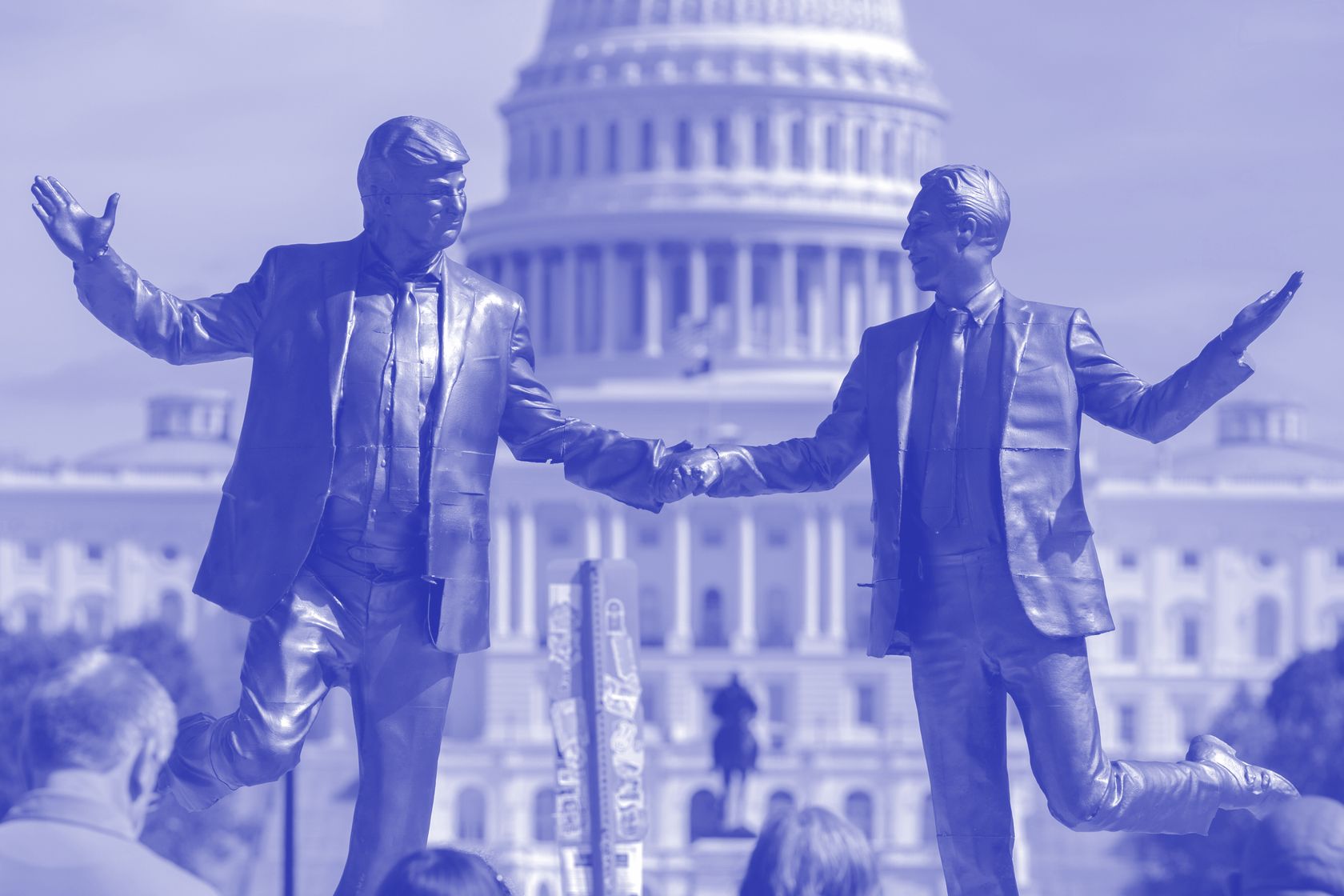
Epstein emails: House Democrats released emails from Jeffrey Epstein in which he claimed Donald Trump “spent hours” at his home with one of Epstein’s victims, an encounter Epstein said in a 2011 email to Ghislaine Maxwell “has never once been mentioned” by police. In a separate 2019 email to author Michael Wolff, Epstein wrote that Trump “of course he knew about the girls as he asked Ghislaine to stop.” In an earlier 2015 exchange, Wolff advised Epstein to “let him hang himself” if Trump denied being on the plane or at the house. Shortly after the Democratic release, Republicans on the House Oversight Committee published 23,000 documents from Epstein’s estate and identified the woman referenced in the emails as Virginia Giuffre, who died by suicide in April. Giuffre had said in a 2016 deposition that she did not believe Trump participated in any abuse and described him in her memoir as “couldn’t have been friendlier.” The White House dismissed the release of the emails as a political hoax and distraction from Trump’s “historic accomplishments.” That came as Congress returned to vote on ending the government shutdown and as Democrats moved to force a vote to compel the Justice Department to release its Epstein files. (NYT)(WaPo)(abc)
2.
Dow record: The Dow Jones Industrial Average was trading at a record high as the US House of Representatives prepared to vote on a bill to end the longest government shutdown in American history. The stopgap legislation, which passed the Senate and has the backing of the US president, would extend federal funding through 30 January, restore pay for furloughed workers, and reverse job cuts made during the shutdown. Most House Democrats oppose the bill because it lacks the key extension for federal healthcare subsidies they were calling for. Wall Street saw a mixed session, with the Nasdaq lower in afternoon trading as investors rotated out of large tech stocks following SoftBank’s Nvidia divestment and a forecast cut by CoreWeave. AMD shares jumped after the company said its data centre revenue will grow 60% over the next three to five years, up from USD16 billion in 2025, driven by increased AI demand and market share gains from Nvidia. Meanwhile, traders are now pricing in a 65% chance of a December interest rate cut, but Fed officials remain split, with limited data complicating assessments. (Reuters)(Bloomberg)(WSJ)(NYT)
3.
Tight-lipped: A group of 51 Liberal MPs emerged tight-lipped from their party room on Wednesday evening after a marathon net zero meeting that threatened to drag into a sixth hour. Aside from a performative handshake between leadership aspirant Andrew Hastie and influential conservative James Paterson, very little was said to journalists as the room emptied. Liberal leader Sussan Ley and her team won’t announce a position until today – and that’s without factoring in crunch talks with the Nationals over the weekend on a deal to keep the Coalition together. Even before Wednesday’s meeting concluded, a picture emerged of a party edging towards dumping the net zero emissions target and moderate Liberals are moving to play down the significance of the shift. They’ve stressed that even the Nationals aren’t walking away from the Paris Climate Accord, but at the same time, their language has subtly shifted towards critiquing the agreement itself. (Capital Brief)
4.
Google rankings: The European Commission is preparing a new competition investigation into Google over how it ranks news sources in search results, The Financial Times reported. The probe will reportedly examine allegations Google downranked publishers that include third-party promotional editorial content, such as sponsored articles. It will be carried out under the EU’s Digital Markets Act, which grants regulators broad oversight of large online platforms and allows fines of up to 10% of global revenue for non-compliance. The move comes as the Trump administration escalates tensions with Brussels, threatening tariffs in response to such fines and describing them as “a form of taxation”. Google has already been the subject of numerous antitrust investigations globally, including prior multi-billion euro fines from the EU. (FT)(Bloomberg)
5.
Claude’s infra: Anthropic will spend USD50 billion ($76.4 billion) to build custom AI data centres across the US, starting with Texas and New York. In partnership with UK-based Fluidstack, the project marks the Claude developer’s first major buildout outside cloud partners like Amazon or Google. The sites are expected online from 2026 and would create about 800 permanent and 2,400 construction jobs, the company said. Anthropic said the investment supports the Trump administration’s goal of strengthening domestic AI infrastructure. CEO Dario Amodei said the centres will enable more advanced AI systems that can solve complex problems and accelerate scientific discovery. The move comes amid massive infrastructure spending by OpenAI, Meta and Microsoft, which is reportedly building a new AI “super factory” in Atlanta. Founded in 2021 by former OpenAI staff, Anthropic now has over 300,000 enterprise customers and was valued at USD183 billion in September. (Capital Brief)(Anthropic)(WSJ)
6.
Beat cop: ASIC announced its new regulatory priorities for the coming year, targeting private credit, financial reporting misconduct, handling of insurance complaints and claims, and misleading pricing, while bolstering its investigation into the collapse of Shield and First Guardian Master Funds. ASIC deputy chair Sarah Court said the priority work would continue to protect consumers from financial harm as the regulator makes private credit a key target. “In line with our increased surveillance across private credit, we won’t hesitate to take enforcement action to stamp out misconduct in the sector,” Court said. The regulator has also prioritised its investigation into the collapse of the Shield and First Guardian Master Funds, allocating 40 staff to the work of returning money to investors. ASIC’s new priorities are in addition to ASIC’s existing work on insider trading, vulnerable consumers and predatory lending, unlawful evasion of small business creditors, super trustee accountability, and auditor misconduct. (Capital Brief)
7.
FemTech standoff: The Department of Employment and Workplace Relations rejected a proposal from Girl Geek Academy and Gender Lens Australia to split a $4.9 million women's technology grant, saying it lacks authority to intervene despite a majority of grant partners supporting the plan. As Capital Brief reported, the women-led groups were removed from the federally funded FemTech project in September following a dispute with union lead Professionals Australia over approximately $170,000 in unpaid invoices for completed work. In correspondence dated 7 November and obtained by Capital Brief, co-founder Sarah Moran said partners are being asked to attend meetings with Professionals Australia and departmental representatives where "unidentified lawyers are present" and discussions proceed as though disputed issues are settled matters, “when they are not.” Girl Geek Academy is requesting an independent financial audit to verify whether Commonwealth payments have been distributed according to approved budget allocations, and immediate payment of outstanding invoices for four partner organisations. (Capital Brief)
8.
Free stream: Labor will shrug off industry concerns that its proposed streaming quotas could run afoul of Australia’s free trade deal with the US, as the government moves to pass the legislation in the coming weeks. The concerns were reiterated last month by the powerful US entertainment lobby group, the Motion Picture Association, which described Australia’s streaming quotas as a threat to Australia’s free trade deal with the US. Last week, Arts Minister Tony Burke announced the government would introduce legislation that would see global streaming platforms including Netflix and Disney+ required to invest at least 10% of their total Australian expenditure, or 7.5% of their revenue, in new local drama, children’s, documentary, arts and educational programs. On Wednesday, the Albanese government dismissed concerns that the proposal could contravene Australia’s trade pact with the US. A spokesperson for the Department of the Arts said the new streaming quotas comply with Australia’s trade obligations. (Capital Brief)
