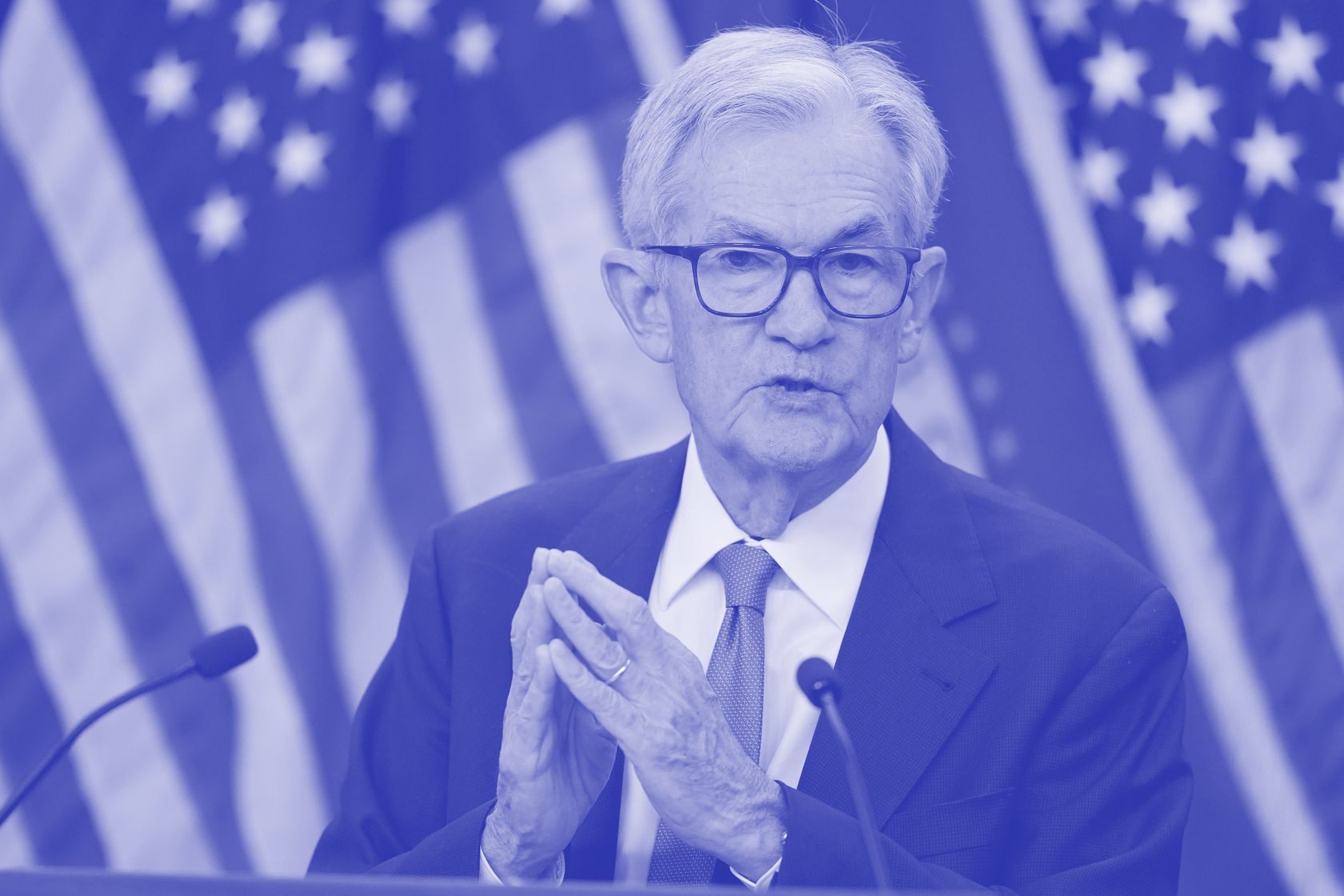
Fed delivers third straight cut amid divide over inflation, jobs
Plus: Nvidia says no evidence DeepSeek smuggled Blackwell chip; PEXA takes NSW to court over $1 transaction fee; Third US judge orders release of sealed Epstein grand jury records.
Good morning. Here's what happened overnight and what you need to know today.
1.
Fed plot: The US Federal Reserve cut interest rates by 25 basis points for the third straight time, lowering the benchmark range to 3.5%-3.75%, with the FOMC voting 9–3 in favour. It marks the first triple dissent since 2019, reflecting deep divisions over whether persistent inflation or a weakening labour market poses the greater risk. Fed Governor Stephen Miran pushed for a larger half-point cut, while Chicago’s Austan Goolsbee and Kansas City’s Jeffrey Schmid opposed any reduction. The decision came alongside updated projections, pointing to one cut in both 2026 and 2027. Forecasts also revised 2026 growth up to 2.3% and trimmed next year’s core inflation to 2.5%. It comes as Trump is expected to announce Powell’s replacement in coming weeks, with Kevin Hassett seen as the frontrunner. The outlook may shift quickly, with delayed inflation and labour data that had been held up by a 43-day government shutdown, due soon. (Fed)(Bloomberg)(Reuters)
2.
Deep smuggle: Nvidia rejected a report that Chinese AI startup DeepSeek is using thousands of its export-restricted Blackwell chips to build a new model, saying it has “not seen any substantiation” or received tips of the type of smuggling operation described. The Information, citing six unnamed sources, reported that DeepSeek obtained the chips through a scheme involving data centres in countries where sales are permitted, with servers dismantled and shipped into China. The US banned Nvidia’s Blackwell chips from being sold to China in 2024. Despite Beijing’s push for domestic AI hardware, executives from Chinese AI firms told the publication that local chips are not yet sufficient for training models. DeepSeek previously used A100 and Hopper chips and released an experimental model in September described as a step toward a next-generation system, with its R1 model drawing international attention in January. It comes as Donald Trump this week approved limited sales of Nvidia’s H200 chips to China and Reuters reported Bytedance and Alibaba have already enquired about purchasing large amounts of those chips. The more advanced Blackwell chips remain subject to export restrictions. (The Information)(CNBC)
3.
In-for-a-penny: ASX-listed PEXA is taking the NSW Registrar General to court and is refusing to pay a $1-per-transaction fee to the data standards regulator after the registrar general blocked Australia’s dominant electronic conveyancing firm from passing the charge on to customers. PEXA does not want to pay the levy until all state and territory land registries approve the cost pass-through, a step NSW has deferred to a broader review of operational pricing due to report at the end of FY26, according to sources who spoke to Capital Brief anonymously. Smaller rival Sympli processes about 2,500 transactions a month, far fewer than the roughly 350,000 Australian property transactions handled by PEXA. A spokesperson for Sympli said it has paid all transaction-related and fixed licence fees it owes to NECDS, has not sought to pass the transaction fee onto customers and argues that regulators must now have realised the reality of the “PEXA monopoly” to “put its own interest first”. (Capital Brief)
4.
Epstein files: A third US federal judge ordered the release of secret grand jury records from the Jeffrey Epstein investigation, after years of court resistance to unsealing the materials. The decision by US District Judge Richard Berman of New York follows similar rulings by a Florida judge and by fellow NY judge Paul Engelmayer in the Ghislaine Maxwell case, after all three had previously denied the DOJ’s requests. The rulings come in response to the Epstein Files Transparency Act, signed into law by President Trump in November, which requires the DOJ to release all unclassified Epstein-related records by 19 December. In his ruling, Berman wrote that the new law “supersedes” existing rules that normally keep grand jury materials secret, and said Epstein’s victims have an “unequivocal right” to have their identities and privacy protected. Judges have cautioned the grand jury materials may be limited in scope but will add to the hundreds of thousands of pages the DOJ is already expected to release. (NYT)(Bloomberg)(Reuters)
5.
Immunity demands: The Trump administration is demanding that the International Criminal Court (ICC) change its founding treaty to ensure it cannot prosecute Donald Trump or top US officials, and is threatening further sanctions if the court does not comply, Reuters reported, citing an unnamed senior administration official. Washington has conveyed its demands to ICC members and the court itself, the person said. Alongside immunity for Trump and senior figures, the US wants the ICC to drop investigations into Israeli leaders over the Gaza war and to formally close its probe into alleged crimes by US forces in Afghanistan. The official cited concerns that the court could target Trump, the vice president, the now secretary of war and others in 2029. The US has previously imposed sanctions on nine ICC personnel but has not sanctioned the court as an institution. Doing so could disrupt its operations. The ICC’s public affairs unit, responding to questions from Reuters, said amendments to the Rome Statute are the prerogative of member states, and did not address whether Washington had sought immunity for Trump. The US is not a party to the Rome Statute. It comes as Congress investigates whether US forces unlawfully killed two survivors during a strike on a suspected drug vessel in the Caribbean, part of a broader anti-drug campaign that has killed more than 80 people across Latin America since September. (Reuters)
6.
Powering AI: GE Vernova shares surged to an all-time high after the company doubled its dividend, raised its buyback program, and forecast stronger growth driven by rising electricity demand from data-heavy industries like AI. The company doubled its quarterly dividend to 50 cents per share and increased its share repurchase authorisation by USD4 billion ($6 billion) to USD10 billion. It expects 2026 organic revenue growth of 16-18% in its power segment and 20% in electrification, along with USD4.5-5 billion in free cash flow, up from USD3.5-4 billion projected for 2025. CEO Scott Strazik told Bloomberg that AI is “a real driver” but not the only one. The company raised its post-2028 earnings estimate to USD52 billion from USD45 billion and its adjusted EBITDA margin target to 20% from 14%. Shares climbed up to 16% to USD725 and are up more than 430% since its March 2024 spin-off from General Electric. (GE Vernova)(Bloomberg)(Reuters)
7.
Business boost: Treasury doubled its forecast for business investment in 2025-26, according to an extract of its mid-year budget update due to be released next week. Treasury's 2025-26 forecast has doubled since its Pre-election Economic and Fiscal Outlook (PEFO) from 1.5% to 3%. Its 2026-27 forecast remains at 1.5%. Treasury is expecting "significantly more strength" in non-mining business investment, with its 2025-26 forecast hiked from 1% to 4%. In 2026-27, it is expecting growth of 2% compared to 1% at PEFO. The budget update will note that business investment rose 3.4% in the September quarter, its highest quarterly growth since March 2021. This was boosted by increased investment in the energy transformation, data centres and computer software. The update said lower financing costs, rising private demand and high-capacity utilisation are supporting a "more favourable investment environment". Treasurer Jim Chalmers said the budget update "will show that the private sector recovery…is really taking shape.” (Capital Brief)
8.
Pacific scramble: A joint Russian-Chinese air patrol near Japan’s southern islands raised fresh concerns in Tokyo about growing military coordination between the two nuclear-armed neighbours, as regional tensions continue to escalate. Japan’s Defence Ministry said two Russian Tu-95 bombers met two Chinese H-6 bombers before conducting a “long-distance joint flight” over the Pacific on Tuesday, joined en route by four Chinese J-16 fighters flying between Okinawa and Miyako islands. The operation, which Japan says was “clearly intended as a show of force”, comes days after Tokyo accused Chinese jets of radar-locking Japanese aircraft – a claim Beijing denies. South Korea also scrambled jets after seven Russian and two Chinese planes entered its air defence identification zone the same day. China’s Defence Ministry said the patrol showed the two countries’ capability to jointly address regional security challenges. With similar flights held annually since 2022, and some aircraft now flying closer to Japan’s main islands than in previous years, Japan’s Defence Minister Shinjiro Koizumi warned the latest operation marks an “expansion and intensification” of joint military activity. The manoeuvres followed comments by Prime Minister Sanae Takaichi suggesting Japan could respond if Chinese military action against Taiwan threatens Japan’s security. (Reuters)(Bloomberg)