Fed holds rates as Iran war darkens the outlook
Plus: Powell vows to stay put until DOJ probe ‘well and truly over’; Chalmers warns war could cut Australian growth, push inflation past 5%; Oil prices spike as Israel hits Iran gas field.

Good morning. Here’s what happened overnight and what you need to know today.

1.
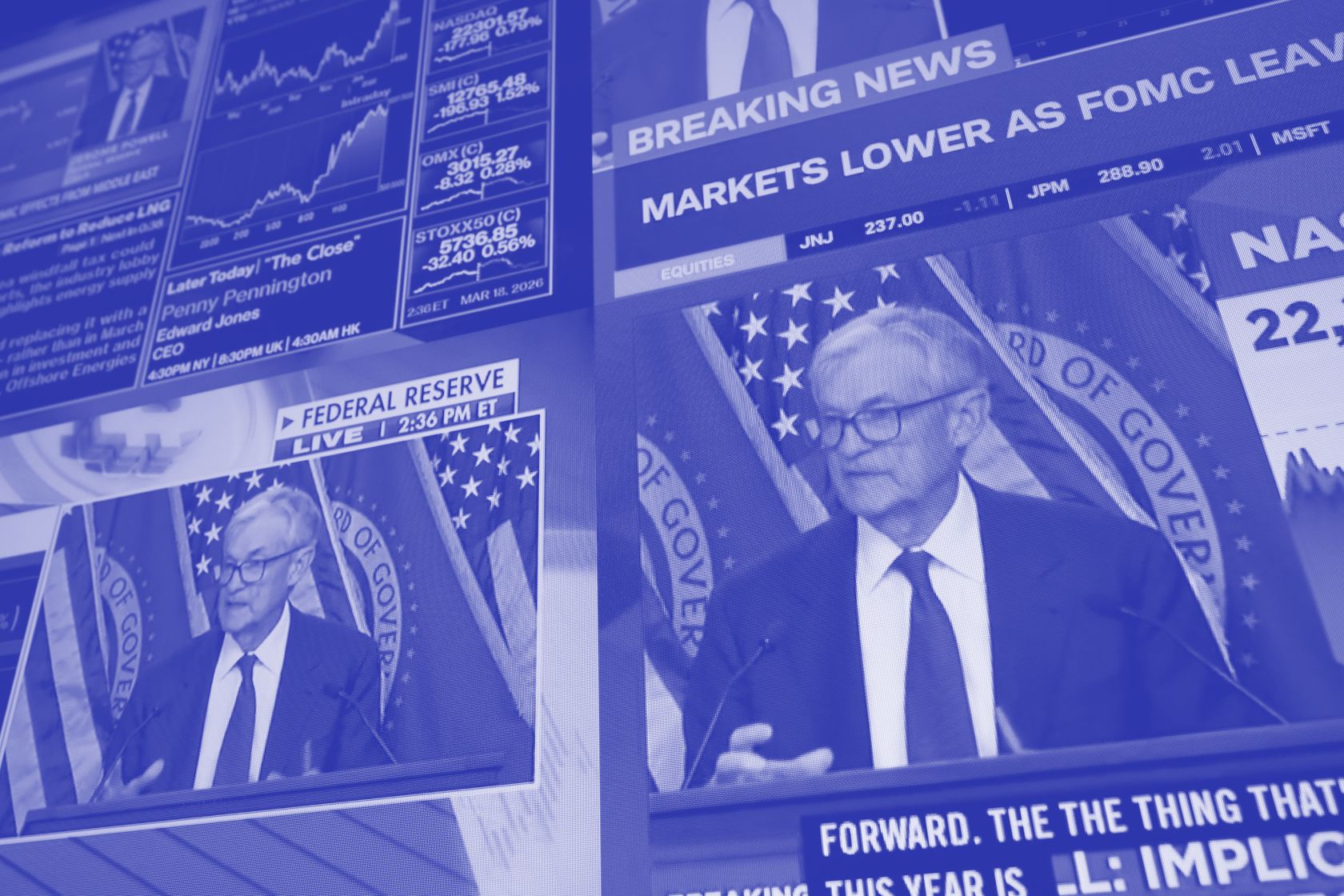
Fed hold: The US Federal Reserve held rates steady at 3.5%-3.75% for a second straight meeting, preserving a path to cuts this year even as the Iran war threatens to prolong its yearslong inflation fight. The vote was 11-1, with Donald Trump adviser and appointee Stephen Miran casting his fifth straight dissent in favour of a cut. Governors Christopher Waller and Michelle Bowman, who had previously signalled that a weakening labour market would lead them to support cuts, backed the hold. Updated projections still pencil in one quarter-point cut in 2026 and one in 2027, unchanged from December. Officials increased their core inflation forecast to 2.7% from 2.5% and lifted their GDP growth forecast to 2.4% from 2.3%. At the press conference Powell said several participants had raised the possibility the Fed’s next move could be a rate rise rather than a cut, saying that possibility “did come up”. He acknowledged the Fed’s latest economic projections were deeply uncertain, saying “if we were ever going to skip an (statement of economic projections) this would be a good one, because we just don’t know” what lies ahead given the war. Trump, meanwhile, again demanded rate cuts on Truth Social. Meanwhile, the US President’s Fed chair pick Kevin Warsh remains in Senate limbo, with Republican Thom Tillis blocking his confirmation over the DOJ’s criminal probe into Chair Jerome Powell. (US Fed)(Capital Brief)(Bloomberg)(FT)(Reuters)(US Fed)
2.
Powell staying: Fed chair Jay Powell also said he has no intention of leaving the central bank’s Board of Governors until the Department of Justice investigation into him is “well and truly over with transparency and finality.” Powell’s chairmanship ends in May, but his board term runs until 2028. He said he would serve as “chair pro tem” if his nominated successor Kevin Warsh, who was picked by US President Donald Trump, is not confirmed by the Senate in time, following precedent set in past scenarios. He has not yet decided whether to remain as a governor after the investigation concludes, he said, adding the decision would be based on “what I think is best for the institution and for the people we serve.” The DoJ probe concerns the cost of renovations to the Fed’s Washington headquarters. Last week, US District Judge James Boasberg blocked grand jury subpoenas issued as part of the probe, ruling the DoJ lacked proper purpose and had shared “essentially zero evidence” Powell had committed any crime. Boasberg wrote that the subpoenas appeared designed to pressure Powell into voting for lower rates or resigning. US Attorney Jeanine Pirro then said the DoJ would appeal, calling the ruling “outrageous.” Meanwhile, Senator Thom Tillis has said he would block Warsh’s confirmation until the investigation is finalised. (US Fed)
3.
GDP hit: Delivering his pre-budget address in Melbourne today, Chalmers will warn that the oil disruption prompted by war in the Middle East could cut GDP growth by up to 0.2 percentage points across Australia’s major trading partners, threatening to see domestic inflation rise above 5%. In line with two scenarios modelled by his department after the conflict broke out, “the prospect of inflation peaking in the high 4s, or even higher, this year is very real”. Chalmers will also note that the extent of tax reform Labor can deliver in its May budget will depend on “fiscal considerations” and “international developments”. He will state that the focus of any reform giving clear attention to intergenerational responsibilities, signalling that capital gains tax reform remains a high priority. Chalmers will clarify that any tax reform will be guided by key principles, specifically that the “outdated tax system” is unfairly weighing on younger Australians and future generations. He will add that the government is “working on substantial savings options…addressing some of the fastest growing structural spending pressures and making difficult decisions in other areas.” (Capital Brief)
4.
Energy strike: Israel struck Iran’s South Pars gas field triggering threats of retaliatory strikes on Gulf facilities and driving oil prices higher. Unnamed Israeli officials were cited by news outlets confirming the strikes, with a US official also telling the WSJ Washington was aware of the operation. Qatar and the UAE both condemned the attack, calling it a dangerous and irresponsible escalation that threatened global energy security. Iran published a list of “direct and legitimate targets” via its semi-official Tasnim news agency, including Saudi Aramco’s Samref refinery and Jubail complex, the UAE’s Al Hosn gas field, and Qatar’s Ras Laffan LNG facility and Mesaieed Petrochemical Complex. All sites began evacuating as a precautionary measure, Bloomberg reported citing unnamed sources. Iran halted gas supplies to Iraq, knocking 3.1 gigawatts off its power grid, Iraq’s electricity ministry spokesman Ahmed Moussa told Bloomberg. Iranian President Masoud Pezeshkian confirmed on X that intelligence minister Esmaeil Khatib had been killed in an Israeli strike. Meanwhile, Iran’s new supreme leader Mojtaba Khamenei vowed in a written statement carried by state media that those responsible “must pay soon.” Meanwhile, Bahrain, Japan, Panama, Singapore and the UAE proposed a safe maritime corridor at a International Maritime Organization meeting in London, with the US backing the measure to free some 20,000 seafarers stranded in the Gulf. In Washington, director of national intelligence Tulsi Gabbard told the Senate Intelligence Committee Iran’s regime appeared “intact but largely degraded". Gabbard had prepared a statement saying Iran had made no effort to rebuild its nuclear enrichment capability since US strikes in June 2025, but did not read it aloud. When pressed by Democratic Senator Mark Warner on the omission, she said she had skipped it because she was running out of time. (FT)(AP)(Reuters)(Bloomberg)(WSJ)(NYT)
5.
Market moves: Wall Street remained on edge overnight with stocks and bonds falling and crude prices surging toward USD110 a barrel on no sign of de-escalation in the war in Iran. The S&P 500 was trading 1.04% lower in afternoon trading in New York, the Nasdaq was 1.10% lower and the Dow Jones down 1.40%, after the US Federal Reserve held its benchmark rate steady and projected just one cut for 2026. Treasury yields extended their advance, with the 10-year yield up three basis points to 4.23%, according to Bloomberg. Brent futures jumped 5% to USD108.56, with WTI gaining 2.3% to USD98.38, as Iran threatened to strike energy facilities across the Gulf following Israeli strikes on its South Pars gas field. Bitcoin fell 3.9% to USD71,656 and spot gold dropped 2.5% to USD4,878.85 an ounce. In corporate news, AMD shares rose after it announced it is expanding its AI memory chip partnership with Samsung. Lululemon was higher after its quarterly results and Macy’s shares were also higher after beating profit estimates and flagging a smaller-than-expected tariff impact in the second half of the year. (Reuters)(Bloomberg)
6.
Critical condition: Critical minerals are expected to be included in a range of tariffs lifted when the European Union (EU) and Australia sign a major free trade agreement (FTA) next week. Prime Minister Anthony Albanese revealed on Wednesday that EU Commission President Ursula von der Leyen will travel to Australia next week, in an all-but confirmation the elusive deal will finally be inked. Multiple sources with knowledge of the deal told Capital Brief expect it would eliminate the majority of import tariffs in both directions. One source expects that to include the total lifting of tariffs on Australian resources and critical minerals, which are vital to AI technology and modern defence equipment. Confirmation of von der Leyen’s trip came hours after Trade Minister Don Farrell declared “there are ways through” major stumbling blocks which saw talks collapse in 2023. Von der Leyen will arrive in Australia on Monday, the beginning of a three-day trip which will see her meet with Albanese in Canberra on Tuesday. (Capital Brief)
7.
Pokie the bear: The Department of Communications called on the Albanese government to crack down on the multi-billion dollar online keno business over concerns a gap in anti-gambling laws is leaving addicts exposed to harm. Nearly 1,000 days after a high profile parliamentary committee proposed sweeping new restrictions on the gambling industry, a separate report from the Department has surfaced, raising new concerns that online keno products are not captured by federal laws banning the use of credit cards to pay for interactive wagering products. As such, Australians can use credit cards to play keno every three minutes, with anti-harm advocates reporting betting limits allow punters to spend as much as $20,000 an hour on games that traditionally were confined to casinos and clubs. The government is under increasing pressure from betting companies, sporting codes and television companies to ignore its findings or compensate them in the event of reforms, while gambling companies fear a ban will damage their businesses. (Capital Brief)
8.
EU Inc: The European Commission unveiled its plan to roll out a single set of corporate rules for the bloc dubbed ‘EU Inc.’, to boost the growth of companies to compete globally against the likes of the US and China. The proposal holds at its core a set of measures allowing firms to incorporate just once under an EU-wide regime and continue operating across the bloc. Under the scheme, entrepreneurs will be able to create a company within 48 hours from anywhere in the EU, completely online. A statement released by the Commission explained that with 27 national legal systems and over 60 company forms, the fragmented corporate legal landscape makes expanding across EU borders prohibitively challenging for companies. “This crucial step is just the beginning. Our goal is clear: one Europe — one market — by 2028”, Commission President Ursula von der Leyen said. The Commission intends to have the EU Inc regime in place by the end of 2026. (European Commission)(Capital Brief)
