Fed ignores Trump, holds rates steady
Plus: Wall Street, Nvidia dip ahead of tech earnings; Alibaba claims new AI model beats DeepSeek, others; Trump latest fintech venture Truth.Fi raises eyebrows.


1.
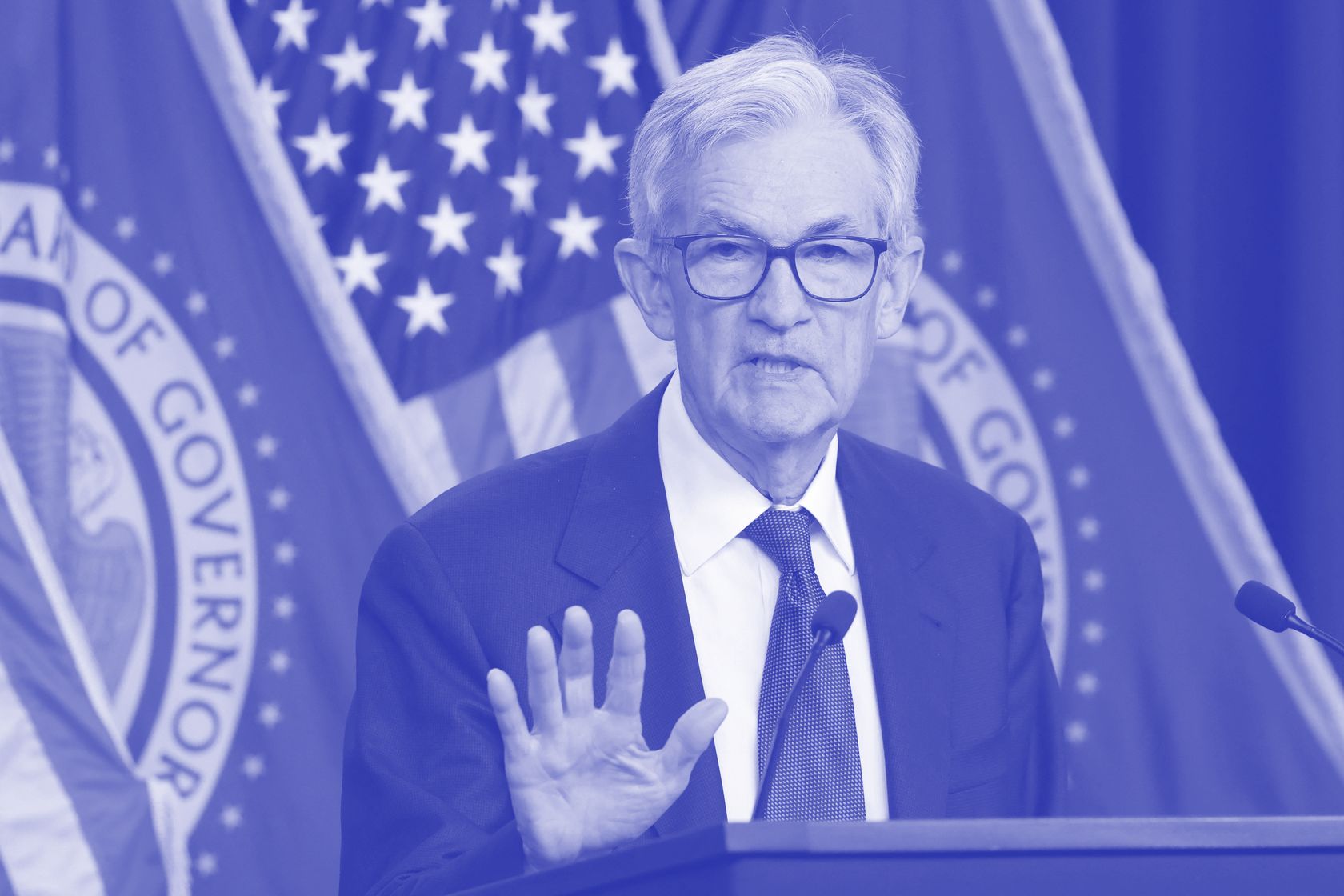
Rebel hold: The US Federal Reserve defied Donald Trump’s calls for deep rate cuts, keeping interest rates steady at 4.25%–4.5% in its first meeting since his return to office. The Fed previously cut rates by a full percentage point in late 2024 but signalled in December that further reductions may slow. In a statement, the central bank reiterated that policy decisions will be based on economic data. Inflation remains above the central bank’s 2% target, and policymakers are waiting for more data before making further changes. Trump has publicly demanded immediate cuts, claiming he understands interest rates better than the Fed and Chair Jerome Powell. Powell is likely to face questions on those demands when he speaks to media this morning. "Inflation remains somewhat elevated," the bank said in a statement, adding the decision was unanimous. "Recent indicators suggest that economic activity has continued to expand at a solid pace. The unemployment rate has stabilised at a low level in recent months, and labour market conditions remain solid. Inflation remains somewhat elevated." Markets still anticipate two reductions in 2025. (Fed)(Bloomberg)
2.
Down again: US stocks fell as the Federal Reserve left interest rates unchanged and ahead of key earnings reports from major tech firms. The S&P 500 was down 0.46 in afternoon trading, the Nasdaq 0.79% lower and the Dow Jones down 0.14%. Nvidia shares were 6% lower amid reports that Trump administration officials are in early discussions about restricting sales of its H20 chips to China. Meanwhile, Apple is collaborating with SpaceX and T-Mobile on Starlink integration, Hewlett Packard Enterprise reportedly met with Trump administration officials regarding its USD14 billion bid for Juniper Networks, and Trump’s Truth Social launched a fintech brand, Truth.Fi. (Bloomberg)
3.
AI showdown: Alibaba is escalating China’s AI race with Qwen2.5 Max, claiming it outperforms OpenAI’s GPT-4o, DeepSeek-V3 and Meta’s Llama-3.1-405B in benchmarks. The launch follows the rise of DeepSeek, a Chinese startup whose high-performance, low-cost AI models have disrupted the industry, forcing major firms like Alibaba, Tencent and Baidu into steep price cuts and rapid upgrades. The AI price war is reshaping China’s industry, driving efficiency and cost-effectiveness. Meanwhile, the White House said the National Security Council would review potential risks tied to DeepSeek’s expansion. And OpenAI told the Financial Times it found evidence DeepSeek used its proprietary models for training. The American startup blocked suspected DeepSeek accounts last year over distillation concerns, a violation of its terms of service. (Capital Brief)(FT)(Reuters)(Bloomberg)
4.
Trump trades: Trump Media & Technology Group will launch a fintech brand, Truth.Fi, to invest in managed accounts, ETFs, Bitcoin and other cryptocurrencies, the latest move by a Trump-linked business to expand into finance during his presidency. The company’s board approved investing up to USD250 million ($401.4 million)—about one-third of its cash—through Charles Schwab. Trump Media’s stock rose over 8% on the news. The move raises conflict of interest concerns, as Trump, whose administration oversees financial regulations, remains the sole beneficiary of a trust holding his Trump Media stake. Ethics experts warn of risks, especially after Trump launched meme coins before taking office. “We have a president who has asserted so much executive power across the board who is himself investing in assets,” Richard Painter, former White House ethics lawyer during the George W Bush administration said “This is a situation that could be quite dangerous for our economy.” (Capital Brief)(Trump Media release)(Bloomberg)(CNN)
5.
Tariff treasure: Gold traders rushing to avoid possible US tariffs have sent so much bullion to New York that London is facing a shortage, delaying Bank of England (BoE) withdrawals to 4–8 weeks. The Financial Times reports that since November, 393 metric tonnes have moved into New York’s Comex vaults, boosting inventories nearly 75% to 926 tonnes, the highest since August 2022. Total US gold shipments may be even higher, with additional bullion likely sent to private vaults owned by HSBC and JPMorgan. The surge has strained London’s supply, extending BoE withdrawal times. Fears that US President Donald Trump could impose gold tariffs—though he has not mentioned bullion—are driving the rush. A price gap between New York futures and London’s cash market has further fuelled shipments, with Comex inventories jumping 36% this month alone. Last week, Comex gold futures traded at a USD60 per-ounce premium over London before narrowing to USD10 as shipments arrived in New York. (Capital Brief)(FT)
6.
Booking boom: ASML shares surged over 11% in Amsterdam after the Dutch chip equipment maker reported fourth-quarter bookings of €7.09 billion ($11.85 billion), nearly double analyst expectations. AI-driven demand countered market concerns after Chinese AI firm DeepSeek’s models triggered a tech stock selloff. ASML will stop reporting quarterly order bookings after 2025, saying they can be “lumpy” and not always a good business indicator. CEO Christophe Fouquet said AI remains a key growth driver and argued that DeepSeek’s lower-cost model reinforces long-term demand by making AI chips more affordable and widespread. ASML’s Q4 net income was €2.7 billion on sales of €9.3 billion, with 2024 revenue reaching €28.3 billion. The US overtook China as ASML’s biggest market and its share should drop to 20% in 2025 due to trade restrictions. It maintained its 2025 revenue forecast of €30-35 billion and announced a €6.40 per-share dividend for 2024. (Capital Brief)(Reuters)(ASML release)
7.
Trump’s purge: The Trump administration moved to reshape the federal workforce, offering around two million civilian employees the option to resign while still being paid through September. In an email titled “Fork in the Road,” The Office of Personnel Management warned of impending downsizing and furloughs. Federal unions condemned the move, warning of disruptions to services like Social Security, tax processing and national parks. Robert F Kennedy Jr, nominated for health secretary, faced Senate questioning, Commerce nominee Howard Lutnick defended tariffs and a tough stance on China, Transportation Secretary Sean Duffy moved to roll back Biden-era fuel economy rules, and the Pentagon revoked General Mark Milley’s security clearance while launching an inquiry into his record. After a federal judge temporarily blocked its order, the White House abruptly reversed course and rescinded a directive that had frozen trillions in federal grants and loans, causing nationwide confusion. The Trump administration also partially lifted a freeze on US foreign aid, allowing “life-saving humanitarian assistance” but excluding programs related to abortion, gender identity and diversity initiatives. (NYT)
8.
Crypto caucus: Coinbase added four high-profile members to its global advisory council: Chris LaCivita, co-campaign manager for Donald Trump's re-election; former US Senator Kyrsten Sinema; Bill Dudley, former president of the Federal Reserve Bank of New York; and Luis Alberto Moreno, a global development and finance expert. The appointments come as Trump’s administration prioritises crypto sector growth, following years of industry complaints about regulatory overreach. Trump recently named former PayPal executive David Sacks as White House AI and crypto czar. It also comes as Trump Media & Technology Group said it would expand into fintech and consider investing in bitcoin and other tokens. (Reuters)(Business Insider)

