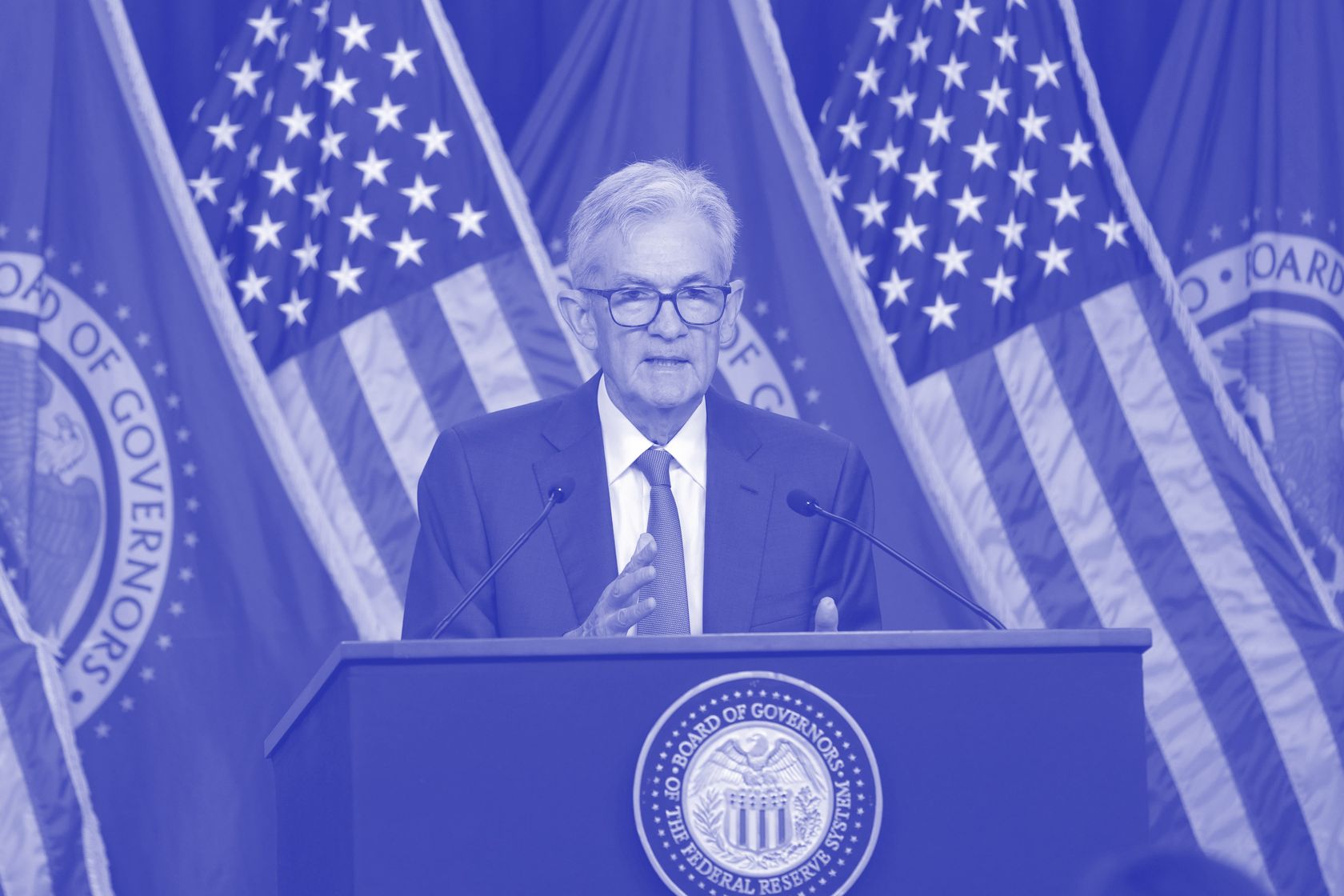
Fed keeps rates steady due to inflation
Plus: US imposes sanctions on Russian and Chinese companies; Bonza's administrator says refunds aren't currently possible; Investors expect Apple revenue decline.
Good morning. Here's what happened overnight and what you need to know today.
Get Standup in your inbox Signed up to Standup
1.
Rate hold: The Federal Reserve maintained interest rates at 5.25% to 5.5% and signalled fresh concerns about persistent inflation, reaffirming the need for more evidence that price gains are cooling before considering rate cuts. The Fed noted that while job gains have remained strong and the economy has expanded at a solid pace, inflation has stalled in its progress toward the 2% goal. While slowing the pace of its balance sheet runoff, the central bank emphasised the need for more evidence that inflation is cooling before considering rate cuts. Inflation in the US slowed late last year, but progress has come to a standstill in 2024 amid a strong labour market, robust wage growth, solid economic expansion, and steady consumption and investment. In his address, Fed chair Jerome Powell underscored that rates will likely remain higher for longer. However, he also signalled that rate hikes are unlikely. (Bloomberg)(Financial Times)
2.
Sanction avalanche: The US imposed harsh new sanctions on over 300 Russian and international entities, including nearly 20 companies in China and others in Turkey, for providing critical military support and enabling circumvention of existing penalties against Russia's war effort in Ukraine. The sweeping measures targeted Chinese companies that allegedly supplied Russia with drone components, military optics, weapons, ammunition and other restricted technology. It also sanctioned two Chinese groups that exported nitrocellulose, a gunpowder and rocket propellant ingredient, to Russian importers. The crackdown follows warnings from Treasury Secretary Janet Yellen and Secretary of State Antony Blinken about consequences for Chinese firms backing Moscow's military. Companies linked to Russian chemical and biological weapons were also sanctioned as the US rushes USD60 billion ($92.3 billion) in new Ukraine aid. (Financial Times)(Reuters)

3.
No refunds: The administrators of the grounded budget carrier Bonza have disclosed that they are unable to process or issue refunds for cancelled flights due to the dire financial position of the company. The announcement came late on Tuesday after Hall Chadwick was appointed administrator of the failed low-cost airline, following the repossession of its modest fleet of Boeing 737 Max 8s by the leasing company AIP Capital. Administrators have been meeting with key industry participants within Australia and overseas to explore potential solutions, but Transport Minister Catherine King suggested it was unlikely these talks would result in Bonza continuing to fly routes. The suspension of Bonza's services is expected to impact 183 flights and over 33,000 passengers, with rival airlines providing support by accommodating stranded passengers and encouraging Bonza crew to apply for job opportunities. (The Australian)(Capital Brief)
4.
Big deal: The US and Saudi Arabia are close to reaching an historic agreement that would provide Saudi Arabia with security guarantees and potentially pave the way for Saudi diplomatic ties with Israel, according to anonymous sources speaking to Bloomberg. The proposed pact still faces obstacles but aims to bolster security cooperation between the US, Saudi Arabia and Israel while diminishing Iranian and Chinese influence in the region. Key elements could include allowing Saudi access to advanced US weapons systems in exchange for limiting Chinese technology access, supporting the Saudi civilian nuclear program, major US investment commitments to Saudi Arabia, and Saudi agreement to limit oil production cuts. The deal would then incentivise Israel to end the Gaza conflict and agree to a pathway for Palestinian statehood by offering diplomatic recognition by Saudi Arabia, increased regional economic integration and security cooperation against Iran. However, concerns remain about congressional roadblocks and the willingness of Israel to join in on the deal. (Bloomberg)
5.
Sharp turn: Tesla's decision to lay off the majority of the team responsible for building its Supercharger electric vehicle charging network has had immediate impacts on the rollout. The layoffs halted construction work at multiple US sites in states like New York and Texas, while property owners were informed Tesla was withdrawing from negotiations to install chargers. Subcontractors speaking to the Wall Street Journal noted that all their contacts at the company had been let go. The upheaval comes amid sluggish EV sales growth and challenges rolling out a national highway charging network that is seen as crucial for greater EV adoption. Analysts were widely baffled by this particular round of layoffs. “This is by all accounts a dramatic move,” said Nick Nigro, founder of the research and consulting group Atlas Public Policy, speaking to the Wall Street Journal. Tesla shares fell 1.8% in Wednesday afternoon trading US time after declining 5.6% Tuesday. (Wall Street Journal)
6.
Rotten apple: Apple's next quarterly earnings, scheduled for tomorrow morning Australian time, will be closely watched as the tech giant grapples with slowing iPhone sales, intense competition from rivals like Huawei in China and pressure to integrate generative AI capabilities into its flagship product to revive demand. Analysts polled by Reuters expect a 10.4% drop in iPhone revenue for the March quarter, the steepest decline in over three years, though some of this is attributed to an unusually high comparison period last year as pent-up COVID demand was satisfied. This is significant, as the iPhone is responsible for half of Apple's revenue. Overall revenue is projected to fall 5%, Apple's biggest decline since late 2022. In an attempt to reignite growth, Apple is reportedly in talks – per anonymous sources – to add generative AI features from OpenAI and Google to the iPhone, with potential unveiling at its annual developer conference in June. (Reuters)
7.
All aboard: Cruise ship operator Viking made a strong market debut, with shares surging past USD26 ($39.90) after pricing at USD24 in a USD1.5 billion IPO – the second-largest in the US market this year. The upsized deal cemented billions in profits for major investors TPG and CPP Investments, who first invested in 2016 and injected more funds during the pandemic to help Viking weather downturns better than rivals like Carnival and Royal Caribbean. It improves hopes for private equity firms sitting on around 28,000 unsold companies worth a total of $3 trillion to make their exits from other long-held investments after a two years of IPO winter, though the market remains delicate. With the cruise industry booming and 36 million passengers expected this year, the USD264 million in IPO proceeds will cover taxes, provide working capital and increase Viking's financial flexibility amid opportunities like its new polar expedition cruises. (Financial Times)
8.
Jet set: Brazilian aircraft manufacturer Embraer is exploring plans to develop a new narrow-body jet that would compete directly with the successors to Boeing's 737 MAX and Airbus's A320 aircraft, according to anonymous sources speaking to the Wall Street Journal. While still in early stages, Embraer has been conducting internal assessments indicating it has the technological capabilities for such a jet, its first entry into the larger aircraft segment. The company has sounded out potential partners and financial backers, including Saudi Arabia's sovereign wealth fund and manufacturers in Turkey, India and South Korea. Embraer, which has established itself as a key player in the regional and business jet market, has been emboldened by the recent crises at Boeing to consider challenging the Boeing-Airbus duopoly that dominates the large commercial aircraft market. (Wall Street Journal)