Fletcher demands Albanese explain ‘troubling’ PsiQuantum funding
Plus: Anglo American board turns down revised BHP offer; OpenAI unveils GPT-4o model upgrade; ‘Roaring Kitty’ return prompts 110% GameStop share surge.

Good morning. Here's what happened overnight and what you need to know today.

1.
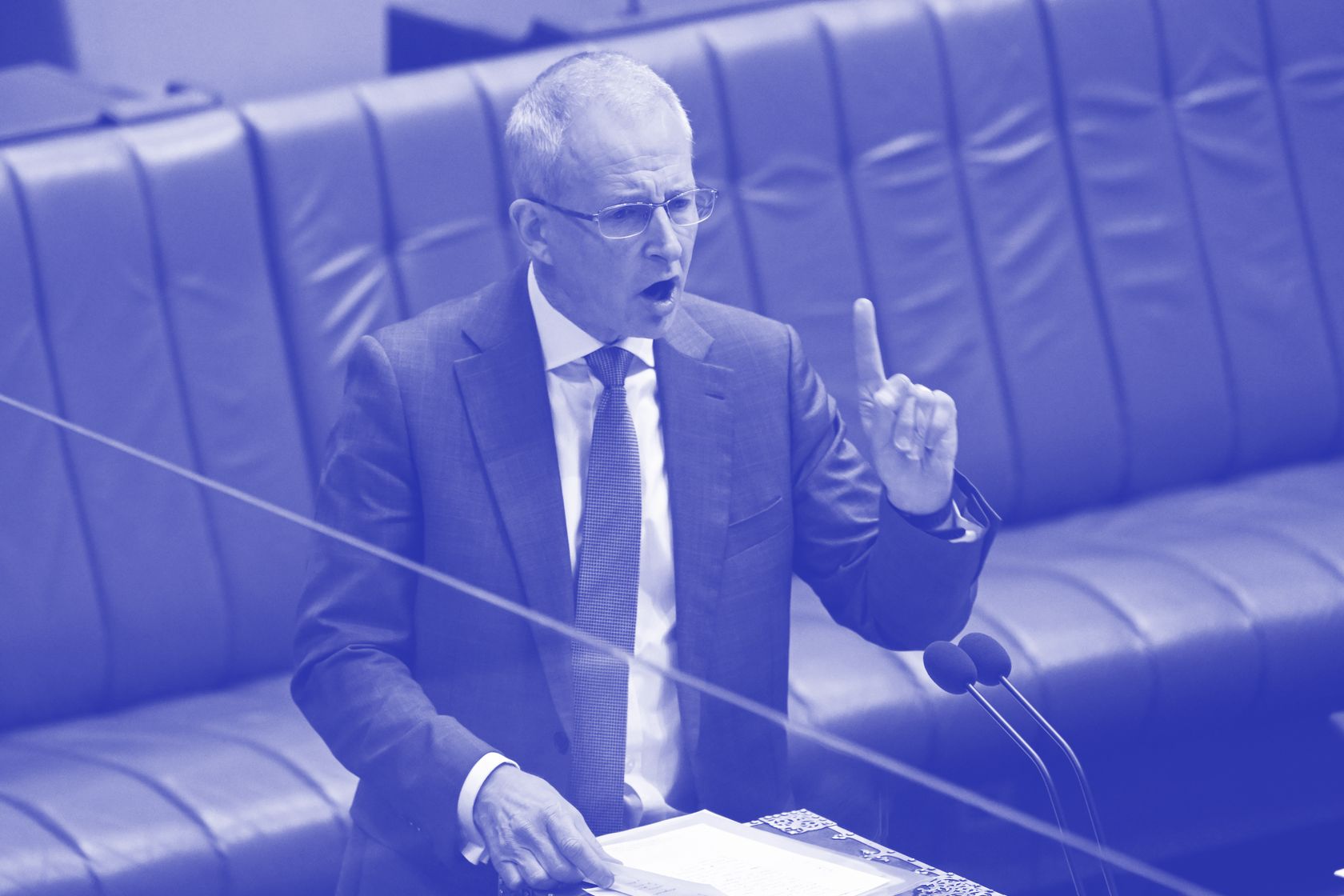
Quantum fallout: Opposition science spokesman Paul Fletcher has told Capital Brief it was “troubling” that the Albanese government chose to bet a very large amount of money on one particular company, pursuing one particular technology path. Responding to the PM’s comments made in Capital Brief’s exclusive pre-budget interview, Fletcher insisted that Australians deserve to know why the $1 billion deal was “cloaked in secrecy” and “failed to meet normal standards of transparency and contestability.” Fletcher argues that “simply saying this decision falls under comparative advantage and national security reasons isn’t good enough.” While Albanese said that the decision to invest in PsiQuantum went through rigorous vetting, the National Quantum Advisory Committee was reportedly not consulted, and rival startups have questioned the logic behind taking a huge bet on a single technology and a single foreign company. (Capital Brief)
2.
No deal: The board of Anglo American has rejected a revised takeover offer from BHP, which valued the mining giant at around £34 billion ($64.44 billion). The revised bid valued Anglo at £27.53 per share, an increase on the approximate £25 per share in the original proposal. The new offer represented a 15% increase in the previous merger ratio. BHP said it is disappointed that the Anglo American Board has chosen not to engage with BHP with respect to the revised proposal and the improved terms. Under the revised proposal, BHP increased the number of BHP shares that would be received by Anglo American shareholders. BHP first proposed the £31 billion takeover in late April, in a transaction that would have marked the sector’s second largest-ever deal. At the time, Anglo said the offer was opportunistic and significantly undervalued the company and its future prospects. (BHP press release)(Financial Times)
3.
Model upgrade: OpenAI has unveiled its newest iteration of its GPT-4 AI model, the large language model (LLM) which powers ChatGPT. Revealed in a live stream led by the company’s chief technology officer, Mira Murati, on Monday, the AI giant’s new model called GPT-4o, will be faster, cheaper and more intuitive than its predecessor. The new LLM which is trained in 50 languages, will be able to accept any combination of text, audio, and image as input, and can generate any combination of text, audio, and image outputs. OpenAI explained that the model will also be able provide much more natural human-computer interactions, as it can respond to audio inputs in just 232 milliseconds, with an average of 320 milliseconds, which is similar to human response time. During the live stream, OpenAI employees demonstrated how the new capabilities allow for near real time translation. The announcement comes one day ahead of Google’s I/O developer conference, where the tech giant is expected to unveil several AI related updates as it competes with Microsoft-backed OpenAI. (OpenAI blog post)(Capital Brief)
4.
Diamond hands: Shares in the infamous GameStop soared during trading on Monday, after the meme stock celebrity Keith Gill, known as ‘Roaring Kitty’, marked his return to social media. Shares in the brick and mortar gaming retailer, GameStop, climbed over 110% shortly after market open on Monday, sending shares from USD17 to USD37. Trading was halted several times due to volatility on the stock. Gill made his highly anticipated return to social media by sharing a meme on his X profile on Sunday night. The image, which depicts a gamer leaning forward in their chair, is the first time Gill has posted in around three years, and has raked in over 75,000 likes on the platform. Gill gained notoriety for engineering the 2021 retail trading campaign that pit day traders against institutional investors in a dramatic short squeeze, resulting in hordes of individual investors driving up the price of GameStop at the expense of several hedge funds which held short positions in the stock. Meme stocks including AMC and Reddit also trader higher on Monday. (Roaring Kitty X post)(Wall Street Journal)
5.
HBO hunting: Warner Brothers Discovery is sounding out Australian partners as it considers launching its standalone streaming platform, Max, in the country. According to sources cited by Capital Brief, the HBO parents has been engaged in talks with several media and telecom companies as it seeks to lock in a primary partner for the Max launch, with early discussions suggesting it prefers to launch with a partner to quickly build a subscriber base. While the timeline is not locked in, the service is expected to reach Australia in early 2025. President and CEO of global streaming and games at Warner Brothers Discover, JB Perrette, told a Morgan Stanley conference in March that the company is “leaving money on the table” under current arrangements, which in Australia includes a deal with News Corp-controlled Foxtel. He said it would be “crazy” not to launch directly. (Capital Brief)
6.
Un-hushed money: Donald Trump’s former ‘fixer’ Michael Cohen testified during the presidential hopeful’s hush money trial that he organised the quashing of negative news stories about Trump while he was campaigning for his first White House bid. During the hearing in Manhattan on Monday, Cohen stated that Trump was concerned that news of an extramarital affair with p*rn actor Stormy Daniels would be a “disaster” for his chances to become president. Cohen testified that Trump ordered him to suppress the Daniels story, and that he had orchestrated payments to a doorman who was looking to sell a story about Trump fathering an illegitimate child. Cohen also told the jury that he was prepared for “a lot of women coming forward” with allegations once Trump announced his presidential candidacy in 2015, and worked to prevent their stories from being made public. (Financial Times)
7.
Template takeover: PE firm Permira will take website-developer Squarespace private in a USD6.9 billion takeover. Under the terms of the agreement, Squarespace stockholders will receive USD44 per share in cash, representing a transaction valued at over USD6.6 billion on an equity value basis. The purchase price represents a premium of approximately 15% over Squarespace's closing share price of USD38.19 on the NYSE on 10 May 2024. Squarespace went public on the NYSE in 2021 after raising USD300 million at a $10 billion valuation, reaching an USD8 billion market cap high in mid-2021. The company’s stock fell to USD2 billion by 2022, but has gained ground on strong earnings during 2024, climbing back above the USD5 billion mark. Founder, CEO and board chairman Anthony Casalena will be kept on board after Permira’s takeover, and will remain one of the largest shareholders in Squarespace following the transaction. Shares in SQSP climbed over 13% after the takeover news broke on Monday. (Squarespace press release)(TechCrunch)
8.
Chip wars: Chinese authorities have instructed the local tech industry to buy Chinese chips. According to sources cited by The Information, officials with Chinese government agencies have told firms including TikTok parent ByteDance, Tencent, Alibaba and Baidu to reduce their purchases of foreign-made chips and increase buying domestically made chips. In the first time the Chinese government has set guidelines around where firms should source their AI chips, companies were told to buy equal numbers of domestic and foreign-made AI chips for new internet data centres. The move comes as a response to the Biden administration’s efforts to curb China’s position in chip sector, using export restrictions and international lobbying to frustrate China’s access to the booming advanced semiconductor space. (The Information)
