Global drama erupts on Trump’s Day One
Plus: OECD tax deal derailed as US considers retaliation; Apple hit by downgrades on AI flop, iPhone sales; Goldman Sachs reshuffles for next-gen leadership.


Good morning. Here's what happened overnight and what you need to know today.
1.
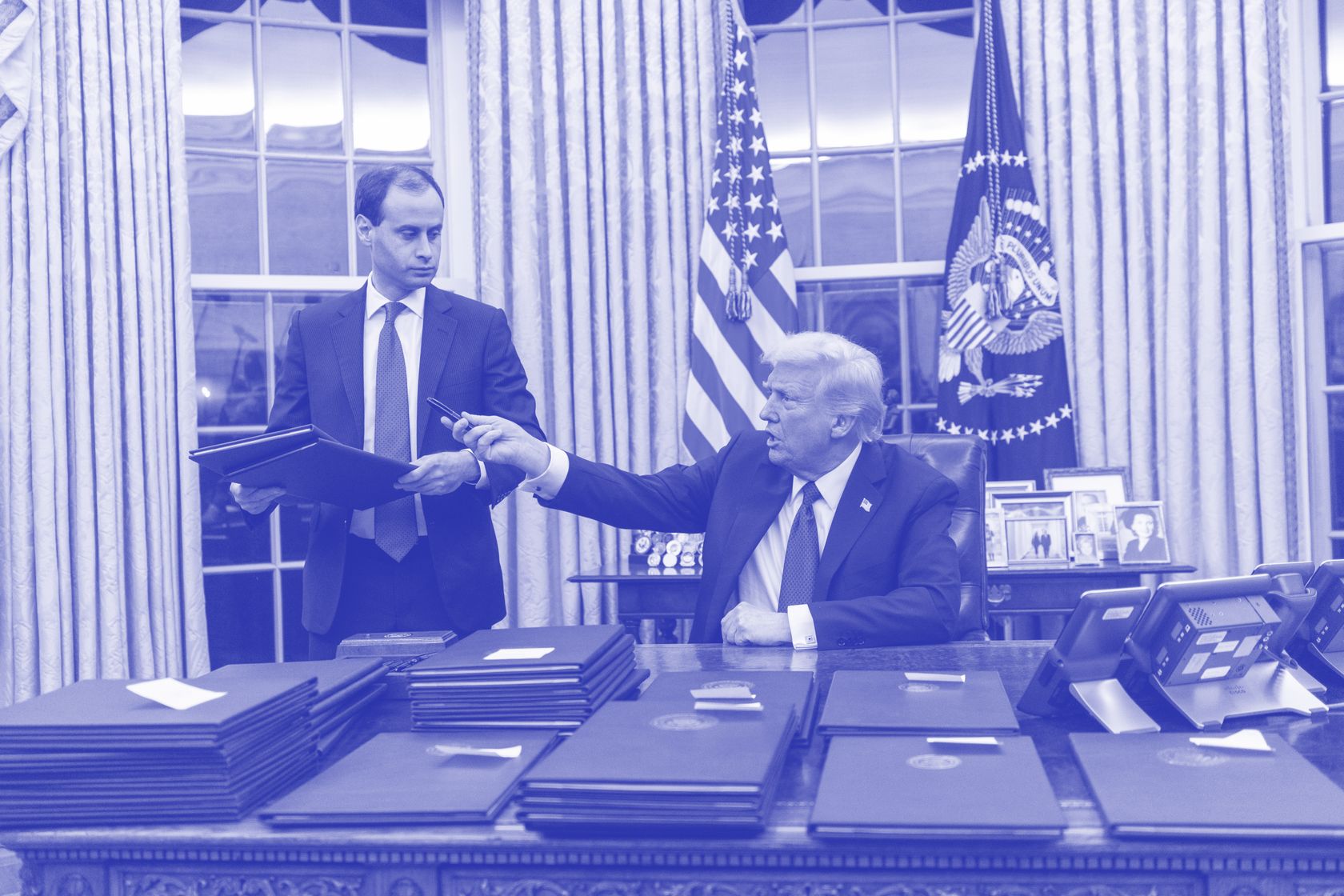
Trump’s Day One: US President Donald Trump began his second term with sweeping actions that reversed Biden-era policies and stirred domestic and international tensions. On his first day, Trump pardoned 1,600 January 6 Capitol rioters, pulled the US from the Paris Climate Accord and the WHO, and signed an order to deny birthright citizenship to children of undocumented immigrants, triggering lawsuits. Trump said he plans 25% tariffs on Canadian and Mexican goods starting February, but his plans for China remained unclear. Meanwhile, Panama condemned Trump’s remarks about retaking the Panama Canal, formally raising the issue with the United Nations but beginning an audit of Hong Kong-based Hutchison Ports, which operates ports at both ends of the canal. European leaders braced for strained relations, as Russian President Vladimir Putin and Chinese President Xi Jinping discussed on Tuesday how to build ties with Trump. Trump is expected to outline infrastructure plans today. Meanwhile, newly minted Secretary of State Marco Rubio announced plans to meet with Quad leaders from Australia, India and Japan, and emphasise "the things that are important to America and Americans." (Reuters)(NYT)(Capital Brief)
2.
Tax break-up: US President Donald Trump withdrew US support for the OECD global tax deal for multinationals, rescinding commitments made by the Biden administration and declaring it “has no force or effect” domestically. As part of a flurry of executive actions on his first day back in office, Trump issued a memorandum directing officials to prepare retaliatory measures within 60 days targeting countries imposing “extraterritorial” taxes on US multinationals. The OECD deal, signed by 140 countries in 2021 and implemented by several, including Australia, sets a 15% global corporate tax minimum to curb profit-shifting. Under its “pillar two” provision, countries can levy top-up taxes if a multinational’s profits are taxed below 15% in its home country. However, the so-called undertaxed profits rule (UTPR) has drawn sharp criticism from US Republicans, who consider it discriminatory. Echoing these objections, Trump’s move now threatens to derail the agreement, spark economic retaliation, and further isolate the US in global tax policy. (Capital Brief)( US President memo)(FT)(Reuters)
3.
Apple bite: Apple shares continued their downward trend on Tuesday, falling 4.6% following a couple of downgrades by sell-side analysts amid slumping iPhone sales and AI disappointment. Jefferies downgraded Apple to underperform, citing an 18.2% drop in iPhone sales in China during the December quarter and a global decline of 5%. Analyst Edison Lee highlighted the weakness in iPhone sales is worse than expected, with US consumers remaining indifferent to AI features, which dampens hopes for an upgrade cycle. Boutique broker Loop Capital also cut its rating to hold, warning of “material iPhone demand reduction” through mid-2025. JPMorgan, while maintaining a buy rating, lowered its price target to USD260, citing challenges including market share losses in the Chinese market and foreign exchange headwinds. Apple shares have plunged almost 13% so far in January. On Tuesday, they fell as much as 4.61% to as low as USD219.38 before paring back some losses. (Capital Brief)(Bloomberg)
4.
Goldman’s plans: Goldman Sachs announced a major leadership reshuffle, appointing 15 new members to its management committee, increasing its size by over 50%. New global heads for key divisions include Erdit Hoxha, Cyril Goddeeris and Dmitri Potishko for equities; Kunal Shah, Anshul Sehgal and Jason Brauth for fixed income; and Kim Posnett, Matt McClure and Anthony Gutman for banking. Shah and Gutman will also become co-CEOs of Goldman Sachs International, succeeding Richard Gnodde, who will take on the role of vice chairman. Francois-Xavier de Mallmann will serve as chairman of Goldman Sachs EMEA. Additional appointments include Will Bousquette, Kathleen Connolly, and Marie Louise Kirk in key operational roles. The promotions follow over a year of internal discussions about shaping the firm’s next generation of leaders, the report said. (Bloomberg)(GS)
5.
Market temperature: Wall Street’s main indices rose alongside the US dollar, as investor optimism grew around President Donald Trump's initial policy moves, with the Dow up 0.91%, the S&P 500 0.48% higher, and the Nasdaq edging up 0.09%. Anticipation over Trump's proposed tariffs on Canadian and Mexican goods, potentially starting 1 February, sparked market movement, alongside Goldman Sachs lowering its 2025 universal tariff forecast from 40% to 25%. Small-cap stocks outperformed, while automakers climbed. Nvidia shares saw gains but downgrades hit Apple. Walgreens shares fell on opioid allegations by the DOJ, while Moderna shares surged on a USD590 million bird flu vaccine deal. Treasury yields dipped, as inflation concerns eased. In Europe, wind shares took a hit, with Orsted losing as much as 17% after it reported impairment charges related to the US offshore market.(Reuters)(Bloomberg)
6.
Crypto strategy: MicroStrategy upped its Bitcoin holdings with a USD1.1 billion purchase, acquiring 11,000 tokens at USD101,191 each, according to SEC filings. Now owning over 2% of all Bitcoin—valued at USD47.9 billion—the company has been funding acquisitions through stock sales and convertible debt, and wants to raise USD42 billion by 2027. A shareholder vote on Tuesday will decide on a proposed 30-fold increase in authorised shares, a move likely to pass as Co-founder Michael Saylor holds 47% of voting power. Bitcoin gained 2.4% on Tuesday to USD105,009.35 in a choppy session after early disappointment at President Trump’s failure to outline crypto policies on Day One. Meanwhile, Trump’s $TRUMP coin fell 20.5%, and Melania Trump’s coin plunged 44.4%, as their meme coins continue to stir criticism. (Bloomberg)(Reuters)
7.
Brokerage recovery: Charles Schwab reported a 76% jump in quarterly profit, driven by higher interest income, record inflows and strong customer trading. Fourth-quarter revenue rose 20% to USD5.33 billion ($8.53 billion), beating analysts’ estimates of USD5.19 billion. Net income surged to USD1.84 billion from USD1.05 billion a year earlier. Total client assets hit USD10.1 trillion, with record annual inflows of USD55 billion, though deposits fell 11% to USD259.1 billion. The rebound follows a challenging 2023, marked by a regional banking crisis and shifts to higher-yield options. Shares were 3.3% higher in late trading. (Capital Brief)(Schwab release)(Bloomberg)
8.
Day-One ask: Hedge fund lobbyists have asked for the immediate rollback of sweeping transparency rules introduced by the US SEC in 2023. Representing the USD5 trillion industry, the Managed Fund Association (MFA) on Monday urged acting SEC chair Mark Uyeda to delay key disclosure rules by six months. These include requirements for funds to reveal short bets, rate of change, fund size, asset holdings and leverage levels, some of which would take effect in February. Uyeda, President Donald Trump’s pick to replace Gary Gensler, assumed the role on Tuesday and has previously criticised the rules as "prescriptive." The MFA’s letter recommends the changes to happen on “Day One”. Hedge fund associations, including the MFA, are also pursuing lawsuits against the SEC to challenge regulations implemented under Gensler's leadership. (Reuters)(MFA statement)
