Google sacks 28 over Israel cloud deal protests
Plus: Iranian oil exports climb as US and UK impose new sanctions; AI chip demand drives TSMC Q1 profit; Mexico bows to US pressure and distances Chinese EV makers.

Good morning. Here's what happened overnight and what you need to know today.
1.
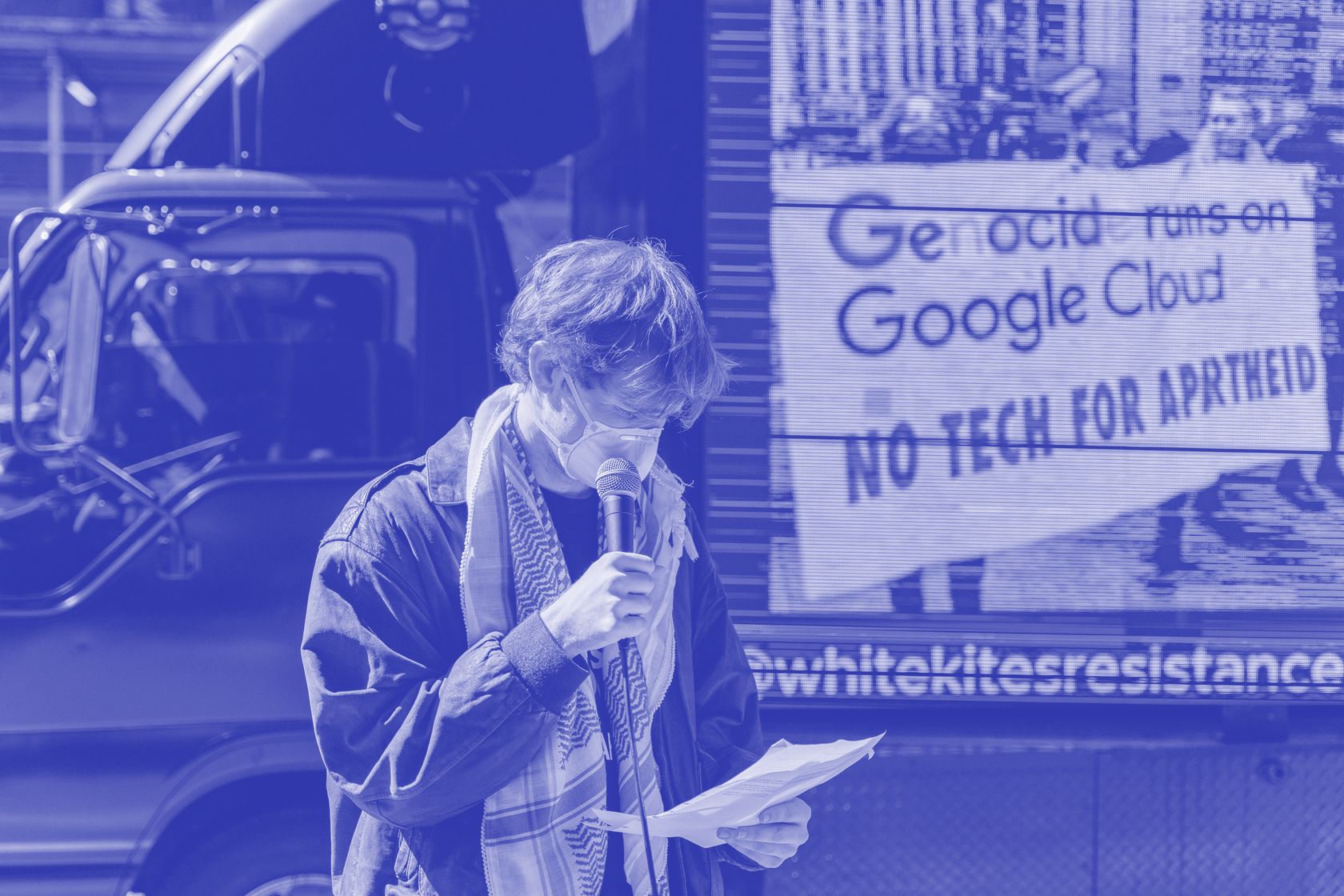
Cloud conflict: Google has fired 28 employees after they protested the tech giant’s contract to provide the Israeli government and military with cloud and AI services. The agreement, referred to as ‘Project Nimbus’, is a USD1.2 billion ($1.87 billion) joint contract with Amazon to deliver the tech services to Israel. The employees were dismissed after an investigation found that they staged protests in the company’s New York, Seattle and California offices this week. Nine employees were arrested on Tuesday night after a sit-in the offices, including one in the office of Google Cloud CEO Thomas Kurian. The group that organised the demonstration, No Tech for Apartheid, said protesters sat in Kurian’s office for over nine hours, wearing shirts and holding banners that read “No more genocide for profit”. (Capital Brief)
2.
Slippery punishment: Iran’s oil exports have hit a six-year high, as the US and UK imposed new sanctions on the country over its attack on Israel. According to data company Vortexa, Tehran sold an average of 1.56 million barrels per day during the first quarter of 2024, almost all of which was sold to China. Fernando Ferreira, head of geopolitical risk service at the Rapidan Energy Group told the Financial Times that the “Iranians have mastered the art of sanctions circumvention … If the Biden administration is really going to have an impact, it has to shift the focus to China.” The new US sanctions targeted 16 people and two entities in Iran that produce engines that power the drones used in the 13 April attack, while the UK targeted several Iranian military branches and individuals involved in Iran’s drone and ballistic missile industries. (Financial Times)(Associated Press)
3.
Chip addiction: Taiwan Semiconductor Manufacturing Co. posted higher Q1 net profit than expected after a 9% year on year rise, and said it anticipates higher growth during 2024 due to insatiable demand for its AI chips. During TSMC’s first-quarter earnings call, the world’s largest chipmaker said it expects AI servers to account for a low-teens percentage of its 2024 revenue, over twice the 2023 amount, with the figure rising to over 20% of revenue by 2028. It expects capital spending to reach USD28-$32 billion, compared to the USD30.45 billion it spent in 2023, and plans to allocate 70%-80% of that spending toward advanced technologies. As a major supplier of both Apple and Nvidia, TSMC CEO C.C. Wei said: "Almost all the AI innovators are working with TSMC to address the insatiable AI-related demand for energy efficient computing power […] AI-related data centre demand is very, very strong.” (Reuters)
4.
US supercharges protectionism: Mexico is halting incentives to Chinese electric vehicle makers, as the US ups pressure on its neighbour to keep the country at a distance. According to Mexican officials cited by Reuters, the country will refuse to offer incentives such as low-cost public land or tax cuts for Chinese investment in EV production as had been provided in the past. Officials will also pause any future meetings with Chinese automakers, according to the sources. The last meeting held between Mexican officials and a Chinese automaker, with executives of BYD present, was in January. Yesterday, President Joe Biden announced new plans to protect the US steel and shipbuilding industry from “China’s unfair practices”, and directed his senior team to work with Mexico to jointly prevent China and other countries’ evasion of tariffs on steel and aluminium that is imported from Mexico into the US. (Reuters)
5.
Hold the line: The EU’s competition chief, Margrethe Vestager, has warned that big telecom mergers in Europe will damage competition and distort the bloc’s single market. At a conference on Thursday, Vestager responded to a new EU report that calls for more consolidation, stating: “No evidence suggests that more concentrated national markets lead to better outcomes, to the contrary, it would lead to less competitive national markets and to a more fragmented single market.” The report from former Italian PM Enrico Letta recommends consolidation as a way to improve the region’s mobile and fixed networks, and is perhaps unsurprising given the ongoing pursuit in recent years of telecom mergers by the likes of Telecom Italia, Vodafone Italia, Iliad and Swisscom. (Bloomberg)
6.
Flight risk: Boeing’s safety culture and manufacturing quality is under the spotlight, as the manufacturer undergoes a grilling during US Senate hearings. Boeing has been called before the Senate after a mid-air cabin door blowout on a Boeing 737 Max 9 jet in January sparked a corporate crisis, and is being scrutinised for its treatment of whistleblowers, records surrounding the blown-out door plug on the Alaska Airlines jet and production concerns over two separate widebody jets. Sam Salehpour, a quality engineer and Boeing whistleblower, testified on Wednesday, stating that the company has a culture of retaliation against employees who raise safety concerns. He said he had raised concerns over three years which were ignored, and that he was berated by a manager in response to repeatedly questioning the safety of the 777 and 787 aeroplanes. (Reuters)(Financial Times)
7.
Dubai delivers: Crypto exchange Binance has scored a full Virtual Asset Service Provider permit to operate in Dubai. According to sources cited by Bloomberg, the permit was issued after co-founder Changpeng Zhao agreed to give up voting control in the emirate. Zhao was forced to resign as CEO after a turbulent number of years for the world’s largest crypto exchange, which saw a spate of regulatory penalties culminate in an agreement to pay USD4.3 billion in fines, along with Zhao’s termination in 2023. Zhao is due to be sentenced this month for anti-money laundering and sanctions related charges. The sources claim that Dubai was acutely focused on ensuring that it didn’t conflict with the agreement Binance reached with US authorities, which it why it insisted on Zhao surrendering his voting rights. (Bloomberg)
8.
Bye-bye BP: Two senior women will depart BP, in the first major management change since disgraced CEO Bernard Looney left the oil giant over past relationships with colleagues. In December last year, two months after Looney’s sudden resignation, the former CEO was accused of promoting women with whom he had undisclosed past relationships during his tenure. BP concluded that Looney had knowingly misled the board, finding “serious misconduct” which led to the exec forfeiting up to £32.4 million in pay, unvested share awards, and other benefits. The changes will see chief technology and innovation officer Leigh-Ann Russell depart for a new role after 18 years at BP, while Anja-Isabel Dotzenrath, who joined in 2022 to head BP’s gas and low carbon business, will retire. The changes reduce the size of the leadership group from 11 to 10, and take the number of women from 6 to 5. (Financial Times)
