Harris hails Biden’s legacy, scores key endorsements
Plus: Nancy Pelosi backs Harris for 2024, urges democratic unity; Nvidia plans export-friendly chip for China; Chatbot-less AI startup Cohere doubles valuation.


Good morning. Here's what happened overnight and what you need to know today.

1.
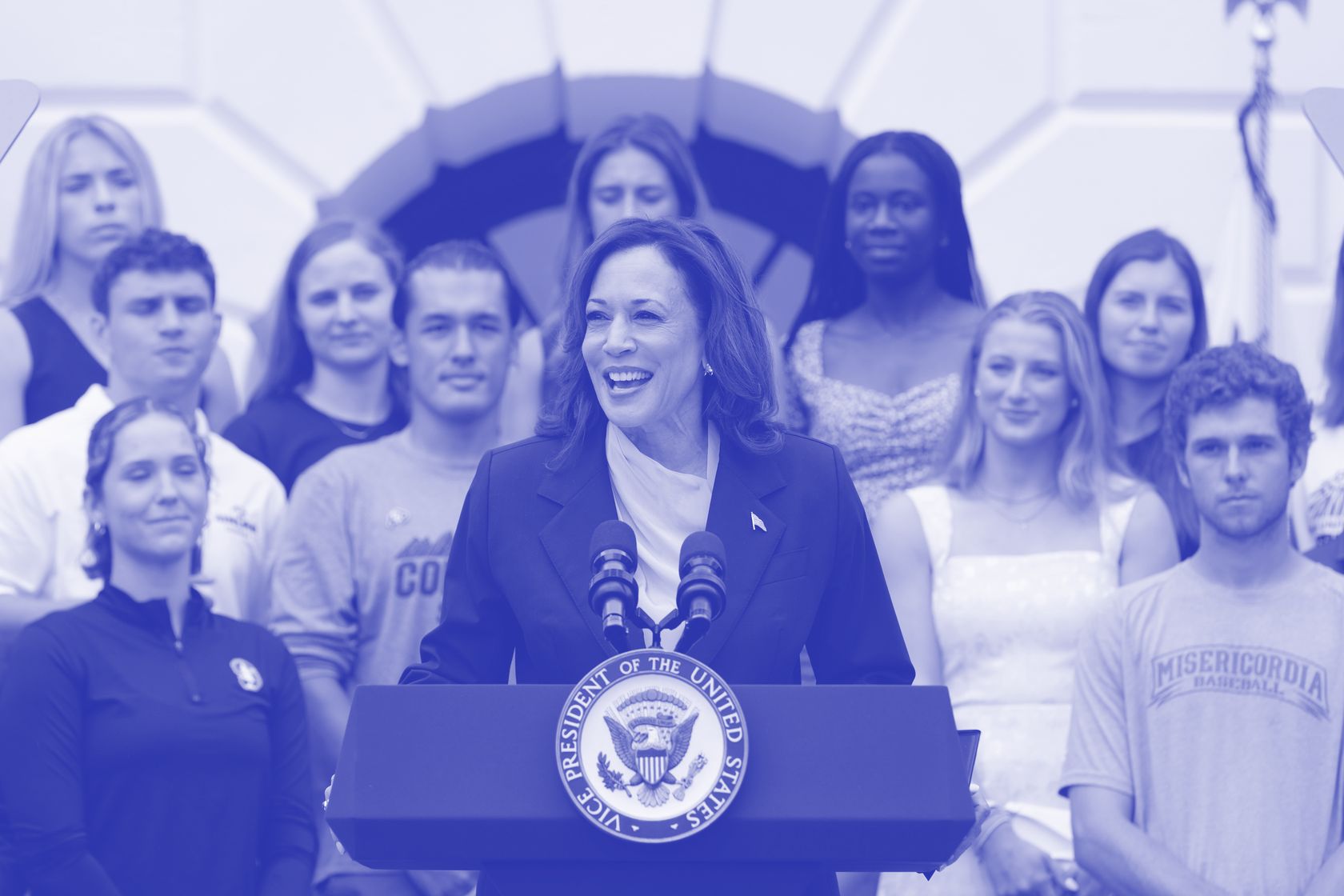
Harris momentum: Kamala Harris used her first public appearance since President Joe Biden withdrew his re-election bid and endorsed her, to commend his legacy. Speaking at a ceremony honouring college sport athletes at the White House, the Vice President lauded Biden's achievements as "unmatched" in modern history. “In one term, he has already surpassed the legacy of most presidents who have served two terms in office,” she said. Less than 24 hours since Biden dropped out, Harris has already secured endorsements from a series of high-profile Democrats. That included key support from Former House Speaker Nancy Pelosi. Governors Josh Shapiro from Pennsylvania, Andy Beshear of Kentucky and Roy Cooper from North Carolina - all of whom had been talked about as possible running mates - also endorsed her. Harris raised over USD50 million ($75 million) in the 7 hours after Biden backed her on Sunday. The President remains in isolation, recovering from Covid and was not expected to address the nation on Monday. (Capital Brief)(New York Times)
2.
Pelosi endorsement: Nancy Pelosi endorsed Kamala Harris to replace President Biden as the Democratic nominee, calling her “brilliantly astute” and the best person to defeat Donald Trump. Pelosi's endorsement, the most significant among growing high-profile support, urged Democrats to unify behind Harris. Other key Democratic leaders including former President Barrack Obama, Senate Majority Chuck Schummer and House Minority Leader Hakeem Jeffries are still withholding endorsement. Meanwhile, Senator Joe Manchin told CNN he would not consider being Harris’s running mate, citing a need for a “new generation” of leadership, and calling for a “mini primary” instead of swiftly line up behind Harris. Mega donor Michael Bloomberg also stopped short of endorsing Harris, calling instead for a considered approach, saying Democrats have “more than enough time for the party to take the pulse of voters.” Other big donors like George and Alex Soros endorsed Harris. (The New York Times)(The Wall Street Journal)
3.
Export plan: Nvidia is developing a version of its new flagship Blackwell AI chips for the Chinese market that would be compliant with US export controls, Reuters reported citing four sources familiar with the situation. The Blackwell series, unveiled in March, includes the B200, which is 30 times faster than its predecessor for tasks like chatbots. Nvidia plans to launch the "B20" chip with Chinese partner Inspur in Q2 2025, according to one of the sources. Nvidia declined to comment and Inspur did not respond to a request for comment from the publication. Nvidia shares rose over 5% following the report. Washington's tighter export controls have spurred domestic sales by Chinese firms like Huawei and Enflame. Nvidia's China market revenue dropped from 26% to 17% after the 2023 sanctions. Sales of Nvidia's H20 chips in China, the most advanced available for that market, are on track to top 1 million this year, valued at over USD12 billion ($18 billion). The report comes as US export controls are expected to tighten further. (Reuters)
4.
Bot-less jackpot: Canadian artificial intelligence startup Cohere was valued at USD5.5 billion ($7.53 billion) in a Series D funding round, doubling its value compared to last year and making it one of the highest-valued AI firms globally. Unlike competitors OpenAI, Anthropic and Google, Cohere does not feature wide audience generative AI chat bots like ChatGPT, Claude or Gemini, nor does it provide a broadly available image generator. Instead, the Cohere focuses on developing large language models tailored specifically for business applications, building them from scratch for targeted use cases. Clients include Notion Labs and Oracle. Funded in 2019, Cohere raised USD500 million in this round, led by PSP Investments and new backers like Cisco and AMD Ventures, Bloomberg reported. “We’re not out there chasing AGI,” Nick Frosst, one of the company's three co-founders told Bloomberg. “We’re trying to make models that can be efficiently run in an enterprise to solve real problems.” (Bloomberg)
5.
Historic fail: Secret Service Director Kimberly Cheatle told the House oversight committee the near-assassination attempt on former President Donald Trump at a Pennsylvania rally was its “most significant operational failure,” since the 1981 attempt on Ronald Reagan. Cheatle, facing calls for her resignation, said the level of security provided to the Republican nominee had increased “well before,” the 19 July rally. She declined to answer most specific questions from the lawmakers, referring them instead to the FBI, which is conducting a criminal investigation. She confirmed reports the shooter had been identified as suspicious before Trump took to the stage. But the Secret Service did not know he was carrying a gun, she said. A tracing system connected to the serial number of the NR-15 style rifle at the scene was key to identifying the shooter as 20-year old Thomas Crooks, she added. The hearing is the first congressional oversight of the assassination attempt, with FBI Director Christopher Wray scheduled to testify next. She added the SS planned to table the results of an internal review within 60 days. (Capital Brief)(Oversight House)
6.
Tesla’s robots: Elon Musk said Tesla will start using humanoid robots internally next year, with plans to produce them for other companies by 2026. The “genuinely useful” robots would be used in low production environments for Tesla’s internal use next year and, “hopefully, high production for other companies in 2026,” Musk said in a post on X. Musk’s EV company has invested in robotics and AI for years, aiming to produce cars more efficiently and reduce labour shortages. The Optimus Gen 2 prototype were showcased at the 2024 World AI Conference in Shanghai earlier this month. Musk anticipates a price below USD20,000 ($30,000) and expects the robots to have conversational capabilities and safeguards. Tesla shares rose over 5% following the announcement. (The Wall Street Journal)
7.
Pay consent: The European Commission and national consumer watchdogs raised official concerns that Meta’s “pay or consent” model for Facebook and Instagram might breach EU consumer laws. Introduced last year, the model gives users the option to pay €12.99 ($21.30) per month to avoid ads or consent to data collection for targeted ads. The EU’s Consumer Protection Cooperation (CPC) Network argues the approach is potentially misleading and pressures users into decisions without adequate information. Meta has until 1st September to address the concerns raised and propose changes, or face potential fines up to 4% of its annual EU revenue from the countries it’s accused in. (The Verge)
8.
China cuts: The People's Bank of China (PBOC) cut several key interest rates to support the world’s second largest economy, marking the central bank’s first broad rate reduction since August 2023. The PBOC reduced the seven-day reverse repo rate from 1.8% to 1.7%, and the one-year and five-year loan prime rates to 3.35% and 3.85%, respectively. The cuts come after weaker-than-expected second-quarter economic data and a Communist Party leadership meeting. With the economy facing deflation, a property crisis, and declining consumer sentiment, the rate cuts aim to bolster growth and address a widening yield gap with the US dollar. Analysts expect further reductions following potential rate cuts by the Federal Reserve. The yuan fell to a near two-week low against the US dollar following the announcement. (Reuters)
