Hunter Biden convicted of lying to buy gun
Plus: Hamas accepts UN-backed ceasefire plan; Apple hits record after analysts upgrades; World Bank raises growth forecast


Good morning. Here's what happened overnight and what you need to know today.
1.
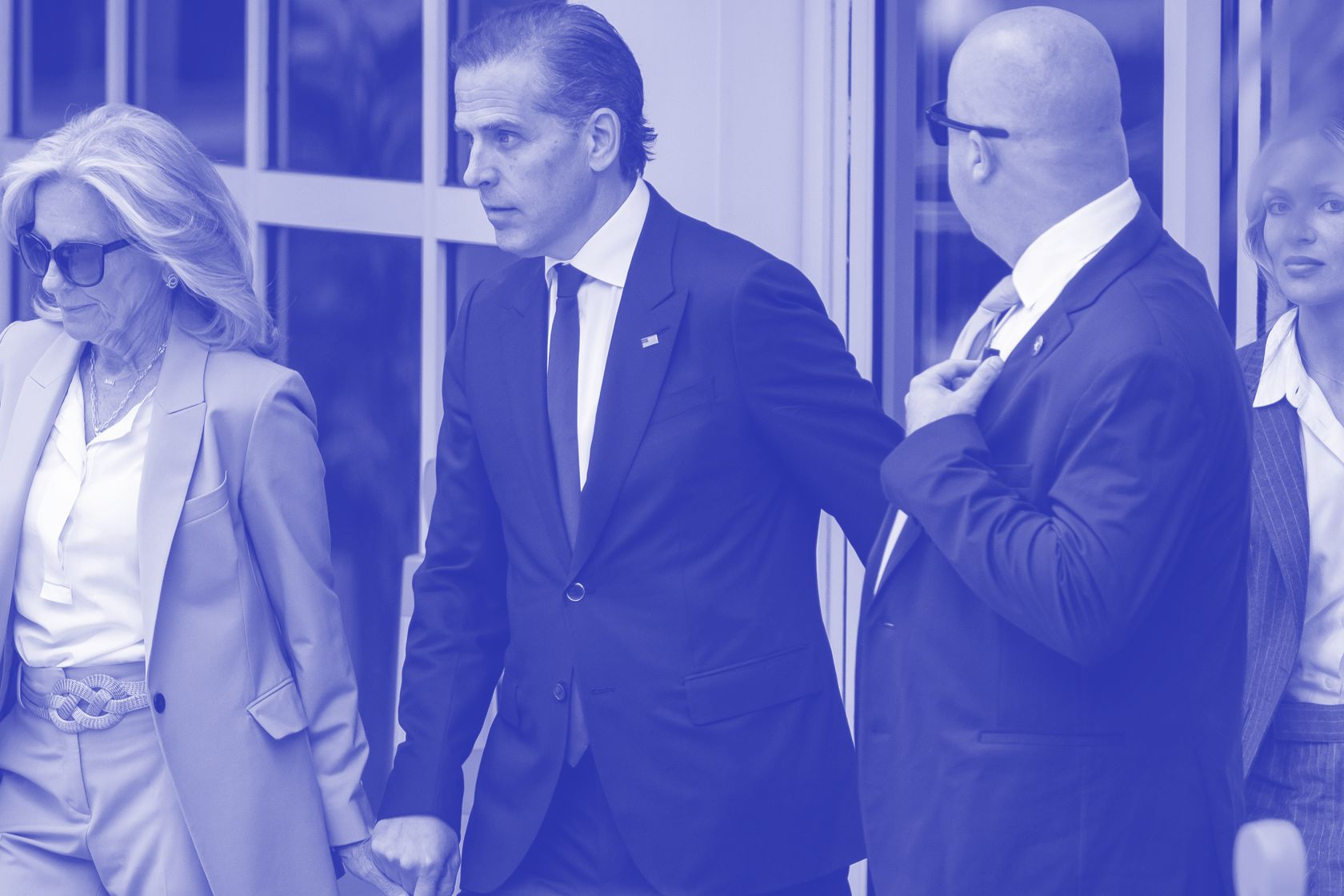
Hunter guilty: Hunter Biden, son of US President Joe Biden, was found guilty by a federal jury in Delaware of lying about his drug use to illegally purchase a gun. Convicted on all three charges, he is the first child of a sitting US president to be found guilty of a crime. The charges include making false statements and illegally possessing a firearm. Sentencing is expected within 120 days, about a month before the US presidential election on 5 November. The case was prosecuted by David Weiss, a special counsel appointed by former president Donald Trump. Last week, President Biden said he would not pardon his son if convicted, a stance that congressional Democrats have highlighted as evidence that the President is not using the justice system for political or personal ends. Hunter Biden could face up to 25 years in prison, although as a first-time offender, he is likely to receive a shorter sentence. He also faces separate tax-related charges in California, where a trial is scheduled for 5 September. (Reuters)
2.
Ceasefire hope: Hamas accepts a UN-backed ceasefire plan to end the war with Israel in Gaza and is ready to negotiate the details, an official of the militant group said, marking a potential breakthrough after eight months of conflict. The plan, endorsed by the UN Security Council, calls for the withdrawal of Israeli troops from Gaza and the exchange of hostages for Palestinian prisoners. US Secretary of State Antony Blinken said Israeli Prime Minister Benjamin Netanyahu had reaffirmed his commitment to the plan during a meeting in Jerusalem, describing the situation as "hopeful." Negotiations were continuing on Tuesday and throughout the week. The three-phase peace plan laid out by US President Joe Biden on 31 May has faced uncertainty due to both sides maintaining hardline positions as Israel's continued deadly assaults on Gaza. However, on Tuesday, Reuters reported that senior Hamas official Sami Abu Zuhri, who is based outside the Strip, said they accepted the ceasefire resolution and were ready to negotiate the details. He added that it was up to Washington to ensure Israel abides by it. Blinken said that definitive word was still needed from the Hamas leadership inside Gaza. "That's what counts, and that's what we don't have yet," he said. (Reuters) (Bloomberg)
3.
Apple’s AI lift: Apple shares surged over 6% to a record high, a day after unveiling new AI features, including an improved Siri and enhanced AI capabilities across its devices that prompted analysts to upgrade price forecasts for the stock. Shares soared to USD206.03 ($312.11) each on Tuesday and were trading near that record shortly before closing. Despite underperforming the S&P 500 this year and an underwhelming reception on Monday, investors were betting the AI updates will boost the appeal of iPhones, iPads and Macs, and potentially increase sales. The stock rally added USD180 billion to Apple's market value, bringing it just a few dozen billion dollars short of Microsoft's USD3.20 trillion valuation. At least 13 analysts raised their price targets for Apple shares, anticipating a wave of new purchases ahead of the upcoming iPhone launch in autumn. (Reuters)
4.
Economy upgraded: The World Bank raised its 2024 global growth forecast to 2.6%, driven by a better-than-expected economic performance in the US. The American economy was projected to grow by 2.5% in 2024. That increase from an earlier 1.6% forecast contributed 80% of the global growth upgrade, which was revised from 2.4% in January, according to the bank's Global Economic Prospects report. "In a sense, we see the runway for a soft landing," World Bank deputy chief economist Ayhan Kose told Reuters in an interview, noting that sharply higher interest rates had brought down inflation without major job losses and other disruptions in major economies. "That's the good news. What is not good news is that we may be stuck in the slow lane," Kose added. The lender said global growth will remain below pre-pandemic levels through 2026, with interest rates staying high. It also highlighted key challenges for poorer economies, increased debt pressures, and risks from geopolitical conflicts and trade restrictions. (Reuters)
5.
AI chip crunch: The Biden administration is considering further restrictions on China’s access to advanced chip technology for artificial intelligence, focusing on the emerging "gate all-around" (GAA) chip architecture, Bloomberg reported. The measures aim to curb China’s ability to build sophisticated AI systems, the publication said, citing unnamed sources. Companies like Nvidia, Intel and AMD, that plan to mass-produce GAA chips soon, could be impacted. The final decision is pending as officials determine the scope of the potential rule. But the report sent Nvidia shares down by as much as 2.49% before paring back most of the losses ahead of the close. A draft GAA rule is under review, the publication reported, with some industry feedback suggesting it is currently too broad. The discussions also include limiting exports of high-bandwidth memory chips essential for AI training. The US has already imposed various restrictions on selling advanced semiconductors to China, and Commerce Secretary Gina Raimondo has previously promised more measures to prevent AI technology from aiding China’s military. (Bloomberg)
6.
WeWork names CEO: WeWork has appointed John Santora, a seasoned real estate executive from Cushman & Wakefield, as its new CEO following its emergence from bankruptcy. Santora will succeed David Tolley, who will step down after WeWork's exit from Chapter 11 bankruptcy protection. The company also introduced a new board of directors, featuring several members from its new owner, Yardi Systems. This move follows a restructuring agreement in late April, which marked the end of Adam Neumann's ambitious bid to repurchase the company he founded. WeWork received approval to exit bankruptcy protection in late May. (Financial Times)
7.
Fruity fortune: Shares in Raspberry Pi, the maker of affordable single-board computers, surged as much as 42.5% following the company’s IPO on the London Stock Exchange, rising from an initial £2.80 ($5.40) to as much as £3.99 each, valuing it at over £770 million. The listing, which raised £166 million, initially restricts trading to institutional investors, with full trading starting on Friday. The IPO is a win for the London market, which is struggling to keep UK firms from moving abroad. Cornerstone backers included existing investors Arm Technology Investments and Lansdowne Partners. Sony’s semiconductor division, a minority investor, did not participate in the offer and its shareholding will be diluted to 1.66% from 1.76%. Most of the proceeds from the raising will go to Raspberry Pi Foundation, the company’s majority shareholder and a UK charity founded in 2008 with the goal of promoting interest in computer science among young people. The £23.6 million balance is slated to fund the company’s engineering projects and supply chain improvements, according to the prospectus. Raspberry Pi reported revenues of £211.1 million for 2023 and an operating profit of £29.8 million. (Raspberry Pi website) (Yahoo Finance)
8.
Judges’ stance: In secret recordings, US Supreme Court Justice Samuel Alito endorsed the idea of returning the country to a state of "godliness" and said that a compromise between the left and right might be impossible. Alito's comments, captured at a Supreme Court gala by a woman posing as a Catholic conservative, seemed to contrast with Chief Justice John Roberts' stance. Roberts, who presides over the powerful 9-member court and was also secretly recorded, emphasised pluralism and rejected the notion that the US is a Christian nation, stating the court's role is to decide cases, not guide the country morally. The controversial recordings, made by documentary filmmaker Lauren Windsor, sparked debate over journalistic ethics and the justices' views. The secret recording is the latest controversy around the Supreme Court and its justices, particularly Justice Alito, who has faced recent revelations that provocative flags used as symbols by election deniers flew outside two of his homes. (New York Times)
