ICC pursues arrest warrants for Netanyahu, Hamas leaders over war crimes
Plus: Anglo shareholder L&G backs management’s break-up plan; Mokhber takes over from President Raisi after helicopter death; Assange wins right to appeal US extradition order in UK.

Good morning. Here's what happened overnight and what you need to know today.

1.
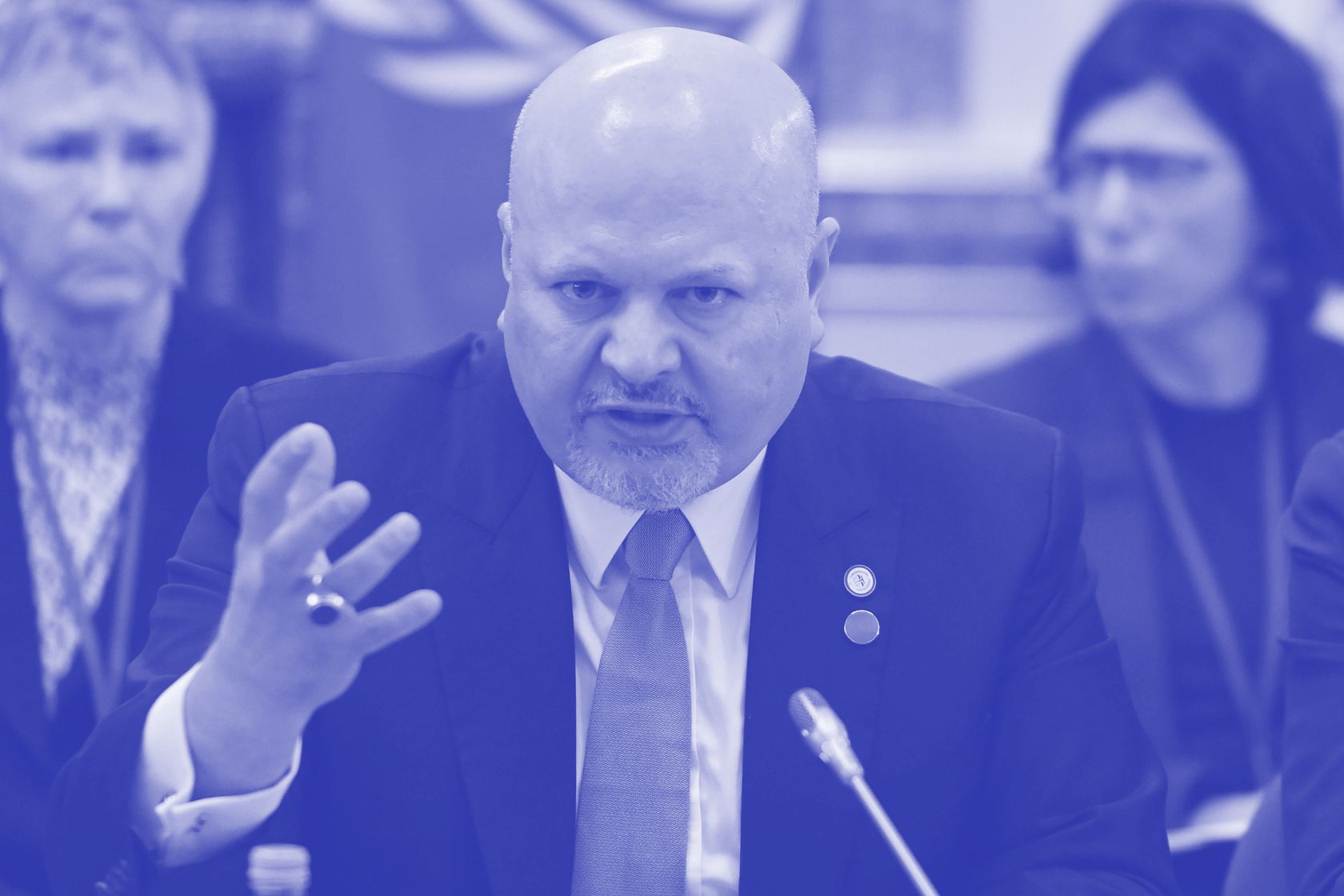
War crimes: The International Criminal Court (ICC) has announced its application for arrest warrants in relation to charges of war crimes by Israeli and Hamas leaders. The application reads that the ICC chief prosecutor Karim Khan has reasonable grounds to believe Israeli Prime Minister Benjamin Netanyahu, and Israel’s Minister of Defence bear criminal responsibility for war crimes and crimes against humanity committed in Gaza since October last year. The application also names head of Hamas, Yahya Sinwar, and two other senior Hamas officials, for war crimes and crimes against humanity in Israel and Gaza during the same period. A panel of ICC judges will determine whether or not Khan’s application will be accepted. The White House has said that it does not support the ICC’s investigation into Israel, and has previously warned the ICC that arrest warrants could see Israel back out of a ceasefire agreement. Israeli President Isaac Herzog criticised Khan’s decision, labelling the move as “beyond outrageous,” while Hamas responded that the ICC “equates the victim with the executioner.” (ICC statement from Karim Khan)(Bloomberg)(Financial Times)
2.
Put up or shut up: Top Anglo American shareholder, Legal & General Investment Management (LGIM), has backed Anglo’s break-up plan as the miner fends off takeover bids from rival BHP. Last week, Anglo announced plans to demerge from its platinum and diamond businesses to focus on its copper and iron ore arms, as it made efforts to convince shareholders that it has a solid future as a standalone group. Nick Stansbury, head of climate solutions at LGIM said that Anglo’s plan is a “radical but attractive strategy to create value for long-term investors,” and that LGIM is confident that Anglo management will be able to execute the plan over time. Stansbury added that BHP’s bids are “far from reflecting the true value of the business.” Under the UK’s ‘put up or shut up’ takeover rules, BHP has until 5pm BST on Wednesday to lodge a formal bid or walk away for six months. LGIM is a top 10 investor in Anglo, holding just under 2% of Anglo’s stock. (Financial Times)
3.
Iran’s caretaker: Iran’s vice president and deputy since 2021, Mohammad Mokhber, has stepped into the role of acting president, following the sudden death of President Ebrahim Raisi in a helicopter crash on Sunday. Mokhber will lead a three-person council that is tasked with organising a new presidential election within the next 50 days, in keeping with the country’s constitution. He will have “the powers and the functions of the president” during this time. It is possible that Mokhber, considered to be a key confidante of Iran’s Supreme Leader Ayatollah Ali Khamenei, will include himself on the election ballot. Mokhber has begun receiving calls from officials and foreign governments as the caretaker president. On Monday morning Iran’s cabinet held an emergency meeting, telling state media that it would follow Raisi’s path and that “with the help of God and the people, there will be no problem with management of the country.” (Bloomberg)(Associated Press)
4.
Assange extradition win: Julian Assange has won the right to appeal extradition to the US. London’s High Court ruled that the WikiLeaks founder will be able to challenge assurances provided by Washington about his potential treatment if he were to be extradited to the US. Assange’s legal team argued that Assange should not accept the assurances that he could rely on the rights and protections under the US First Amendment, and that if extradited, Assange could be discriminated against on the basis of his nationality, as an Australian-born foreign national. The 52-year-old has not lived freely for 12 years, and remains wanted by US authorities on charges of espionage for the publication of classified US documents and cables in 2010 and 2011. He will appeal the decision from the UK. Last month President Biden said he was considering a request from Australia to drop the prosecution of Assange and return him to Australia. (CNN)
5.
Brain chip: The US Food and Drug Administration (FDA) has given its approval for Elon Musk’s brain chip company, Neuralink, to implant its product into a second patient. The company hopes to implant its device into 10 patients during 2024, and plans to submit applications to start similar trials in Canada and the UK in the coming months. Neuralink sought sign off from the FDA for a number of proposed fixes in the chip which caused problems for the first trial participant. According to sources cited by the WSJ, some of these fixes included embedding the chip’s wires more deeply into the brain. The first patient to receive a Neuralink chip, Noland Arbaugh, had a chip implanted in January this year, and despite initial success the physical changes in his brain meant most of the chip’s threads had come loose. The Neuralink team has made software changes to the 15% of threads which remain in place, allowing him to regain the device’s original capabilities. In the second patient, the FDA has given Neuralink the green light to implant the threads more deeply into the brain’s motor cortex, in efforts to avoid the problems faced with Arbaugh’s implant. (Wall Street Journal)
6.
South Africa election: South Africa’s former president, Jacob Zuma, has been blocked from running for parliament in the country’s upcoming election. South Africa’s constitutional court ruled that Zuma’s 15-month gaol sentence for contempt of court in 2021 disqualifies him from standing in the May 29 election, as the constitution prohibits anyone given a prison sentence of 12 months or longer from holding a parliamentary seat. Zuma has fallen out with the African National Congress (ANC) and has been campaigning with the newly formed uMkhonto we Sizwe (MK) party. MK party secretary general Sihle Ngubane said: "He is still the leader of the party. It [the ruling] doesn't affect our campaign at all.” Polls in the country show that the ANC’s majority is at risk after 30 years in power. (CNBC)(BBC)
7.
Bad for business: Chief of Australia’s Council of Small Business Organisations Australia (COSBOA) has railed against Labor’s budget, asserting that Dutton’s budget reply speech offers a lot more for small business. COSBOA’s chief executive, Luke Achterstraat, said the budget failed to consider how the nation's 2.5 million SMEs will factor in to the Future Made in Australia policy, which is a “missed opportunity for small business.” Achterstraat added that the government’s decision to sink almost $1 billion into PsiQuantum when businesses are struggling to break even shows the “really big disconnect from the localised economy to the institutionalised economy.” Achterstraat also praised Dutton for his plan to make permanent the instant asset write-off and lift it to $30,000. He warned that while Dutton’s heavy focus on slashing immigration was a “fair conversation” to have, securing the support of small business will depend on how it affects skilled migration intake. (Capital Brief)
8.
AI competition: Microsoft has revealed a suite of new software and computers laden with artificial technology, ramping up competition with Alphabet’s Google and Apple’s AI efforts. The tech giant’s new range of AI-powered PCs are called Copilot+PC, while the machines on its Surface line will hold more power and operate 58% faster than Apple’s leading Macbook Air M3. OpenAI’s GPT-4o, updated version of its GPT-4 announced last week will soon be brought into the Copilot AI assistant. The new products show that Microsoft is working on ensuring generative AI capabilities are used to improve computing for retail consumers rather than just for corporate customers. On the new products, Microsoft chief Satya Nadella said: “The pursuit has always been about how to build computers that understand us, instead of us having to understand computers and I feel like we really are close to that real breakthrough.” (Microsoft blog post)(Bloomberg)
