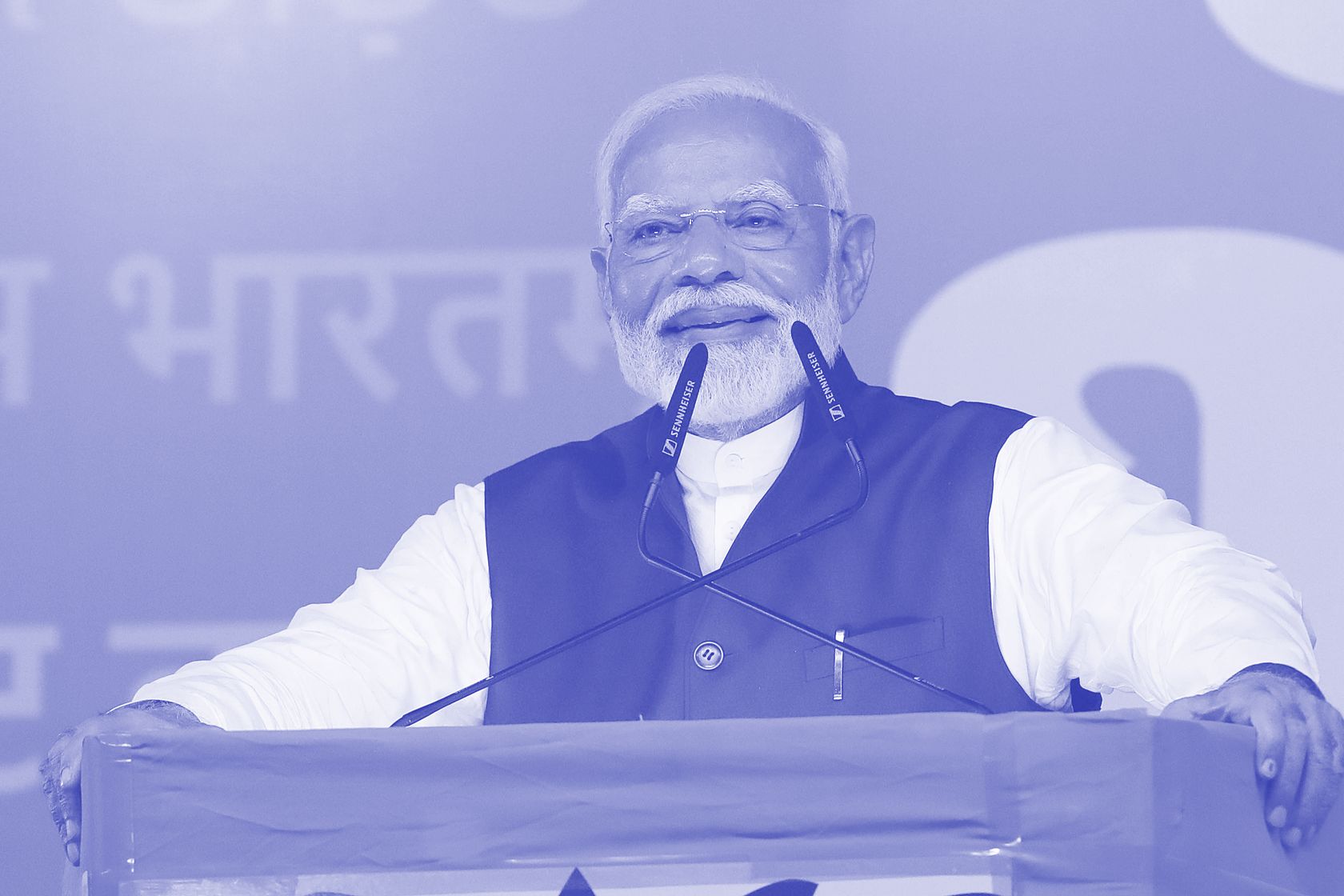
India's Modi set to win election but lose majority
Plus: TSMC chairman says it may lift AI chip production prices; Biden restricts asylum requests at Mexico border; US vacancies drop ahead of rates decision.


Good morning. Here's what happened overnight and what you need to know today.
1.
India’s election jolt: Indian equities plummeted on Tuesday as early election results indicated a narrower-than-expected lead for Prime Minister Narendra Modi’s Bharatiya Janata Party (BJP). Modi is set to become the first PM to serve three consecutive terms since Jawaharlal Nehru. But with over 90 per cent of the votes counted, he is on track to lose his majority. Market confidence was shaken, especially in companies linked to Modi’s infrastructure plans. The Nifty 50 index fell 6%, with Adani Enterprises and Adani Ports dropping 19% and 21%, respectively. Bloomberg reported Modi's BJP was short of the 272-seat majority on its own, but the National Democratic Alliance it leads was on course to win 293 out of 543 seats. The opposition INDIA alliance, led by the Indian National Congress, was performing better than expected and was on track to win 229 seats. The election was seen as a referendum on Modi's decade in office, and the weakened mandate will complicate his ability to implement economic policies and there may need to be greater reliance on smaller coalition partners. But the outcome also highlights the resilience of Indian democracy amid fears of one-party rule. Voting saw participation from 642 million out of nearly 1 billion registered voters, according to the election commission, making it the world's largest election. (New York Times) (Financial Times) (Bloomberg)
2.
Chip talks: Taiwan Semiconductor Manufacturing Co’s (TSMC) CEO and newly appointed chairman CC Wei is considering raising the price of the AI chip production services provided to companies like Nvidia. Wei told reporters on Tuesday he had spoken to Nvidia CEO Jensen Huang about the high prices of Nvidia's AI products while suggesting TSMC's critical role deserves higher fees. TSMC is the sole manufacturer of Nvidia’s AI training chips and also produces chips for Qualcomm, AMD and Intel. Speaking at his first news conference as chair after the company’s annual meeting, Wei said "anyone sitting at home can think [up the strategy]" of asking for higher fees. He added that TSMC is still evaluating the demand for chips and will decide on future production capacity accordingly. “TSMC is talking to everyone on this because everyone who wants to do AI chips will come to us to discuss with us. So we are the only ones who can collect all the information. Then we will do our analysis and ... decide how many production lines we should build." (Nikkei)
3.
Biden’s border blockade: US President Joe Biden announced an executive order that will restrict asylum requests at the US-Mexico border once the daily threshold of crossings is exceeded. The order, which Biden plans to sign alongside several border-town mayors on Tuesday afternoon, local time, will shut down asylum requests once the daily average of encounters between ports of entry exceeds 2,500. This could lead to an immediate border closure, as current figures exceed that number each day. The border would reopen for asylum seekers once the daily average falls below 1,500, the Associated Press reported. The move is the Biden administration's most aggressive yet to control migration numbers and mirrors a provision in a failed border bill that collapsed earlier this year after former president Donald Trump urged Republicans to oppose it. The White House is reportedly hoping the move will resonate with voters concerned about border security, a key issue in the upcoming presidential election. That is even as it is expected to face legal challenges and risks backlash from progressive Democrats. (Associated Press) (New York Times)
4.
US vacancies drop: Demand for US workers dropped in April as job openings fell to their lowest level in nearly three years, a potential positive sign for the Federal Reserve as it seeks to cool inflation. The Labor Department reported 8.059 million job vacancies, missing economists' expectations of 8.355 million and marking a decline from March's revised 8.355 million. The decline in vacancies, with 1.24 openings per unemployed person, indicates a softening labour market, potentially easing inflationary pressures. Still, Federal Reserve officials are expected to keep the policy rate steady in their upcoming meeting next week. Layoffs were at their lowest level since December 2022 at 1.5 million, while total quits rose slightly to 3.51 million. A separate report showed a third consecutive monthly increase in orders for US-manufactured goods, driven by demand for transportation equipment. (Reuters)
5.
Kitty’s cut off: Morgan Stanley’s E*Trade is considering banning meme-stock leader Keith Gill from its platform due to growing concerns about potential stock manipulation around his recent purchases of GameStop options, according to the Wall Street Journal. Also known as “Roaring Kitty”, Gill helped spark the GameStop trading frenzy in 2021 and resurfaced on Reddit this weekend with posted screenshots showing a massive USD140 million position in GameStop shares and options. That led to a 21% percent surge in the stock’s share price on Monday. E-Trade and Morgan Stanley are worried Gill may be using his large social media following to artificially inflate GameStop's stock price for his own benefit, the WSJ reported, citing unnamed sources. The sources said Gill purchased a large volume of GameStop call options shortly before his recent social media posts. They added that company officials are debating whether banning Gill could trigger a backlash from his loyal followers and lead to an exodus of E-Trade customers. The Securities and Exchange Commission is also reviewing trading in GameStop call options around the time of Gill's social-media posts. (Wall Street Journal)
6.
Global hack for hire: US prosecutors are seeking to extradite an Israeli private investigator from London for allegedly hacking critics of hedge fund Elliott Management and oil giant Exxon Mobil, the Wall Street Journal reported, citing court documents and unnamed sources. The efforts are part of an investigation into an alleged globe-spanning hacking-for-hire operation. The investigator Amit Forlit was arrested at Heathrow Airport on behalf of US authorities in April. He is accused of working with Washington-based lobbying firm DCI Group to gather information on Argentina during the country's debt crisis. Neither Elliott, Exxon nor DCI are accused of wrongdoing. Elliott is known for its aggressive tactics, which included lobbying and publicity campaigns against Argentina. Prosecutors are also investigating Forlit's work for Exxon Mobil, which included countering a campaign by environmentalists. Exxon has denied any involvement in any hacking. Elliott said it was not aware of the alleged investigation and DCI declined to comment. (Wall Street Journal)
7.
Hospital cyber shock: A reported cyber attack on Monday has forced some of the UK's major NHS hospitals to cancel operations and blood transfusions. The incident, affecting King’s College Hospital and Guy’s and St Thomas’ NHS Foundation Trust among others, involves their pathology partner Synnovis, which experienced an IT incident that disconnected hospitals from its servers. The incident led to the loss of IT system access, affecting the issuance of blood transfusions and test results. The Health Service Journal reported that multiple unnamed senior sources had indicated the system had been targeted by a ransomware attack. Guy’s and St Thomas’ CEO Ian Abbs informed staff that Synnovis experienced a major ongoing incident impacting services. Synnovis, a London-based partnership between Guy’s and St Thomas’ NHS Foundation Trust, and King’s College Hospital NHS Foundation Trust and Synlab UK & Ireland, confirmed the disruption but provided no further comment. It follows a previous cyberattack on Synlab’s IT systems in Italy. (BBC) (Sky News) (Health Service Journal)
8.
Middle East tension: Israeli airstrikes near Aleppo in Syria on Monday resulted in the death of a senior figure in Iran’s Revolutionary Guards Corps, according to Iranian media. General Saeed Abyar had been in Syria since 2012 and was assisting the Syrian government. The attack is the first Israeli strike on an Iranian since April, when Israel bombed Iran’s embassy compound in Damascus. The strikes killed 17 people and injured 15, including members of Hezbollah, Iranian media said. Following the deaths of President Ebrahim Raisi and Foreign Minister Hossein Amir Abdollahian in a helicopter crash last month, Iran is dealing with its own leadership crisis and is seen as unlikely to retaliate. Meanwhile, Hezbollah launched rockets and drones from Lebanon into northern Israel, causing wildfires and injuring six Israeli reservists. Israel also announced that four hostages taken during the Hamas-led 7 October attacks had been dead for months. These developments come amid growing pressure on Israeli Prime Minister Benjamin Netanyahu over a ceasefire proposal. (New York Times)
