Investors brace for ‘blood’ as recession risk climbs
Plus: EU readies retaliatory tariffs after China strikes back; All eyes on Bullock and RBA’s next move; Dutton backflips on jobs and students as Labor unveils $2.3b battery rebates.

Good morning. Here's what happened overnight and what you need to know today.

1.
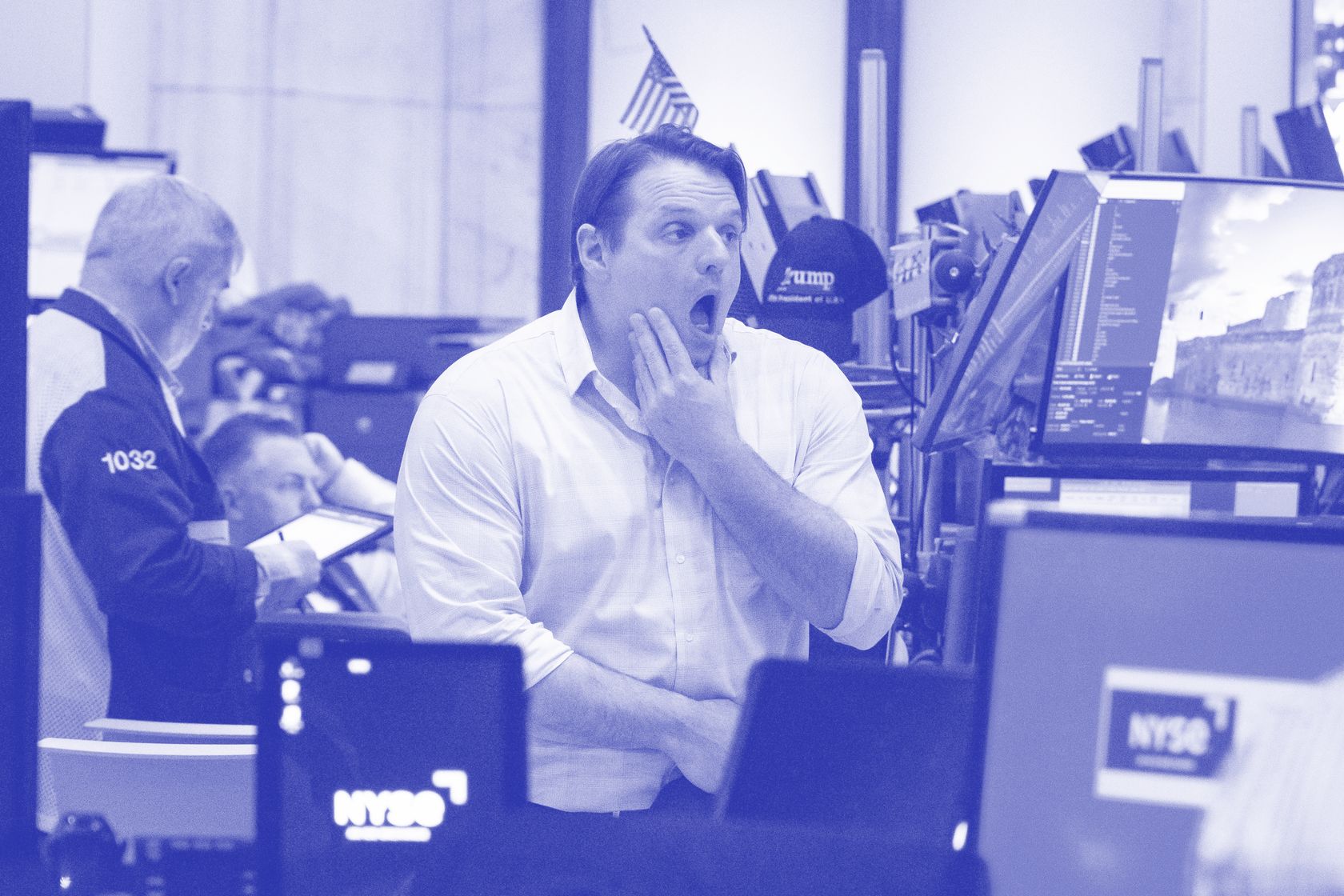
There’ll be blood: Markets are bracing for a further bloodbath on Monday as China retaliated, after Donald Trump imposed the steepest US tariffs in over a century, with a 34% levy on all US imports from 10 April. The S&P 500 plunged 4.84% on Thursday and 5.97% on Friday, wiping over USD6 trillion in two days—the worst selloff since the pandemic. JPMorgan raised its US recession probability to 60% in a note titled “There will be blood”, as the average US tariff rate surges to 22.5%, according to the Yale Budget Lab. Polymarket also showed recession odds rising to 60%. The Nasdaq is now in a bear market, the Dow has entered correction, and ASX futures are pointing to a fall of over 4% for the local market this morning. Commodities and currencies also plunged: copper fell 8.76%, silver 7.1%, Brent crude 6.4% and gold 2.47%. The Australian dollar dropped 4.5% to USD0.604—below its GFC low. (Bloomberg)(WSJ)
2.
Global reaction: After China hit back with a 34% tariff on all US imports, the EU is preparing to vote Wednesday on a first set of countermeasures covering USD28 billion of US goods. Australia’s embassy is reportedly planning to delay trade talks until after the 3 May election, according to The Australian, with the Albanese government ruling out concessions on biosecurity, digital rules or the PBS. About 50 countries have contacted the Trump administration, including Vietnam—which Trump said offered to eliminate its tariffs in return for a deal—and India, which is pursuing a bilateral agreement to soften the impact. Over the weekend, 1,200 demonstrations took place across all 50 US states and internationally, with major rallies in Washington, Berlin and Paris. As markets roiled, Trump hosted a USD1 million-a-head fundraiser at Mar-a-Lago and a LIV Golf tournament at Doral, backed by Aramco, Riyadh Air and TikTok. Merchandise—including items made in China—sold out, and every room at Doral was reportedly booked. (NYT)(Reuters)(FT)
3.
Bullock briefing: US tariffs and their impact on markets is set to dominate Australia’s economic agenda this week, which is headlined by Michele Bullock's first public address since 'Liberation Day' on Thursday, to be delivered against the backdrop of the federal election campaign. It’ll follow last week's RBA interest rate decision, with economists expecting the details of Bullock’s Chief Executive Women Melbourne Annual Dinner keynote to potentially be "significant" in terms of the prepared remarks. ANZ expects a “significant shift in rhetoric and for Bullock to make clear that the board stands ready to ease if the outlook softens.” ANZ now forecasts cuts in May, July and August. HSBC and Barrenjoey also brought forward their rate cut expectations on Friday on the back of the tariffs.(Capital Brief)
4.
About face: Labor unveiled a $2.3 billion battery rebate for households, as the Coalition abandoned plans to force public servants back to the office and vowed to cut foreign student numbers by 30,000 below Labor’s failed cap last year. Labor will offer 30% rebates on household batteries from July, aiming to support 1 million new units by 2030, if it wins the election. Peter Dutton, meanwhile, now says it will not change flexible work arrangements or pursue 41,000 public service job cuts via redundancies, after backlash from voters, particularly women. The backflips come as the Coalition loses polling ground and prepares for the first leaders’ debate Tuesday night. Dutton pledged to cap new international student enrolments at 240,000 annually, limit overseas students to 25% at public universities, and double visa fees for Group of Eight institutions, if elected. The pledge follows the Coalition’s move to block Labor’s student cap legislation last year. Universities and business groups warned the policy would damage a $51 billion export sector. (Capital Brief)(The Australian)(ABC)(AFR)
5.
IPO freeze: Initial public offerings in the US have come to a standstill amid last week’s market turmoil, according to The Wall Street Journal. Klarna, StubHub and Chime are delaying their IPO plans as the stock-market swoon slams the door on companies waiting in the wings to go public. StubHub and Klarna postponed roadshows that were set to kick off next week, sources told the paper, while Chime is reportedly pushing off filing its financials publicly with regulators. Elsewhere, Hinge Health is watching the market before its anticipated late-April offering, while Circle Internet Financial is anxiously deciding what to do next. Meanwhile, Donald Trump’s tariffs also sparked the biggest sell-off in the US junk bond market since 2020, according to the Financial Times. ICE BofA data shows spreads jumped 1 percentage point to 4.45 points. JPMorgan now forecasts a 0.3% contraction in 2025. (WSJ)(FT)
6.
Smells phish-y: Key executives at a number of superannuation funds have been impersonated in a phishing scam, the same week that the sector experienced a coordinated cyberattack that compromised thousands of accounts. According to media reports, the not for profit organisation Women in Super, as well as the Australian Council of Superannuation Investors and the Association of Superannuation Funds of Australia were targeted in unsuccessful phishing attacks. Women in Super confirmed that it suffered a recent phishing attempt impersonating office holders at the fund, which did not result in any breach or compromise. While Women in Super did not confirm the executives who were targeted, the AFR reports that the organisation’s board includes ESSSuper chief executive Robbie Campo and middle managers at Cbus, ART and Mercer. Should regulators find that the funds had inadequate consumer cybersecurity protections in place, the Australian Prudential Regulation Authority could impose steep fines. (The Australian)(AFR)(Capital Brief)
7.
Measured response: Taiwanese President Lai Ching-te said the country will not impose reciprocal trade tariffs against the US, but will work toward removing trade barriers and boost investments in the US. Taiwan was hit with 32% import tariffs on goods shipped into the country (excluding semiconductors) in Trump’s ‘Liberation Day’ tariffs unveiled last week. Lai commented that given Taiwan’s dependence on trade, it will be heavily affected by the tariffs, but in efforts to minimise the impact, "Taiwan has no plans to take tariff retaliation,” and it will not alter companies’ investment commitments to the US. Lai referenced Taiwan Semiconductor Manufacturing Corporation’s planned USD100 billion ($163.6 billion) in the US, saying that the country will further this commitment and extend investment across other US industries. Beyond trade, Taiwan relies on US military presence across the Pacific for defence against Chinese aggression. (Reuters)(Capital Brief)
8.
Road block: Jaguar Land Rover (JLR) has suspended all car shipments to the US for one month, as the UK carmaker considers how to respond to US President Trump’s 25% tariffs on vehicle imports. The Tata Motors-owned group typically sells around 400,000 Range Rover Sports, Defenders and other models in the US each year, with sales in the US accounting for almost 25% of its annual sales. The carmaker said that April’s shipment pause is a short-term move as the company develops mid-to-longer-term plans for managing the new trade landscape. JLR is particularly exposed to the new tariffs as it does not have any manufacturing capability in the US, and may be waiting to see whether UK Prime Minister Keir Starmer can secure a trade deal with Washington in the coming weeks. Carmakers around the globe are scrambling to reduce the impact of import tariffs while boosting US manufacturing where possible. (Reuters)(FT)(Capital Brief)
