Iran strikes UAE oil port and ships, killing the fragile truce
Plus: Oil surges ahead of RBA call; Labor pulls plug on full EV tax break; Amazon opens logistics empire to the world.


Good morning. Here’s what happened overnight and what you need to know today.
1.
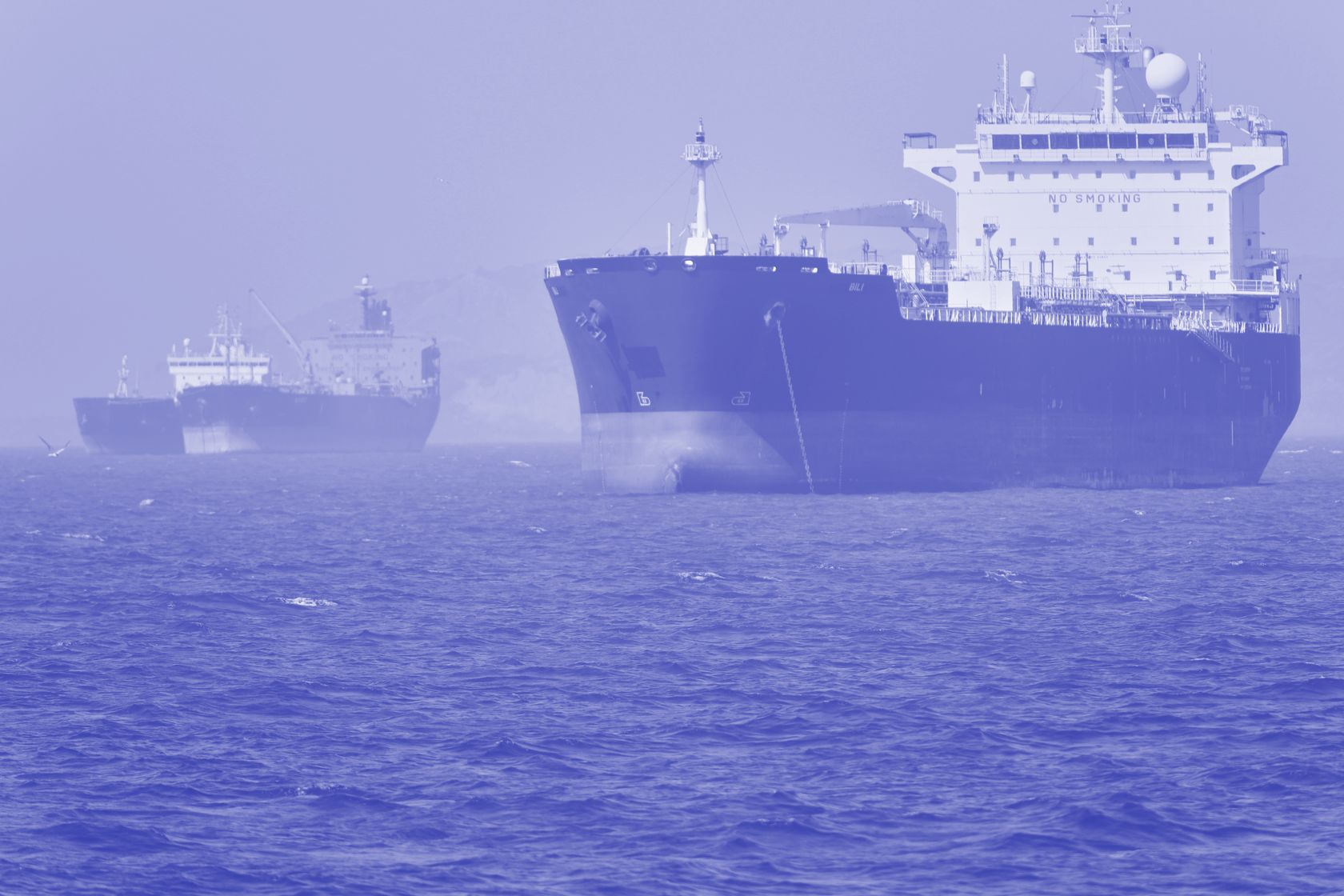
Iran war: Iran fired missiles and drones at the UAE for the first time since a ceasefire took hold a month ago, striking the country’s largest oil storage facility and multiple ships in the Strait of Hormuz. The attacks on the Emirates’ Fujairah Oil Industry Zone hospitalised three people and came hours after Trump announced a US military operation to guide stranded ships out of the Persian Gulf. US Central Command chief Admiral Brad Cooper told reporters that US forces destroyed six Iranian small attack boats, intercepted Iranian cruise missiles and drones, and guided two US-flagged merchant vessels through the strait. Iran denied any vessels had crossed and denied its boats were sunk. Cooper repeatedly declined to say whether the ceasefire had been broken. Meanwhile, the UAE’s defence ministry said it intercepted three of four Iranian cruise missiles, with a fourth falling into the sea. An empty ADNOC state oil tanker was also struck by two Iranian drones off Oman, with no casualties. A South Korean cargo ship, HMM Namu, also caught fire after an explosion in its engine room while anchored in the strait, with all 24 crew members unharmed. Trump said on Truth Social that Iran had targeted the vessel and called on Seoul to “come and join the mission”. (Reuters)(NYT)(WSJ)(Bloomberg)
2.
Oil moves: Iran’s attacks on UAE oil infrastructure and ships in the Strait of Hormuz sent markets into a volatile session, with oil surging and stocks falling as investors weighed the most serious escalation since the US-Iran ceasefire took hold in early April. Brent crude jumped about 6% to roughly USD115 a barrel while US benchmark West Texas Intermediate rose about 4% to USD106 a barrel. US stocks fell broadly, with the Dow Jones Industrial Average down 1.1%, the S&P 500 off about 0.4% and the Nasdaq dropping 0.2%. Meanwhile, Australian shares were set to open lower, with ASX 200 futures down 66 points or 0.8% to 8,649, as markets braced for a widely expected rate hike from the RBA this afternoon. Markets also expect hikes from both the ECB and the BOE, and no longer expect the Fed to cut rates this year, as oil-driven inflation complicates the global monetary policy outlook. The yield on benchmark US 10-year notes rose 7.6 basis points to 4.454%. (WSJ)(Reuters)
3.
EV unplugged: The Albanese government will wind back its electric vehicle tax break in next week’s budget, phasing out the full fringe benefits tax exemption and replacing it with a permanent 25% discount. That would save $1.7 billion as the scheme’s cost blows out from a projected $605 million to $10.1 billion over seven years, according to the Grattan Institute. Treasurer Jim Chalmers and Energy Minister Chris Bowen announced in joint statements cited by media that the full FBT exemption, which has been in place since early 2023, will only continue until the end of March 2027. From April 2027 to April 2029, the full discount will apply only to EVs costing under $75,000. Vehicles priced between that threshold and the luxury car tax threshold of $91,387 will receive a 25% FBT discount. From April 2029, all EVs below the luxury car tax threshold will receive only the 25% discount. Existing leases will not be affected and eligible vehicles will remain exempt from import tariffs. “The new rules will encourage manufacturers to offer more affordable and cheaper to run EVs in the Australian market,” Chalmers and Bowen said. (Capital Brief)(Bloomberg)(The Conversation)(The Guardian)
4.
Chain reaction: Amazon launched a unified logistics service open to any business, sending UPS and FedEx shares tumbling, as the world’s largest third-party logistics company officially entered the market as a direct competitor. The new Amazon Supply Chain Services consolidates existing products, including air and ocean freight, trucking and last-mile delivery, into a single suite. The move positions Amazon to compete in a global third-party logistics market estimated at more than USD1.3 trillion, according to research group Armstrong & Associates, which already ranked Amazon the world’s largest third-party logistics company by gross logistics revenue last year. “We first built this network over 20 years for ourselves. We then made it available to Amazon sellers,” Peter Larsen, vice president of Amazon Supply Chain Services told the WSJ. “Now we’re making it available to any business of any shape or size.” Early customers include Procter & Gamble, 3M, Lands’ End and American Eagle. Morgan Stanley analyst Ravi Shanker described the announcement as a potential “watershed moment for North American freight transportation companies,” with air freight and parcel carriers likely taking the hardest hit. Logistics firms GXO and Forward Air suffered double-digit declines. Amazon shares rose. (Amazon)(Bloomberg)(WSJ)
5.
Meat the press: The High Court will open its May sittings today with a case that has media outlets and content creators on high alert as it could have serious ramifications for whistleblowers and investigative journalism. Farm Transparency International (FTI) is appealing a 2025 Full Federal Court decision that found copyright in footage filmed while trespassing on the property of the Game Meats Company (GMC) belonged to GMC. The court found the images were held on a constructive trust for GMC’s benefit, ordered them destroyed and awarded $130,000 in damages, which was a major shift from the general rule that copyright in a film or photograph is owned by the maker. The potential consequences for free speech led the court to grant the Human Rights Law Centre and the Alliance for Journalists’ Freedom leave to intervene, with the groups arguing parliament has never contemplated the automatic assignment of copyright to anyone other than a maker, especially without consideration of the public interest or potential illegality. Law firm Ashurst warned that upholding the Full Court decision would increase risks for those “creating and publishing stories without the consent of the subjects of those stories,” including facing hefty financial penalties. Capital Brief has the full analysis. (Capital Brief)
6.
Just game: eBay said it would review GameStop’s unsolicited USD55.5 billion ($77.4 billion) takeover offer, saying it had no prior contact with the company before receiving the proposal, and that the board’s focus would be on whether GameStop could actually deliver “a binding, actionable proposal.” The Ryan Cohen-led company offered USD125 per share in a half-cash, half-stock deal. That is a 20% premium to eBay’s Friday close and said it had secured a non-binding commitment letter from TD Securities for up to USD20 billion in debt financing. GameStop shares fell 10% to a valuation of USD10.7 billion. With roughly USD9 billion in cash, the company is attempting to buy another nearly four times its size, the FT noted. eBay shares rose 5% to USD109.33 (below the offer price) at a valuation of USD48.5 billion. Cohen pledged USD2 billion in annual cost savings within 12 months of closing and said GameStop’s roughly 1,600 US stores would give eBay “a national network for authentication, intake, fulfilment and live commerce.” He said he would serve as CEO of the combined entity with no salary, compensated solely on performance. If eBay rejects the offer, Cohen told the WSJ he was prepared to run a proxy fight and take the bid directly to shareholders. Analysts believed there was low probability of a deal. Morgan Stanley cited “fundamentally different” business models and the FT’s Alphaville column called the financing “shaky as hell". (GameStop)(eBay)(WSJ)(Bloomberg)(FT)(Reuters)
7.
Guarded allies: Australia and Japan used yesterday’s summit in Canberra to deepen one of the Indo-Pacific’s most consequential partnerships, producing a $1.67 billion critical minerals commitment, expanded weapon testing commitments, and fresh energy assurances that both leaders say will outlast the current crisis. Albanese and Takaichi signed agreements spanning critical minerals, defence, cybersecurity and energy security at Parliament House. Australia will contribute up to $1.3 billion and Japan approximately $370 million to six priority minerals projects targeting nickel, rare earths and other strategic commodities, according to a joint statement. “Testing of new equipment, advanced weapons and emerging technologies,” would be a priority, the leaders said. Australia has separately agreed to purchase three Japanese-made frigates in the coming decade. With Japan relying on Australia for a third of its energy consumption, Takaichi declared Japanese diesel exports (roughly 7% of Australian consumption) would be unaffected by the Iran crisis. But the visit also laid bare a telling difference in how the two leaders are approaching an increasingly assertive Beijing. Takaichi, who has earned the moniker “Iron Lady” for her bluntness on China, listed it as the first topic of discussion. Albanese, by contrast, referenced neither China nor Trump in his 700-word statement. In another sign of the times, both leaders declined to take questions from journalists, sticking instead to tightly-prepared statements. (Capital Brief)(Reuters)(Bloomberg)(Joint statement)(Leaders’ statement)
8.
Normal credit: Regal Partners’ private credit manager Merricks Capital downplayed a spike in bad debts and credit losses over the past 18 months as “normal business activity and portfolio dynamics”, even as ASIC intensifies its surveillance of the sector and lingering concerns grow over the resilience of the asset class as the economy sours. In new filings with ASIC viewed by Capital Brief, Merricks’ bad debt expense grew from $5.1 million in July 2024 to $16.91 million in December 2025, while credit losses rose $17.9 million from $1.86 million. Performance and funds management fees fell $8.43 million to $4.31 million and loan management fees dropped to $1.87 million from $2.4 million. Revenue grew 118.6% to $120.85 million, including a $41.14 million Regal acquisition payout. The financial report itself stated that the group has no “material credit risk exposure to any single counterparty or group of counterparties.” (Capital Brief)
