Iranian President missing after helicopter crash
Plus: China announces probes into US plastics imports; US regulators reconsider new capital requirements rules for banks; France mobilises 600 officers to tackle New Caledonia unrest.

Good morning. Here's what happened overnight and what you need to know today.

1.
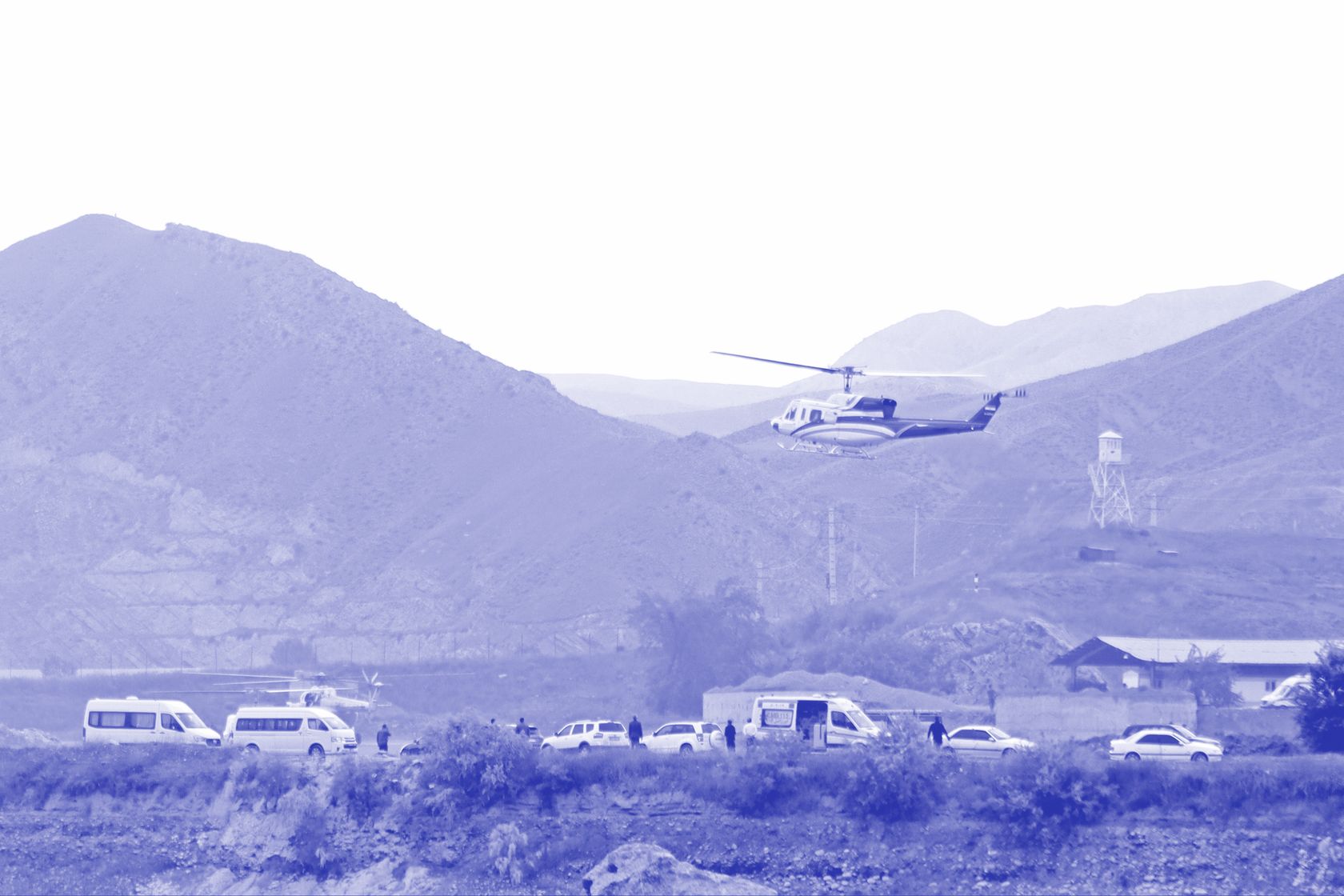
Hard landing: A helicopter carrying Iran’s President Raisi and foreign minister Hossein Amirabdollahian has crashed in heavy fog over mountainous terrain, while returning from a visit to the border with Azerbaijan. Iranian state media said that the helicopter experienced a “hard landing” and that rescuers are still trying to reach the crash site but are facing difficult weather conditions. Ahmad Alirezabeigi, Iranian MP for the city of Tabriz, told reporters in Tehran that rescue workers are yet to find the location of the helicopter, adding that two other helicopters in the convoy landed safely. An Iranian official told Reuters that "We are still hopeful but information coming from the crash site is very concerning," and the lives of Raisi and Amirabdollahian are "at risk following the helicopter crash."(Reuters)(BBC)
2.
Tit-for-tat: China’s Ministry of Commerce has announced a probe into imports of a thermoplastic used in consumer electronics and the automotive industry from the EU, US, Japan and Taiwan. The move follows the Biden administration’s decision to increase tariffs on USD18 billion ($27.16 billion) in Chinese imports last week. The US tariffs will impact Chinese imports including steel and aluminium, solar cells, batteries, semiconductors, medical products and critical minerals. China had warned that it would take “resolute measures” to safeguard its rights and interests following the ban, and that the US should “immediately correct its wrong actions and cancel the additional tariff measures.” The back and forth between the US and China is reminiscent of policies seen during the trade war that characterised Trump’s presidency. The anti-dumping probe should be completed within one year, but may be extended for six months. (Financial Times)
3.
Lobbying for lenience: The Federal Reserve and two other US regulators are considering reducing a proposed 19% increase in capital requirements for the US’ largest banks, according to sources cited by the Wall Steet Journal. The proposed rules unveiled in July last year would change the manner in which banks with over USD100 billion in assets calculate the cash they must set aside to absorb potential losses. The WSJ reports that top officials from the Fed, the Federal Deposit Insurance Corporation and the Office of the Comptroller of the Currency are discussing substantive and technical revisions to the proposed rules. The WSJ reports that the required capital increases may end up being about half as much as the original amount proposed. JP Morgan chief Jamie Dimon has been actively campaigning against the rules, and encouraged fellow CEOs to bypass the Fed’s Michael Barr in their efforts to pressure other Fed governors to revise the proposals. Dimon has described the proposals which were first designed by Barr as “flawed and poorly calibrated.” (Wall Street Journal)
4.
Instability on the doorstep: 600 French gendarmes, including 100 officers from Paris’ counterterrorism special forces, have been mobilised in attempts to restore order in New Caledonia following almost one week of riots led by pro-independence activists in the French territory. The key aim of the operation is to regain control of the 60 kilometre stretch of road connecting the country’s capital Nouméa to the international airport. Six people have been killed and over 230 detained since violence broke out early last week, and a state of emergency declared by Wednesday after new voting rules were voted through in France. French MPs approved constitutional changes that would allow all residents of New Caledonia to vote in local elections, which many of the island’s indigenous Kanak people believe will further marginalise their voice. (Politico)
5.
Israel-Hamas war: Former general and opposition figure, Benny Gantz, has threatened to withdraw his centrist National Unity Party from the government, if the Israeli government does not commit to a new war plan by 8 June. In a televised statement over the weekend, Gantz increased pressure on Prime Minister Benjamin Netanyahu by demanding the government agree to a six-point plan. The plan would include the return of Israeli hostages still held in Gaza, the defeat of Hamas and demilitarisation of the region, the return of evacuated Israelis to the north of the country, steps toward normalisation with Saudi Arabia and the expansion of measures to ensure ultra-orthodox Jews can be drafted into the military. The tension comes as US national security adviser, Jake Sullivan, travelled to Israel to meet with Netanyahu on Sunday in efforts to secure a ceasefire deal in Gaza. Israeli forces are continuing military operations in Gaza, including the southern city of Rafah. (Financial Times)(Reuters)
6.
Remote access: Indonesia has launched SpaceX’s satellite internet service, Starlink, across the country’s health sector, in efforts to improve internet access in the nation. Indonesia’s population of 270 million people is spread across an archipelago comprised of 17,000 islands, spanning three time zones. Elon Musk arrived in Denpasar Bali to launch the Starlink rollout in three health care centres on Sunday. His launch included a speed test of the internet service with a health worker located on the island of Aru, in one of the country’s most remote provinces. When Musk was asked about his plans to invest in the country’s electric vehicle sector during a press conderence, he responded that Starlink was the initial focus. "We are focusing this event on Starlink and the benefits that connectivity brings to remote islands," he said, "I think it's really to emphasise the importance of internet connectivity, how much of that can be a lifesaver." Musk is scheduled to meet with Indonesian President Joko Widodo on Monday, and will participate in the 10th World Water Forum this week. (Associated Press)(Bloomberg)
7.
Buying-up Britain: EQT group is in advanced talks to buy Keywords Studios for £25.50 per share, which would value the video game services company at over £2 billion. The bid follows four rejected proposals from PE firm EQT, and is a “significant increase from the initial proposal” which the Keywords board has said it would be “minded” to recommend. The Swedish PE fund’s proposal represents a premium of around 73.5% on Keywords’ stock price at close of trading on Friday 17 May. Takeover interest in UK-listed companies has reached its highest point since 2018, as investors are increasingly attracted by the country’s sinking share prices. EQT has until 15 June to make a firm offer to walk away under the UK’s takeover rules. (Bloomberg)
8.
Chevron warning: Chevron has warned that Labor’s decision to back down on gas approvals will impact its appetite for future investment in Australia. Chevron Australia’s managing director Mark Hatfield told The Australian that the country has been considered a safe and reliable investment destination in the past, but recent actions by the federal Labor government undermine that reputation. The comments follow Labor’s move to withdraw legislation that would have closed a legal avenue used by environmentalists to curtail new LNG developments. “While no single policy or regulatory change alone may act as a deterrent to future investment, the cumulative effect of these shifts is challenging Australia’s investment appeal at a time when global competition for capital has intensified.” (The Australian)
