Israel rescues two hostages from Rafah
Plus: More US oil majors announce merger; Aramco chief says oil demand is ‘robust’; WA GST deal could blowout to $50b.

Good morning. Here's what happened overnight and what you need to know today.

1.
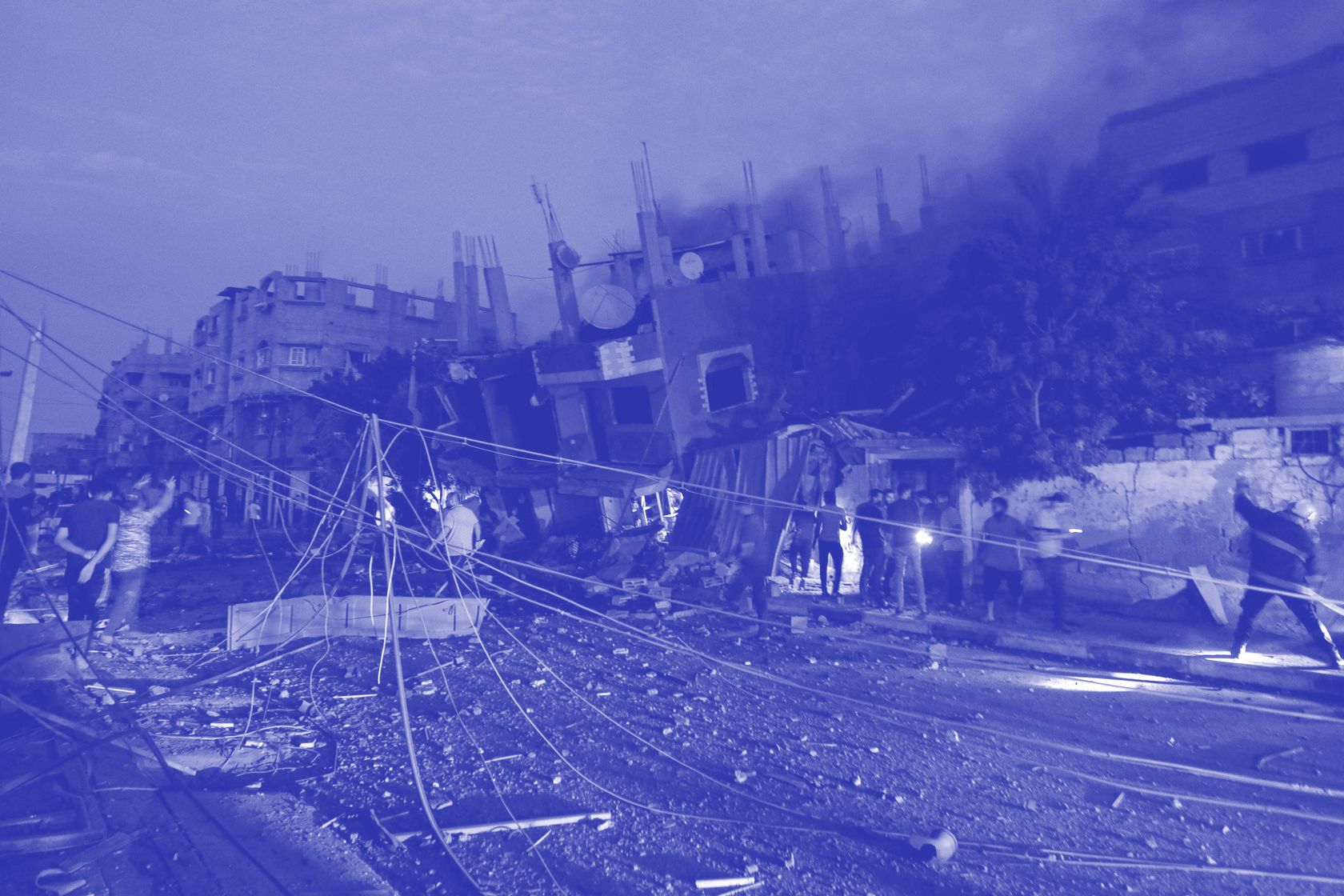
Israel-Hamas war: Israel has rescued two hostages held in Gaza in an overnight raid in central Rafah, a city in southern Gaza. Fernando Simon Marman and Louis Har were kidnapped from their homes in Kibbutz Nir Yitzhak on 7 October last year, and had been held captive by Hamas militants since. Hamas health authorities said Israeli airstrikes killed 164 people overnight, dozens of the casualties occurring in Rafah where the IDF is planning to launch a major offensive. Over 1 million Palestinians are currently sheltering in the city. (Wall Street Journal)
2.
Pooling oil: Diamondback Energy and Endeavor Energy Resources are the latest oil rivals to announce merger plans as major consolidation across the Permian Basin continues. The cash and stock deal values Endeavor at around USD26 billion ($39.7 billion), and would create an oil-and-gas giant worth over USD50 billion. Diamondback fought off bids from other parties including ConocoPhillips, and will own the majority of the combined company when the deal closes. (Wall Street Journal)
3.
Oil appetite: Saudi Aramco chief Amin Nasser has said global oil demand is set for another year of “robust” growth. At a conference on Monday, Nasser said: “We see 104 million barrels of demand for this year, so a growth of about 1.5 million barrels.” The comments are generally in line with analysts’ forecasts of increased demand for this year, driven largely by economic expansion in China, and are in-between OPEC’s and the International Energy Agency’s predictions. At the same conference, Saudi energy minister Prince Abdulaziz bin Salman said that the capacity halt announced by Aramco last month is due to the energy transition. The state-run company has said that it will not proceed with plans to bolster production capacity by about 8% to 13 million barrels per day by 2027. (Bloomberg)(Reuters)
4.
GST blowout: A GST deal negotiated by the Turnbull government in 2017 to 2018, designed to shore up votes in WA, could see a cost blowout from $39 billion to $50 billion over the next decade. The GST top-up guarantee was created by then-treasurer Scott Morrison and the Productivity Commission, to compensate all states and territories for lost GST revenue as part of a broader deal to put a floor under the tax allocation for WA. Economists are calling on the Productivity Commission to recommend that the top-up payment be abolished when it is next reviewed. (AFR)
5.
Well heeled: Shares in the luxury footwear maker, Tod’s, soared 18% during trading on Monday on news that it would team up with the LVMH-backed L Catterton on a take-private bid. The news also sparked a rise in similar small-cap luxury brands and Tod’s rivals including Salvatore Ferragamo, Burberry, and Brunello Cucinelli. Small-cap luxury brands are increasingly feeling the pressure of a market dominated by conglomerates like LVMH and Kering. (Bloomberg)
6.
PE exec boom: Bosses and top execs at large US PE groups have seen the value of their shares rise by over USD40 billion since the beginning of 2023. Blackstone, KKR, Apollo Global, Ares Management and TPG shares have neared or eclipsed record highs due to strong financial results aided by a boost in new assets, especially credit and insurance based investments, which benefited from surging interest rates. Apollo Global saw USD157 billion of gross inflows last year alone. Commenting on the company’s growth from USD44 billion AUM in 2008 to USD652 billion in overall assets today, CEO Marc Rowan said: “I’d like to think that was all as a result of management acumen […] but we are the beneficiary of macro industry factors that drove not just us but our entire industry.” (Financial Times)
7.
Compliance crunch: Citi has been reproached by regulators, calling on the bank to make urgent changes to the way it measures default risk of its trading partners. In late 2023, the Federal Reserve warned Citi to address its approach to measuring risk of default by derivative transactions. Citi’s internal audit unit also flagged that more work was needed to address problems previously raised by regulators, according to an internal email seen by Reuters, which was a response to enforcement actions dating back to October 2020. The Office of the Comptroller of the Currency also assessed Citi in September and October 2023 to determine whether the bank had made as much progress on data integrity as it claimed. Citi failed those exams, requiring it to take extra steps to rectify the issues. (Reuters)
8.
Draining data: Governments around the world are placing curbs on building new server farms over fears around excessive energy use. Ireland, Germany, Singapore and China, Amsterdam (the Netherlands) and a US county have all introduced restrictions on new data centres in order to comply with more demanding environmental requirements. Barclays analysts warn that curbs of similar “severity and frequency” are to be expected elsewhere in the coming years, which could put pressure on the data centre and cloud company industry, which is set to reach USD418 billion by 2030. (Financial Times)
