Jeff Bezos to return as co-CEO of new AI venture, says NYT
Plus: APRA to expose liquidity risks in super funds and banks; Bitcoin falls below USD93,000 as US tech stocks retreat; Peter Thiel’s hedge fund exits Nvidia.

Good morning. Here's what happened overnight and what you need to know today.

1.
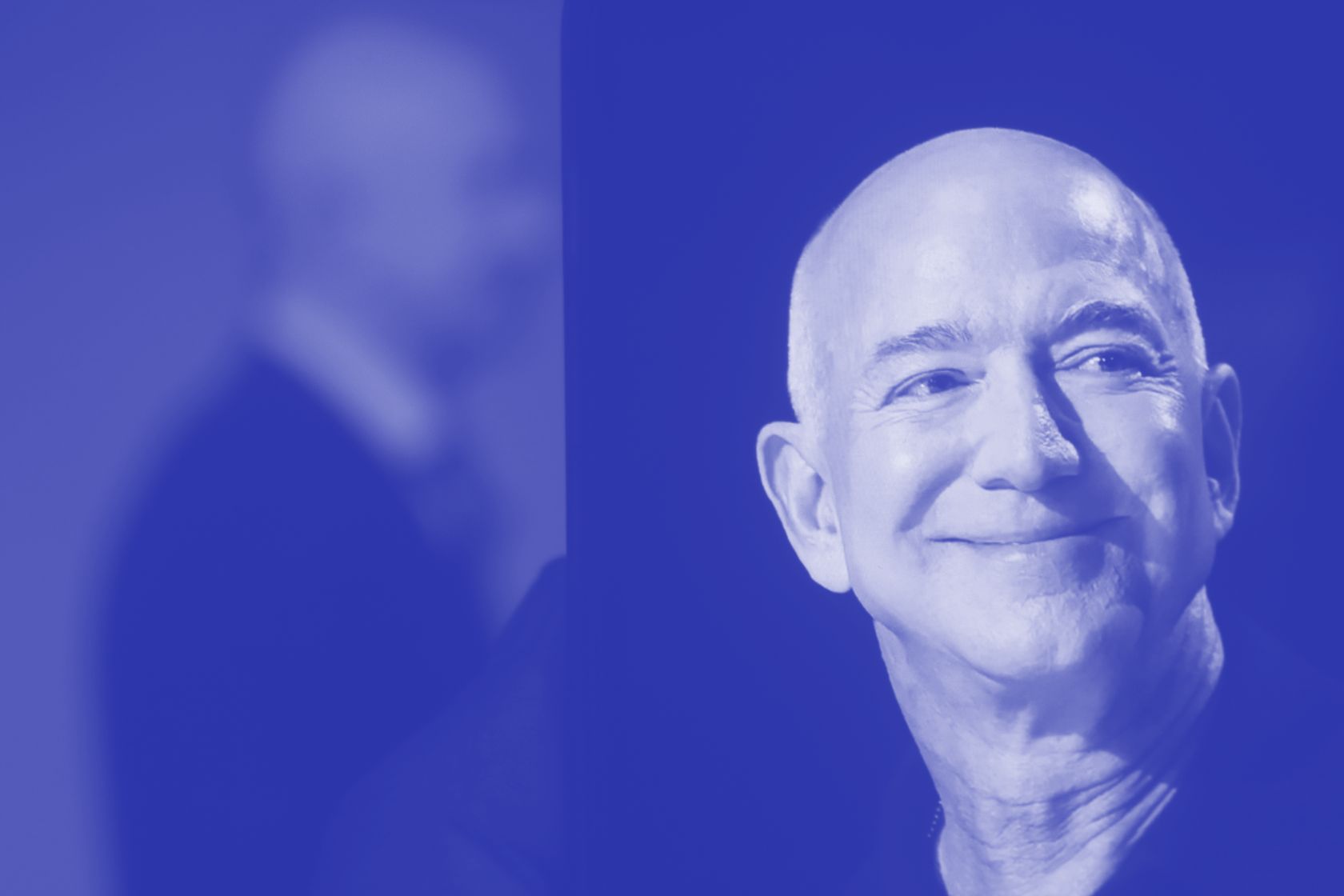
Bezos re-entry: Jeff Bezos will serve as co-CEO of a new AI company called Project Prometheus, which has raised USD6.2 billion ($9.5 billion) in funding, The New York Times reported citing three unnamed sources familiar with the company. It will be Bezos’ first formal operational role since stepping down as Amazon CEO in July 2021. The start-up will focus on applying AI to engineering and manufacturing in sectors including computers, automobiles and spacecraft. Bezos will lead Project Prometheus alongside Vik Bajaj, a physicist and chemist who previously worked at Google’s X research division and co-founded Verily and Foresite Labs. Bajaj recently left Foresite Labs to focus on the new venture, according to the report. The company has already hired nearly 100 employees, including researchers from OpenAI, DeepMind and Meta. The launch comes as smaller AI firms seek to compete with larger players like OpenAI, Meta and Google. Project Prometheus plans to develop AI systems that interact with the physical world to accelerate tasks in science and manufacturing. (Capital Brief)(NYT)
2.
Super stress: APRA is putting the finishing touches on a report that will expose vulnerabilities in Australia's $4 trillion superannuation sector, following a year-long stress test into the resilience of the country's big four banks and the country’s six largest super funds. Two sources told Capital Brief APRA's findings will be released later this week, identifying weaknesses in the system, including liquidity risks. The concerns relate to how super funds and banks would perform in a crisis and could open the door to intervention from APRA and the Reserve Bank, including the introduction of enhanced liquidity rules, one of the sources suggested. APRA chair John Lonsdale was tight-lipped on what the results would look like in remarks at the ASIC Forum in Melbourne last week, but hinted that the super funds and banks incorrectly assumed how the other side would act in the same scenario. (Capital Brief)
3.
Nervous market: US markets wavered as investors stayed cautious ahead of Nvidia’s earnings and the delayed September jobs report, while Alphabet shares surged after Berkshire Hathaway disclosed a USD4.9 billion ($7.5 billion) stake. The Dow Jones was down 0.63% in afternoon trading in New York, the S&P 500 slipped 0.57% and the Nasdaq fell 0.61%, as the AI trade showed further signs of cooling. Nvidia dropped 2% with traders positioning for Wednesday’s report, seen as a critical test of AI stock valuations. Dell and Hewlett Packard Enterprise each sank around 8% after Morgan Stanley downgraded both stocks. Bitcoin declined past USD93,000, adding to last week’s losses. Meanwhile, Fed Vice Chair Philip Jefferson said the central bank should “proceed slowly” on any future rate cuts, citing inflation risks and labour market weakness. Traders have cut the odds of a December cut to 57%, down from 94% a month ago. (Reuters)(Bloomberg)(WSJ)
4.
Another exit: Peter Thiel’s hedge fund, Thiel Macro LLC, exited its entire position in Nvidia during the third quarter, selling all 537,742 shares. The stake would have been worth about USD100 million ($153.7 million) based on Nvidia’s closing price on 30 September. The fund now holds Apple, Microsoft and a reduced stake in Tesla as its main positions. The move came amid increasing concerns over an AI investment bubble and as Nvidia became the world’s most valuable company. It also comes as Japan’s SoftBank Group also sold its entire Nvidia stake in October for USD5.83 billion, to help finance other AI investments. An analysis of 13F filings from 909 hedge funds, cited by Bloomberg, found 161 increased their Nvidia positions in the quarter and 160 reduced them, resulting a near-even split in investor sentiment. Earlier this month, hedge fund manager Michael Burry, known for his 2008 housing market bet, disclosed put options on Nvidia and Palantir and questioned the depreciation schedules used by large Nvidia customers including Microsoft and Alphabet. (Reuters)(Bloomberg)
5.
G(e)ga for gallium: Having just closed a $925,000 pre-seed round backed by UNSW Founders, Flying Fox Ventures, Investible, Trailblazer for Recycling and Clean Energy and Salus Ventures, Sydney startup Gega Elements wants to challenge China’s dominance in gallium and germanium refining, aiming to secure Australia’s foothold in critical minerals. The startup aims to build an advanced refining capability for gallium and germanium — two critical minerals essential for semiconductors, AI infrastructure, electric vehicles, space technologies and national security applications. China currently controls 98% of global gallium supply and 68% of germanium supply and has already implemented export bans to the US. Founder Mo Assefi claims the Gega process is at least 40% greener than conventional methods and 30 to 40% cheaper. Gega has secured multiple MoUs with some of Australia’s largest mining firms and announced a collaboration with Rare X and is already receiving samples from Brazil, the US and across WA and QLD. (Capital Brief)
6.
China relations: Foreign Minister Penny Wong warned that while China will continue trying to shape the region to suit its own interests, Australia should continue to pursue a productive relationship with the nation. Wong told the Australian Institute of International Affairs in Canberra on Monday night that “China will continue trying to reshape the region according to its own interests.” Wong explained that Australia is continuing to seek dialogue with China for conflict prevention, as well as to communicate that Australia does not tolerate “unsafe or unprofessional” conduct aimed towards our armed forces. Wong continued that the idea that Australia must choose between protecting its sovereignty and maintaining productive economic ties with Beijing is not necessary, arguing that China is Australia’s largest trading partner, the world’s second-largest economy and a key player on climate action. Wong also said the government is determined to strike new agreements with Tonga, Fiji and Vanuatu and that the US remains Australia’s “closest ally, and our principal economic and strategic partner.” (AFR)(The Australian)(SMH)(ABC)(Capital Brief)
7.
Buy car: Ford will begin selling its certified used vehicles through Amazon, becoming the second major carmaker to offer cars on the platform after Hyundai. Starting in Los Angeles, Seattle and Dallas, customers will be able to browse, finance and purchase a used “Blue Advantage” Ford vehicle from a participating dealer directly on Amazon, using the familiar “add to cart” button. Ford said about 200 of its 2,800 US dealers have expressed interest, with around 20 already in the process of launching. Buyers must collect vehicles from the dealership, and all sales will be at a fixed price with no haggling. The vehicles will come with multi-point inspections, condition reports, service histories, and limited warranties of up to one year or 12,000 miles. That includes a 14-day or 1,000-mile money-back guarantee. The company plans to roll out the program more broadly and may explore adding new vehicles in future. (Ford)(Reuters)(Bloomberg)
8.
Permacrisis pivot: Australia’s $261 billion Future Fund is planning to focus on portfolio resilience to protect its assets against intensifying geopolitical tensions and rising inflation. A 17-page position paper due for release today will see the Future Fund outline its shift in strategy towards dealing with escalating pressures that could make delivering consistent returns challenging into the future. The fund said that it has devised a strategy to deal with these issues, which includes switching back to active equity fund managers who it believes will be “better rewarded in an environment where higher inflation and geopolitical risk make market returns less certain.” The fund recast its scenario framework to develop multiple secular scenarios, focusing on supply side driven forces, as well as retaining multiple three-year scenarios, the AFR explained. It will also buy $1 billion in gold and will favour “quality” stocks with pricing power and adding to Australian real assets like infrastructure and accommodation. (AFR)(Raphael Arndt Op-Ed)(Investment Magazine)(Capital Brief)
