Keir Starmer announces resignation, clears path for Burnham as UK PM
Plus: Alphabet drags S&P 500 and Nasdaq lower on talent concerns; Former US Fed chair Alan Greenspan dies aged 100; SpaceX strikes USD6.3b compute deal with Reflection AI, launches bond.


Good morning. Here’s what happened overnight and what you need to know today.
1.
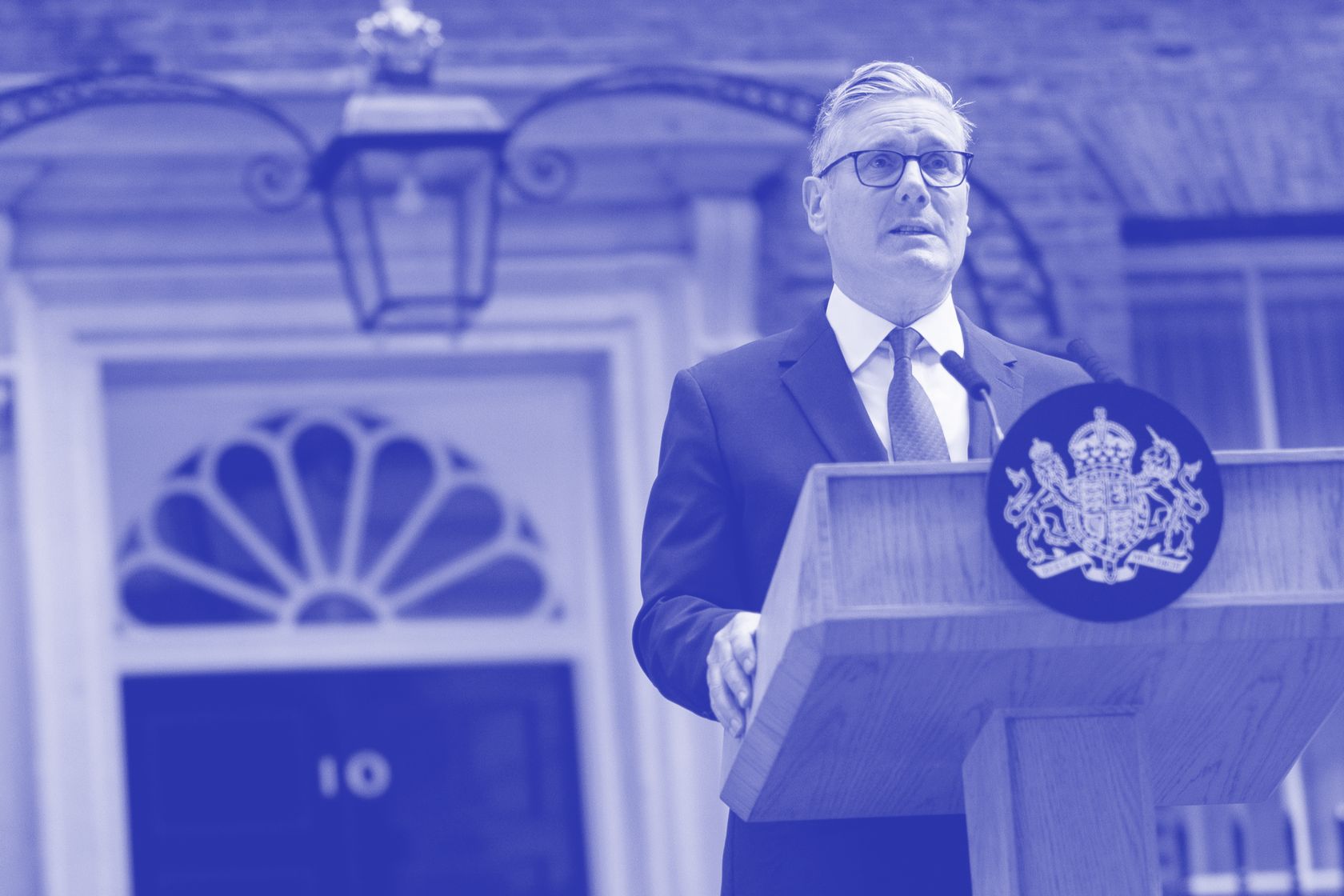
Seventh PM: Andy Burnham is poised to become Britain’s next prime minister after Keir Starmer announced he would resign as Labour leader. Burnham, the former Greater Manchester mayor who won a seat in parliament last week, said on X he would “put myself forward as part of this process”. His route to Downing Street opened further when former health secretary Wes Streeting, his most likely rival, ruled himself out and endorsed him instead. “We could spend the summer exaggerating small differences, or we can roll up our sleeves and help him deliver the change our party and our country needs,” Streeting said. With his voice breaking outside Number 10, Starmer said that he accepted his party’s verdict that he was not best placed to lead Labour into the next election “with good grace”. He set a timetable under which nominations to succeed him open on 9 July and close 16 July, with a new leader in place before parliament returns on 1 September. If no rival emerges, Burnham could enter Downing Street as early as 17 July, becoming Britain’s seventh prime minister in a decade. Sterling and gilts steadied after Streeting’s move reduced the chance of a drawn-out contest. (FT)(Bloomberg)(BBC)
2.
Brain drain: The S&P 500 and Nasdaq were lower overnight, dragged by megacap technology stocks led by Alphabet, as investors assessed progress in US-Iran negotiations. Alphabet tumbled as much as 7.2%, its sharpest intraday fall since February, after Google DeepMind vice-president John Jumper (and a 2024 Nobel chemistry laureate) said he was leaving for Anthropic. That came days after prominent Google researcher Noam Shazeer also departed for OpenAI. The twin exits sparked concern that — as DA Davidson tech analyst Gil Luria put it — “Google is losing the war for talent at the frontier of AI”. Meta, Amazon, Microsoft and SpaceX also fell. The Nasdaq Composite was 1.3% lower, while the Dow rose 0.29% and the S&P 500 closed 0.37% lower. Oil fell as much as 4% after the US issued a 60-day licence allowing Iran to sell oil on the international market, as the two sides reported progress at the first round of peace talks in Switzerland. Among movers, Getty Images soared 84.5% after it announced a licensing deal with OpenAI, and Apogee Therapeutics jumped nearly 47% after AbbVie agreed to buy it for USD10.9 billion. (Reuters)(Bloomberg)(WSJ)
3.
Greenspan dies: Alan Greenspan, the former US Federal Reserve chair who dominated global markets for nearly two decades before his legacy was clouded by the financial crisis, died aged 100. Greenspan died at his home in Washington on Monday local time from complications of Parkinson’s disease, his wife Andrea Mitchell said in a statement. Appointed by Ronald Reagan, Greenspan led the Fed from August 1987 to January 2006 under four US presidents of both Republican and Democratic parties. He oversaw the second-longest economic expansion in US history, a decade of growth from March 1991 to March 2001. As The New York Times noted in an obituary, his reputation rested on a mid-1990s judgment that a productivity surge would keep inflation contained, and that markets could police themselves. But barely two years after his 2006 departure, the US fell into a financial crisis, prompting accusations his monetary and regulatory policies had fostered the boom and bust. In a statement, the Federal Reserve said Greenspan had “brought rigorous analytical discipline to monetary policymaking and helped establish the credibility that remains one of the Federal Reserve’s most important assets.” (Capital Brief)(NYT)(FT)(US Fed)
4.
Compute deal: SpaceX signed a computing deal worth up to USD6.3 billion ($9 billion) with Reflection AI, becoming the latest outside company to rent capacity at Elon Musk’s Colossus data centres. The open-source AI startup will get immediate access to Nvidia GB300 chips at the Colossus 2 site in Memphis and will pay SpaceX USD150 million a month from 1 July through 2029, CNBC reported, citing “materials” it viewed. The payments would total about USD6.3 billion over the full term, with either side able to exit on 90 days’ notice after the first three months, according to the report. Reflection confirmed the deal in a LinkedIn post without sharing details, adding it is hiring researchers, engineers, and builders across the company. The agreement adds to a string of commercial wins for SpaceX since its historic IPO, following deals with Google and Anthropic. Reflection was last valued at USD25 billion and was founded by two former Google DeepMind researchers. SpaceX shares fell as much as 16.8% in its third straight day of declines, after it announced its first bond sale to fund its AI push. SpaceX also disclosed it had USD100 billion in cash. (Reflection AI)(SpaceX)(Reuters)(CNBC)(Bloomberg)
5.
Builder mentality: Meta will invest USD900 million ($1.29 billion) in Indian fintech startup Cred and install its founder Kunal Shah as the new global head of WhatsApp. The investment values Bengaluru-based Cred at USD4.5 billion post-money and gives Meta a roughly 20% stake. Shah, who founded Cred in 2018, replaces Will Cathcart, who is stepping down after more than seven years running the messaging service to take a new role at Meta building products “from the ground up”, chief executive Mark Zuckerberg wrote in a Facebook post. The Indian company said it would not grant Meta access to Cred customer data. Cathcart wrote on X that WhatsApp “is in the strongest position it’s ever been — and that felt like the right moment to step back”. India is WhatsApp’s largest market, with more than 500 million users, and the platform is expanding beyond messaging into payments and business services there. Cred operates a members-only platform for consumers with high credit scores, serving 17 million members a month and processing more than 40% of India’s credit card bill payments, according to Reuters. (Kunal Shah)(Mark Zuckerberg)(Reuters)(Bloomberg)(Cred)
6.
Not enough noise: Biotech industry leaders are warning that the Albanese government’s capital gains tax backdown will fall short without urgent action on planned changes to the Research and Development Tax Incentive, which threatens crucial funding for smaller life sciences companies. The message Brandon Capital founder Chris Nave received across three departments in Canberra last week was consistent: CGT now, RDTI later. The concern is borne out by Treasury’s 18 June consultation paper, which details the proposed Innovative Business CGT Concession but doesn’t address RDTI at all. As Capital Brief reported in May, changes to the R&D tax incentive (including a 10-year age cap on the refundable offset) were buried in the budget papers, wrong-footing the biotech and deep tech sectors. The cap cuts off eligibility precisely when biotech spending, employment and R&D activity typically peak. Nave attributes the deferral in part to the sector’s limited political weight, despite biotech being Australia’s largest manufactured export industry, having doubled in size since 2017 and employing around 350,000 people. “We get told, you guys always come here with credible points asking for sensible things, but your lobbying power and your noise is not large enough,” he said. (Capital Brief)
7.
Green leverage: The Albanese government could be forced to change its budget for a second time in less than a week, with the Greens reportedly demanding it close a loophole allowing people to buy investment properties through self-managed super funds to avoid the capital gains tax increase. To win the Greens’ support for its budget tax measures, the government has already agreed to postpone until August the passage of separate legislation cutting the cost of the NDIS by AUD37.8 billion over four years, so a longer Senate inquiry can be held. Now the minor party wants more. An unnamed source told the AFR the government was considering yielding to the SMSF demand, and The Australian said it “understands” Treasurer Jim Chalmers is considering the change. In their dissenting report to last week’s Senate inquiry, the Greens warned people would flock to SMSFs as the remaining vehicle able to buy tax-advantaged residential property. “Since the budget, there has been a surge of social media advertising that encourages people to ‘turn your super into a property portfolio’, advertising SMSFs as a ‘budget loophole’,” they said. SMSF Association chief executive Peter Burgess urged the government to stand firm. With the Coalition opposed to the budget, the government needs the Greens to pass its legislation in the Senate. (AFR)(The Australian)
8.
White noise: WiseTech Global shares crashed 18.4% to a five-year low yesterday after Nine newspapers revealed billionaire executive chairman Richard White is under criminal investigation by federal police. The company and police have not commented publicly, but according to the reports AFP’s human exploitation taskforce launched the probe this year after a complaint from a former executive at Kyckr, another company White controls. White is being investigated over claims he exploited a woman’s immigration status and financial insecurity and provided false information on a visa application. He is alleged to have coerced Caroline Heidemann, a Brazilian once employed by WiseTech as a cleaner, into an inappropriate relationship. Heidemann made similar claims last year but reached a settlement, and White has said the pair were in a consensual relationship. The reports do not suggest White is guilty, only that he is being investigated by the AFP. Monday’s fall to $30.08 down from a record $135.15 in 2024, wiped almost $2.3 billion from the company’s value in a day. HESTA, holder of a 0.7% stake in WiseTech, said the allegations were "deeply concerning” and, if proven, compound “serious governance and leadership issues” it has raised for more than a year. (AFR)(SMH)(Capital Brief)
