Labor backs gas with 'generational' investment
Plus: Uber shares fall on weak Q1 earnings; Biden Administration delays ammunition shipment over Rafah incursion; Softbank in talks to buy Graphcore.

Good morning. Here's what happened overnight and what you need to know today.
1.
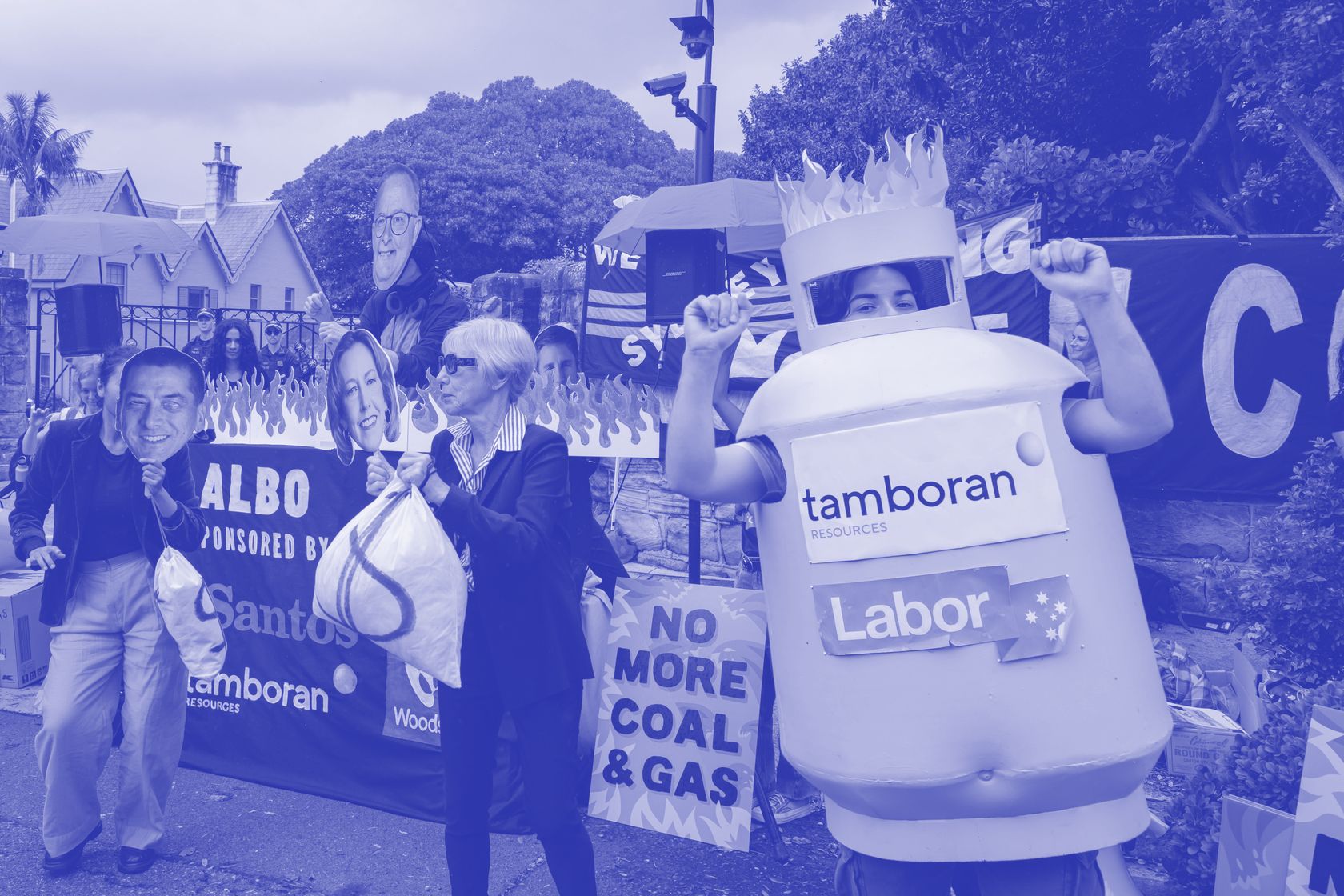
Foot on the gas: The Albanese government will adopt a new framework to support the country’s natural gas industry under the ‘Future Gas Strategy.’ The Budget, which is due for release next week, will see Labor invest $566.1 million over ten years from 2024-25 to deliver data, maps and other tools for use by the resources industry. The strategy's "generational investment," which is scheduled for release on Thursday, aims to find new deposits of minerals and sources of energy, underscoring the “Government’s plan to put the resources industry at the heart of its Future Made in Australia policy.” The strategy will include ‘use it or lose it’ provisions called for by the West Australian government, to stop energy companies that hold rights for major offshore gas fields from sitting on untapped reserves. (Capital Brief)
2.
Price drop: Shares in ride-hailing and food delivery firm, Uber, fell over 9% during trading on Wednesday, after the company reported unexpected losses and a weak Q2 forecast. Uber reported operating profit of USD172 million ($261.58 million) for the first three months of 2024, coming in significantly below analysts’ expectations of over USD600 million. Wednesday’s share price losses pushed the company’s gains for the year down to 11%. During Wednesday’s earnings call, the company explained that income from operations declined sequentially, primarily due to “discrete legal and regulatory reserve changes and settlements” and that it is currently “resolving several legacy matters.” Uber agreed to pay $271.8 million to settle a class-action suit brought by Australian taxi drivers earlier this year, and is currently facing off with GoCatch in the Supreme Court in another matter downunder. (Uber Q1 2024 earnings) (Capital Brief)
3.
Ammunition holdup: US Defense Secretary, Lloyd Austin, confirmed that the Biden Administration has delayed a shipment of “high-payload” munitions to Israel, over concerns that the country is nearing a decision on a full-scale incursion on the Gazan city of Rafah. A full-scale attack on the city by Israel would be against the wishes of the US, as over one million civilians are sheltering in the southern enclave after evacuating from other parts of Gaza. The delayed munitions shipment was due to consist of 1,800 900-kilogram bombs and 1,700 225-kilogram bombs, larger explosives which the US does not want used in the dense urban settings of cities like Rafah. “We’re going to continue to do what’s necessary to ensure that Israel has the means to defend itself,” Austin said. “But that said, we are currently reviewing some near-term security assistance shipments in the context of unfolding events in Rafah.” (Associated Press)
4.
AI snap-up: Softbank is reportedly in talks to acquire struggling UK semiconductor startup, Graphcore, according to unnamed sources cited by Bloomberg. Once valued at USD2.7 billion, the startup has been suffering from slowing hardware sales, posting just USD2.6 million in revenue for 2022, marking a 46% fall from the year prior. Softbank and Graphcore have reportedly been in talks for several months, with the discussions evolving into more advanced negotiations recently. In September last year, the FT reported that Softbank made a preliminary offer to buy Graphcore which was rejected by the startup. Softbank already holds a majority stake in another UK chip designer, Arm Holdings, shares in which have surged around 40% since February when it reported a strong outlook for its expansion into AI applications beyond smartphones. (Bloomberg)
5.
DeepMind goes DeepScience: Google DeepMind has unveiled AlphaFold 3, the third generation of its AI model built to more effectively design drugs and target disease. In an interview with Bloomberg, Google’s AI chief Demis Hassabis said that he expects the software to bolster a business that could be worth over USD100 billion. The latest iteration of DeepMind’s model, developed in partnership with Isomorphic Labs, will help scientists predict the structure and interactions of all life’s molecules with “unprecedented” accuracy. DeepMind states for the interactions of proteins with other molecule types, the tool promises at least a 50% improvement compared with existing prediction methods. DeepMind argues that the findings would reduce the time and money needed to create revolutionary treatments for disease. AlphaFold 3 will be freely available for scientists to use via the AlphaFold Server. (Bloomberg)(Google DeepMind press release)
6.
Facing the music: Bill Hwang, former-founder and CEO of collapsed investment firm, Archegos Capital Management, has arrived in a New York court for the start of his criminal racketeering trial. Hwang is accused of using derivatives to secretly build positions in several stocks that were so large they eclipsed the positions of the companies’ biggest investors, driving up stock prices. Prosecutors argue that over a 12 month period, Hwang grew his USD1.5 billion portfolio into a USD35 billion portfolio. The huge bets placed by Archegos blew up in a rapid and dramatic fashion in 2021, which saw over USD100 billion wiped from nearly a dozen public companies in just days. Hwang is also accused of lying about his holdings to sustain relationships with global banks, as well as 10 additional counts of fraud and market manipulation, with each count carrying a maximum sentence of 20 years. (Reuters)
7.
Going Dutch: Australian build-to-rent startup, Apt.Residential, has secured $700 million in initial funding from Dutch pension fund, PGGM, as it seeks to develop 2,500 apartments in the coming few years. The apartments will be spread across six to eight towers, the majority of which will be in Sydney. Founder Matt Carolan told the AFR that the plans with PGGM were negotiated over two years, and that the Dutch fund’s investment is the initial “cash portion” of $700 million. Combined with debt and Apt.Residential’s investment, the totally development budget pool will come to $1.5 billion. Carolan said that they have one project committed in Sydney with another few being finalised, and are focused on the inner suburbs of Sydney “in locations where people want to rent.” (AFR)
8.
Cloud calling: Telefonica Germany is set to move one million of its 5G customers to the Amazon Web Services cloud later in May, as the tech giant breaks into the telecoms market. The customer shift will mark the first time an existing mobile operator will switch its core network to a public cloud. Mallik Rao, chief technology and information officer at O2 Telefonica, also known as Telefonica Germany, told Reuters: “I want to see it working for at least one to two quarters and have a roadmap to move at least 30-40% of my customer base by 2025-2026." Telefonica Germany has around 45 million customers across Germany. US company Dish became the only telecom company to use AWS cloud for its core network in 2021, a move made significantly easier by the fact that it did not have existing systems which needed to be modified to work within the cloud. (Reuters)
